
ADU vs JADU in California: What Is the Difference?
An ADU is a complete second home on your lot, up to 1,200 square feet if detached. A JADU is a unit of 500 square feet or less carved out of your existing house, with an efficiency kitchen and a bathroom it may share. Both are legal in California, and one lot can often hold both.
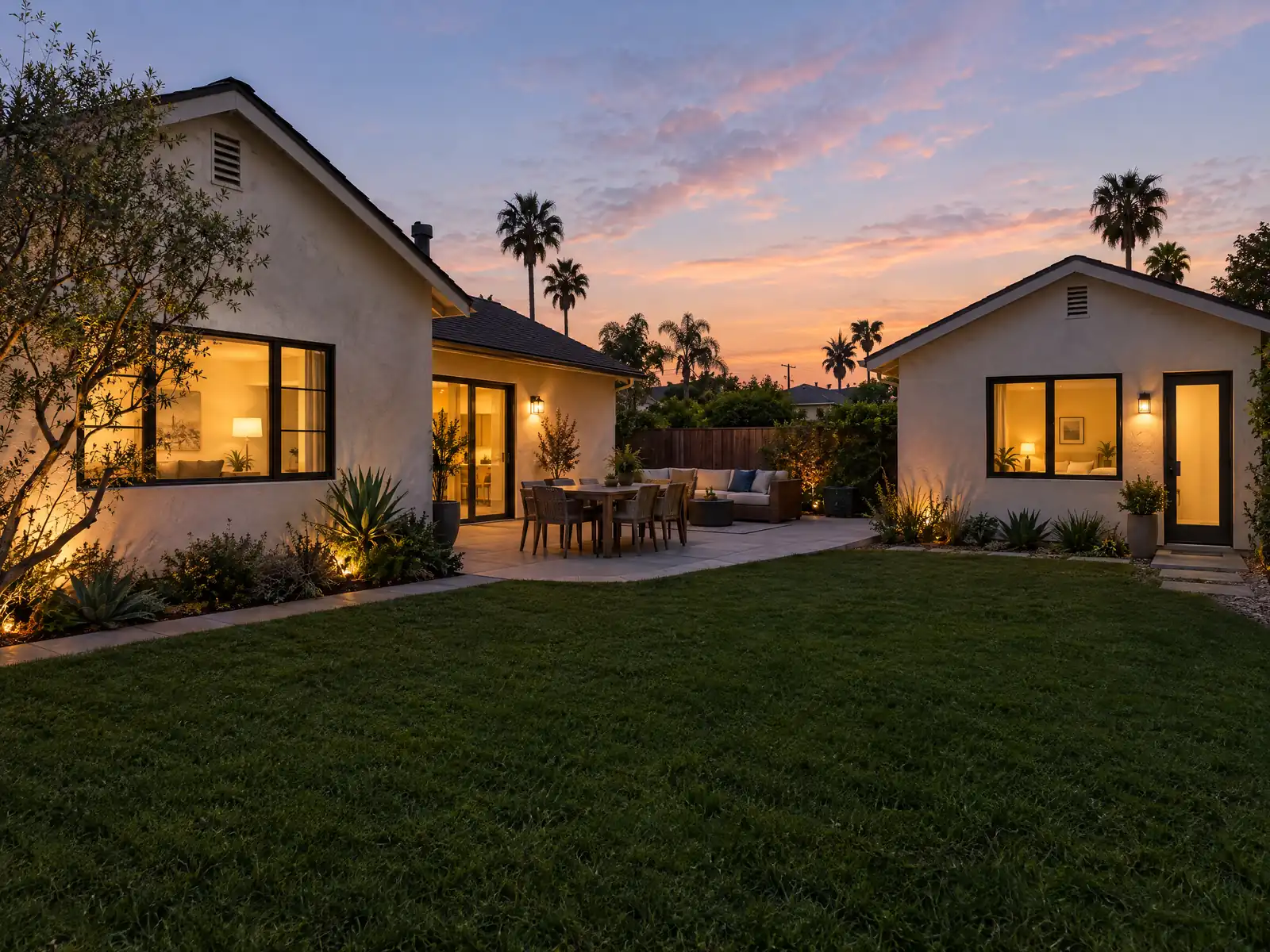
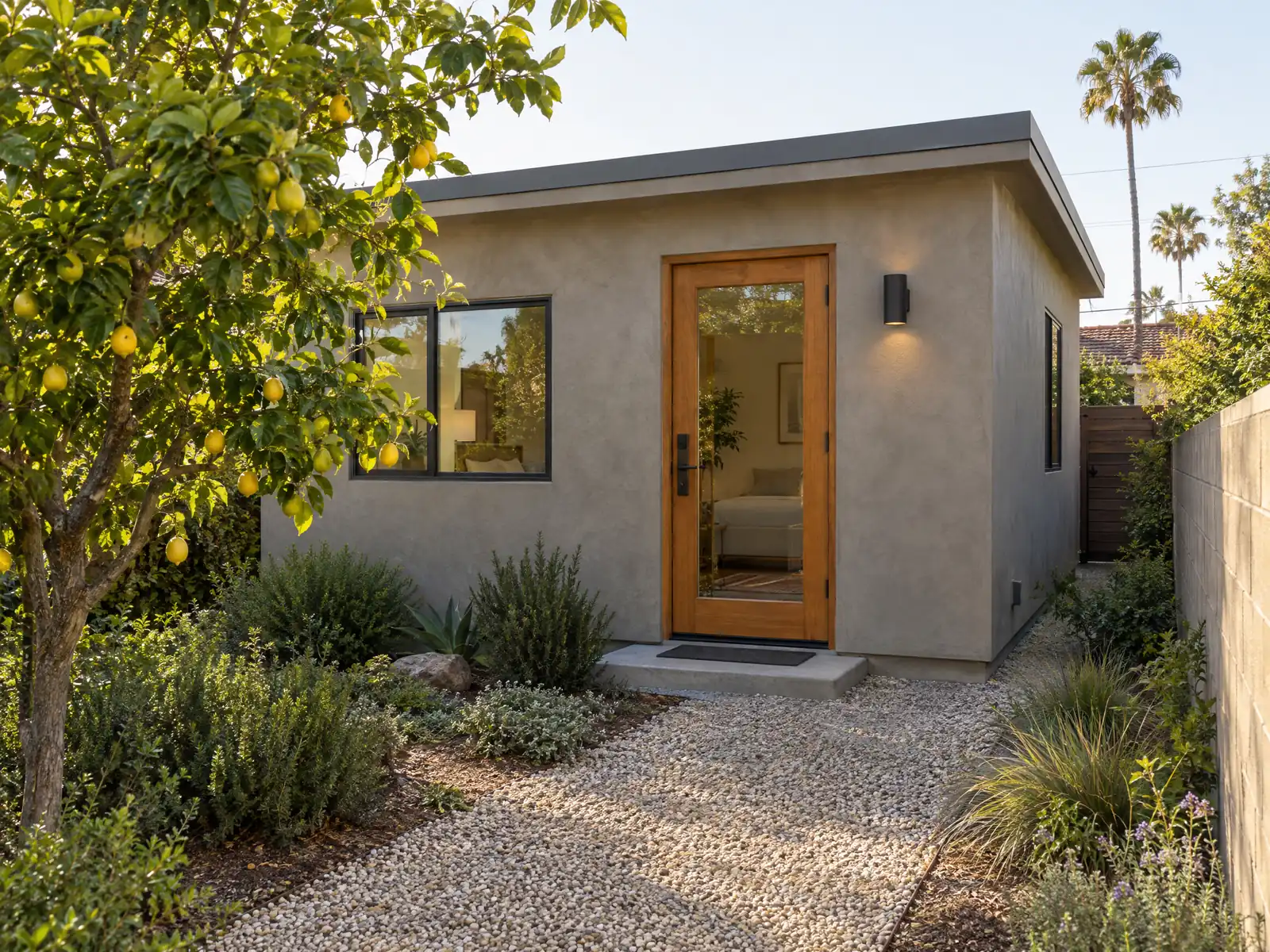
ADU and JADU side by side
Both terms come from the same body of state law, Chapter 13 of Division 1, Title 7 of the Government Code (sections 66310 to 66342). Articles written a few years ago cite section 65852.2 for these rules; that is the older location of the same law, and some details inside it moved on January 1, 2026. Here is how the two unit types differ on the points owners ask about most.
- Where it can sit. An ADU can be detached, attached to the house, or converted from existing space. A JADU must be inside the walls of a single-family house, and an attached garage counts (section 66313).
- Maximum size. A detached ADU can reach 1,200 square feet; an attached ADU can reach 50 percent of the existing house (section 66314). A JADU stops at 500 square feet.
- Kitchen and bathroom. An ADU is a complete home, which in practice means its own kitchen and bathroom. A JADU needs an efficiency kitchen and may share a bathroom with the main house.
- Entrance. A JADU needs its own entry. An ADU normally has one as a matter of design.
- Parking. A JADU adds no parking requirement. For an ADU, a city may require no more than one space per unit or per bedroom, whichever is less, and none at all in several situations listed in sections 66314 and 66322.
- Impact fees. None on an ADU of 750 square feet or less, and none on a JADU of 500 square feet or less (section 66311.5).
Owner occupancy changed on January 1, 2026
State law does not let a city require the owner to live on the property for an ADU (section 66315). Before this year, a JADU came with an owner-occupancy requirement. AB 1154, effective January 1, 2026, narrowed it: under section 66333 the owner has to live on the property only if the JADU shares sanitation facilities with the main house.
Be careful with older material. The City of Los Angeles zoning memo on ADUs (ZA Memo 143, Revision 1, dated August 1, 2025) predates the change and still describes the older JADU rule. Where a local document and the statute disagree, the statute controls. A JADU with its own bathroom and its own entry is therefore the version that does not tie you to living on site.
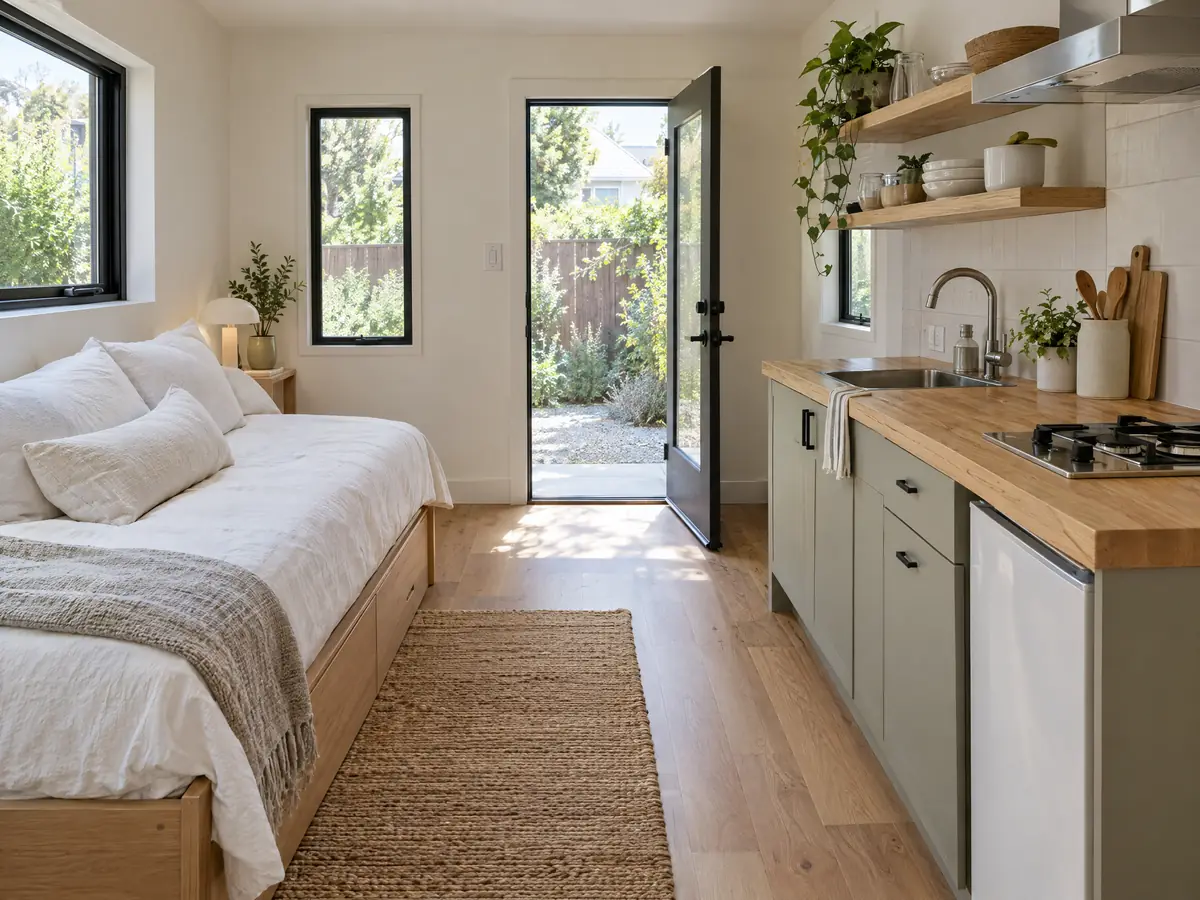
Which part of the house can become a JADU?
Think of a JADU as a conversion of space you already own: a spare bedroom with an exterior door, a bonus room, or an attached garage. Because the statute requires the unit to be inside the single-family house, a detached garage or a pool house cannot be a JADU. Those can be ADUs.
The JADU needs a deed restriction recorded against the property, a separate entry, an efficiency kitchen, and a rental term longer than 30 days. If you are weighing a garage for either type, garage conversion permit steps in Los Angeles walks through what the city asks for.
Fees, utilities and sprinklers for each
Government Code section 66311.5 sets the fee rules for both. It bars impact fees on an ADU of 750 square feet or less and on a JADU of 500 square feet or less, and above 750 square feet an ADU's fees must be proportional to the main house. It also says a unit under 500 square feet counts as adding no assessable space for school fees.
Utility charges are a separate matter. Connection and capacity fees are not covered by the 750 square foot exemption, but an ADU converted from existing space cannot be forced to take a new utility connection or pay a related fee. On fire safety, an ADU needs sprinklers only if the main house has them, and adding an ADU cannot make the city require sprinklers in the main house (sections 66314 and 66323).
Renting, selling and short stays
A city may require ADU rentals to be for terms of 30 days or longer (section 66315), and the state-protected ADU types and JADUs must be rented for longer than 30 days. That rules out nightly rentals in most cases. Los Angeles also has its own Home-Sharing Ordinance, which caps home-sharing at 120 days a year in a host's primary residence and bars it in rent-stabilized units. The city housing department says the answer for an ADU depends on rent-stabilization status, so confirm for your address.
Selling is narrower than most owners expect. An ADU cannot be sold separately from the main house, except to a qualified low-income buyer through a qualifying nonprofit (section 66341) or under a condominium ordinance a city has chosen to adopt (section 66342).
Can you build a JADU and an ADU on the same lot?
Often yes. Section 66323 lists four ADU types a city must approve with a building permit: an ADU and JADU converted inside the house or an existing accessory structure; one new detached ADU up to 800 square feet with 4-foot side and rear setbacks; conversions of non-livable space in a multifamily building; and up to eight detached ADUs on a lot with an existing multifamily building. The city must approve any combination of them, and may not add other objective standards to those types.
A common Los Angeles pairing is a JADU made from the attached garage plus a new detached ADU in the back yard. Whether your lot supports it depends on space, utilities and fire-zone status, so treat this as a question for a feasibility check, not a promise.
How to choose between them
Pick a JADU when you want the cheapest way to create a legal rental or guest unit inside walls you already have. It adds no footprint, needs no new foundation, and carries no parking requirement. We do not print a JADU price because we found no independent source for one.
Pick an ADU when you want a unit that stands on its own: more room, a full kitchen, a detached location, or a long-term rental you do not want to share walls with. Costs and fees are laid out in ADU cost in California.
MDG Builders (CSLB #1040337) handles either type as the general contractor: the feasibility check, the plans, the permit and the schedule, with licensed subcontractors doing the trade work. The ADU construction page covers how a project runs from first call to final inspection.
ADU and JADU questions
What is the difference between an ADU and a JADU?
A JADU is a unit of up to 500 square feet built inside an existing single-family house, with an efficiency kitchen and a shareable bathroom. An ADU is a full independent home that can be detached, attached or converted, and a detached one can reach 1,200 square feet. A JADU also carries a deed restriction.
Does a JADU require owner occupancy?
Only if it shares a bathroom with the main house. Since AB 1154 took effect on January 1, 2026, Government Code section 66333 requires the owner to live on the property only when the JADU shares sanitation facilities. A JADU with its own bathroom has no owner-occupancy requirement.
Can I build a JADU and an ADU on the same property?
Often yes. Section 66323 requires cities to approve any combination of the four state-protected ADU types, which includes a JADU converted inside the house alongside one new detached ADU of up to 800 square feet. Your lot's size, utilities and fire-zone status decide whether it works.
Is a garage conversion an ADU or a JADU?
It depends on the garage. An attached garage is part of the house and can become a JADU or an ADU. A detached garage is not inside the house, so it can only become an ADU. Either way, converting existing space is one of the four state-protected types in section 66323.
Do I need to provide parking for a JADU or an ADU?
Not for a JADU, and not to replace a garage you convert. A city may require at most one space per ADU or per bedroom, but sections 66314 and 66322 remove even that near public transit, in historic districts, and when the unit is inside the house or an existing accessory structure.
Can I sell my ADU separately from my house?
Generally no. State law bars selling an ADU apart from the main house, with two exceptions: a qualified low-income buyer through a qualifying nonprofit (section 66341), or a city that has adopted a condominium ordinance for ADUs (section 66342). Ask your city whether it has one.
Work that goes with this
Keep reading about ADUs
How Much Does an ADU Cost in California?
Sourced 2026 ranges for garage conversions and detached ADUs in Los Angeles, and how old the survey numbers are.
Read the guide →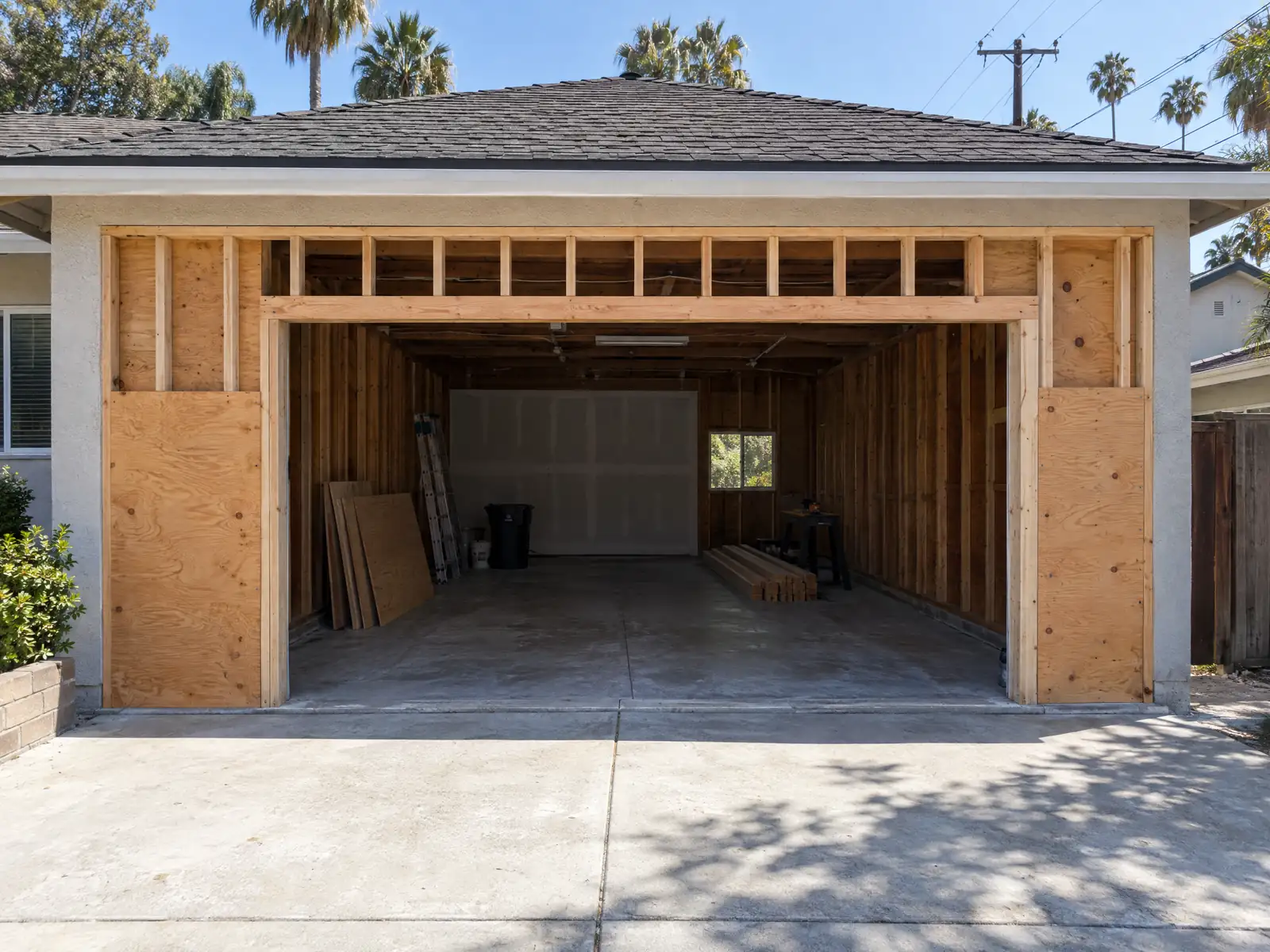
Garage Conversion Permit Steps in Los Angeles
The permit path for turning a Los Angeles garage into an ADU, with the LADBS conversion checklist and the state deadlines.
Read the guide →Ready to plan your project?
Call or send the form. We schedule a site visit and send a written proposal.