
ADU Constructionin Los Angeles and Southern California
Yes. California law makes a city approve a complete ADU application without a hearing, and since January 1, 2026 the city has 60 days to decide or the permit is deemed approved. Our sourced working ranges are about $100,000 to $200,000 for a garage conversion and $200,000 to $400,000 for a new detached unit.
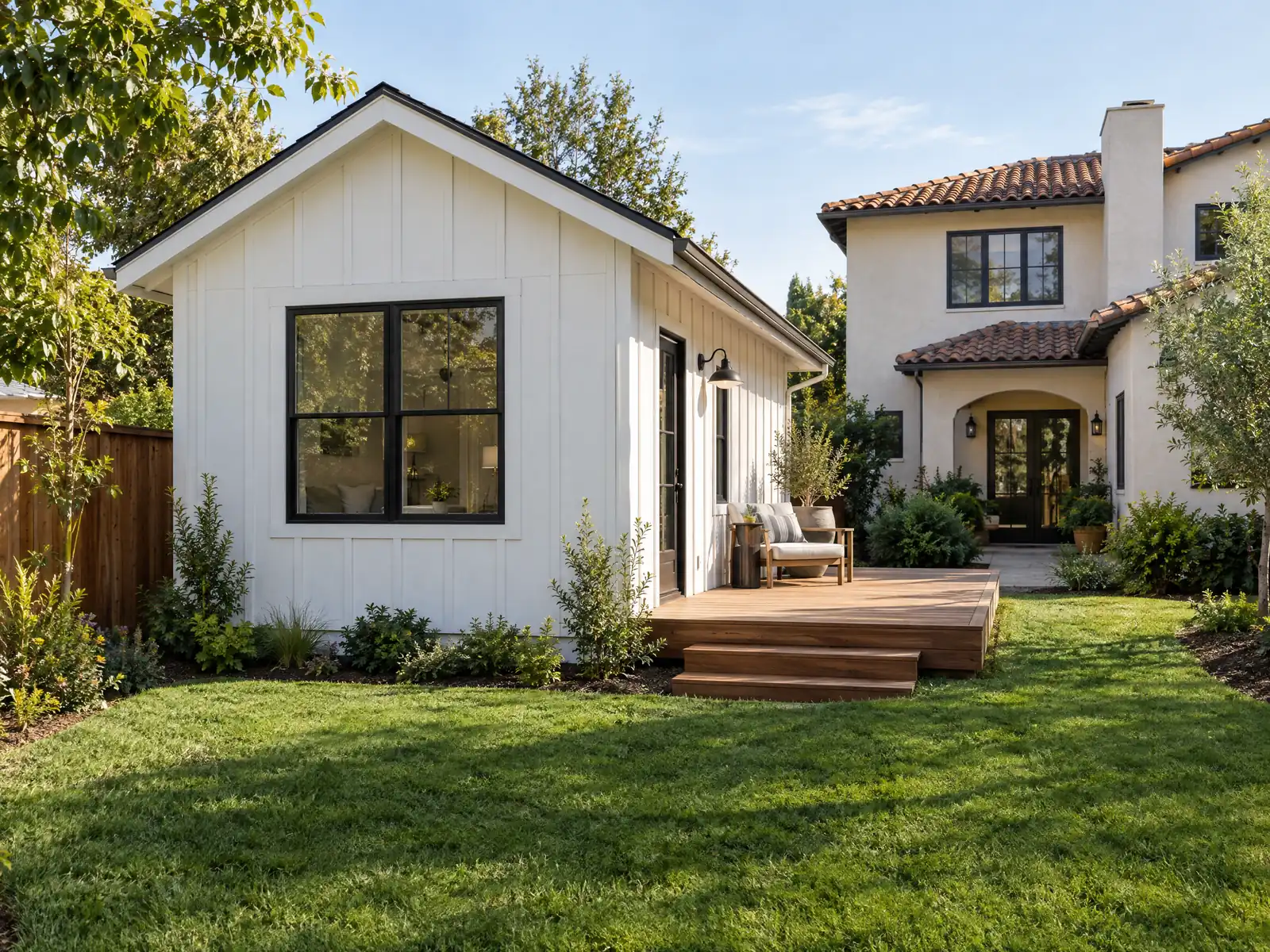
Can I convert my garage into an ADU in Los Angeles?
Yes, in most cases. Under Government Code 66323, a city must approve a building permit for an ADU, a JADU, or both, created inside an existing house or an accessory structure such as a garage. The owner may add up to 150 sq ft, and only to give the unit its own entrance and exit. A converted structure needs no new setbacks (Government Code 66314).
Parking is the question we hear most. The city cannot require you to replace the garage spaces you convert, and it cannot require parking for the ADU itself when the unit sits inside an existing house or accessory structure (Government Code 66322).
Inside the City of Los Angeles, LADBS Information Bulletin P/BC 2026-150 (revised August 13, 2026) is the best public list of what a conversion's plans must show. It is written for existing detached structures, so we confirm how LADBS treats an attached garage before drawing. The items that surprise owners:
- Research into prior permits and the certificate of occupancy for the garage.
- A framed infill wall where the garage door was, with 2x4 studs at 16 inches on center.
- A separate bathroom with a toilet, a sink, and a tub or shower.
- A separate electrical panel and a separate water shut-off valve for the unit.
- A one-hour fire-rated wall if the garage is under 5 feet from the property line and not sprinklered (3 feet if sprinklered).
- Title 24 energy compliance, smoke alarms, and an egress door 3 feet wide by 6 feet 8 inches tall.
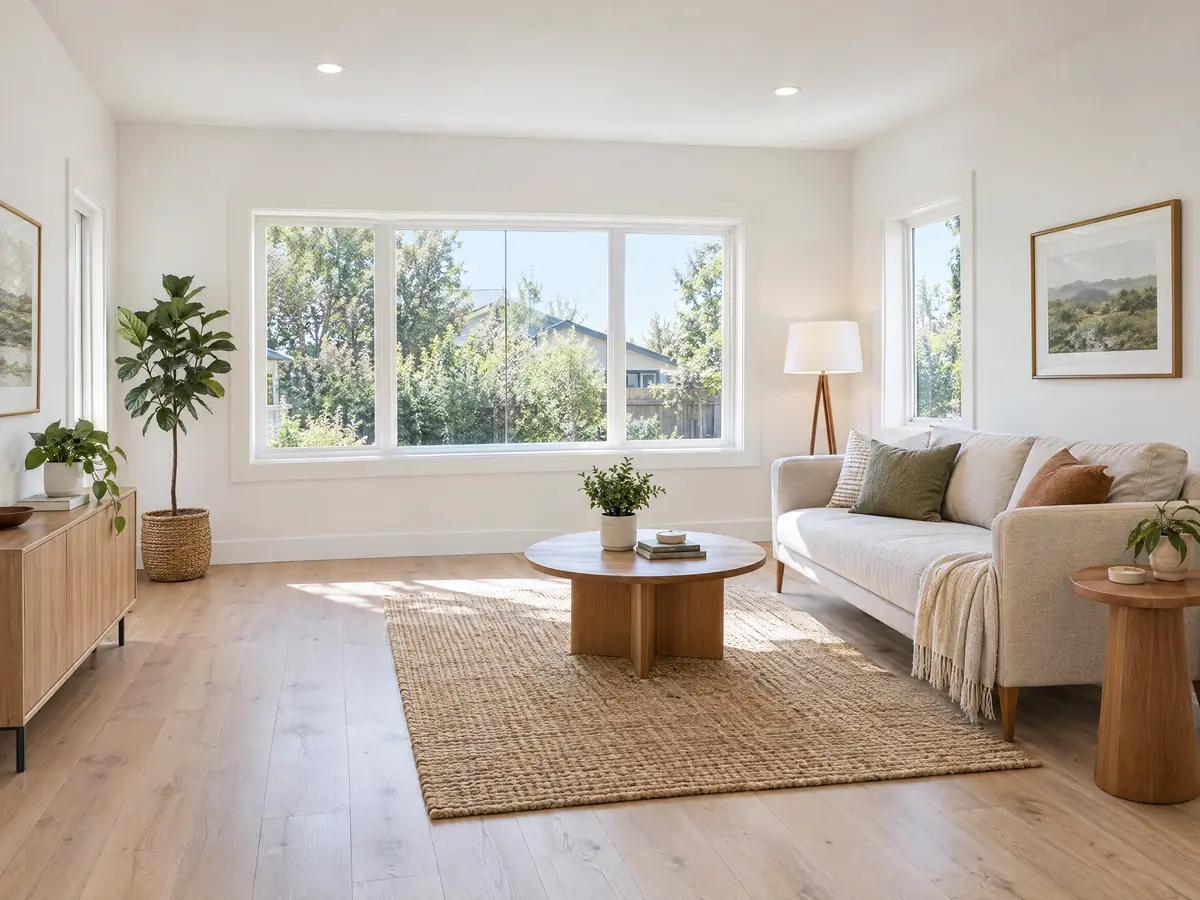
How big can a detached ADU be, and how does it differ from a JADU?
A new detached ADU can reach 1,200 sq ft (Government Code 66314). A city may not set its cap below 850 sq ft, or 1,000 sq ft with more than one bedroom, and it must still allow 800 sq ft with side and rear setbacks of 4 feet (Government Code 66321). Cities must allow at least 16 feet of height for a detached unit, 18 feet near major transit. The City of Los Angeles ordinance allows two stories for ordinance ADUs, while the 800 sq ft state-protected type keeps the lower height (ZA Memo 143).
A JADU is smaller and lives inside the house: up to 500 sq ft, with an efficiency kitchen, a separate entrance and a deed restriction. An attached garage counts as space inside the house. The owner must live on the property only if the JADU shares a bathroom with the main house (Government Code 66313, Government Code 66333). Section 66323 lets a lot combine a converted ADU, a JADU and one new detached unit up to 800 sq ft.
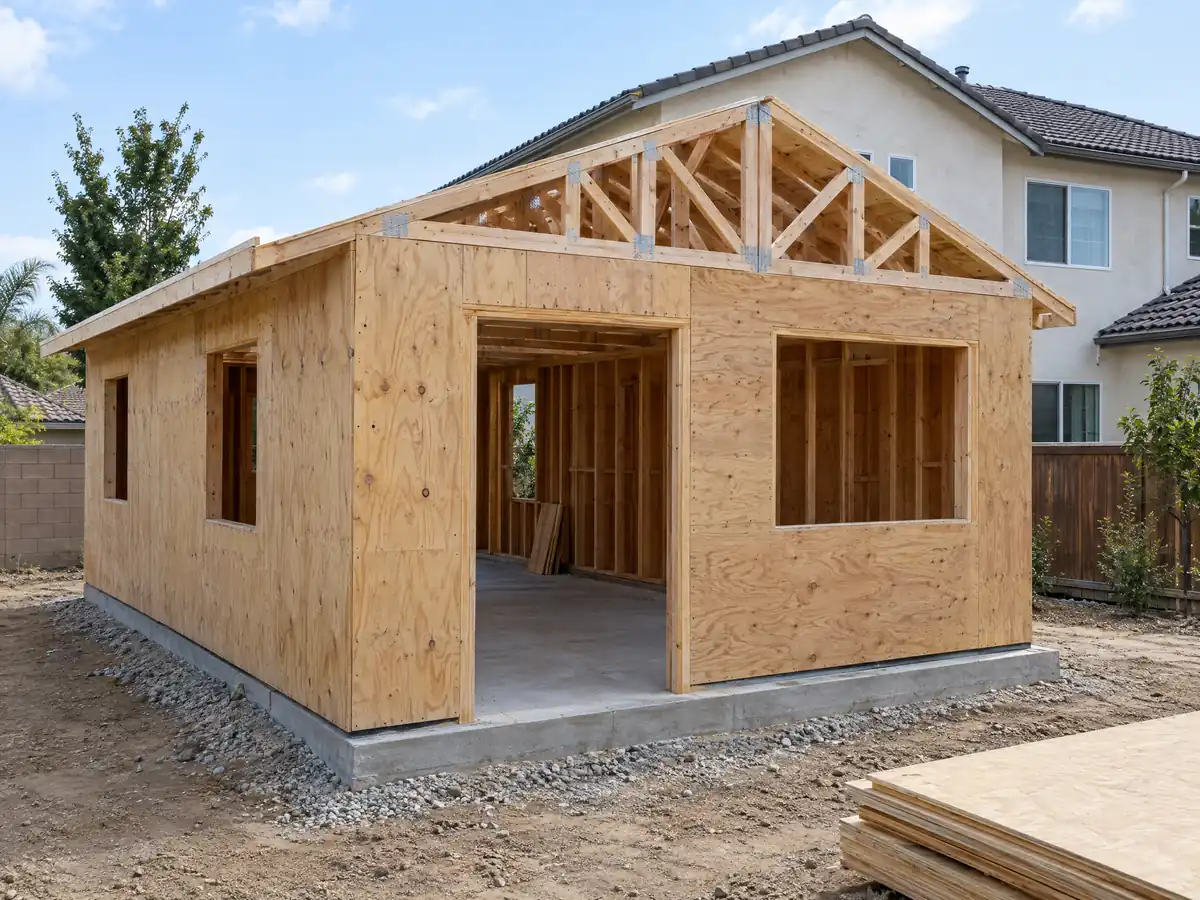
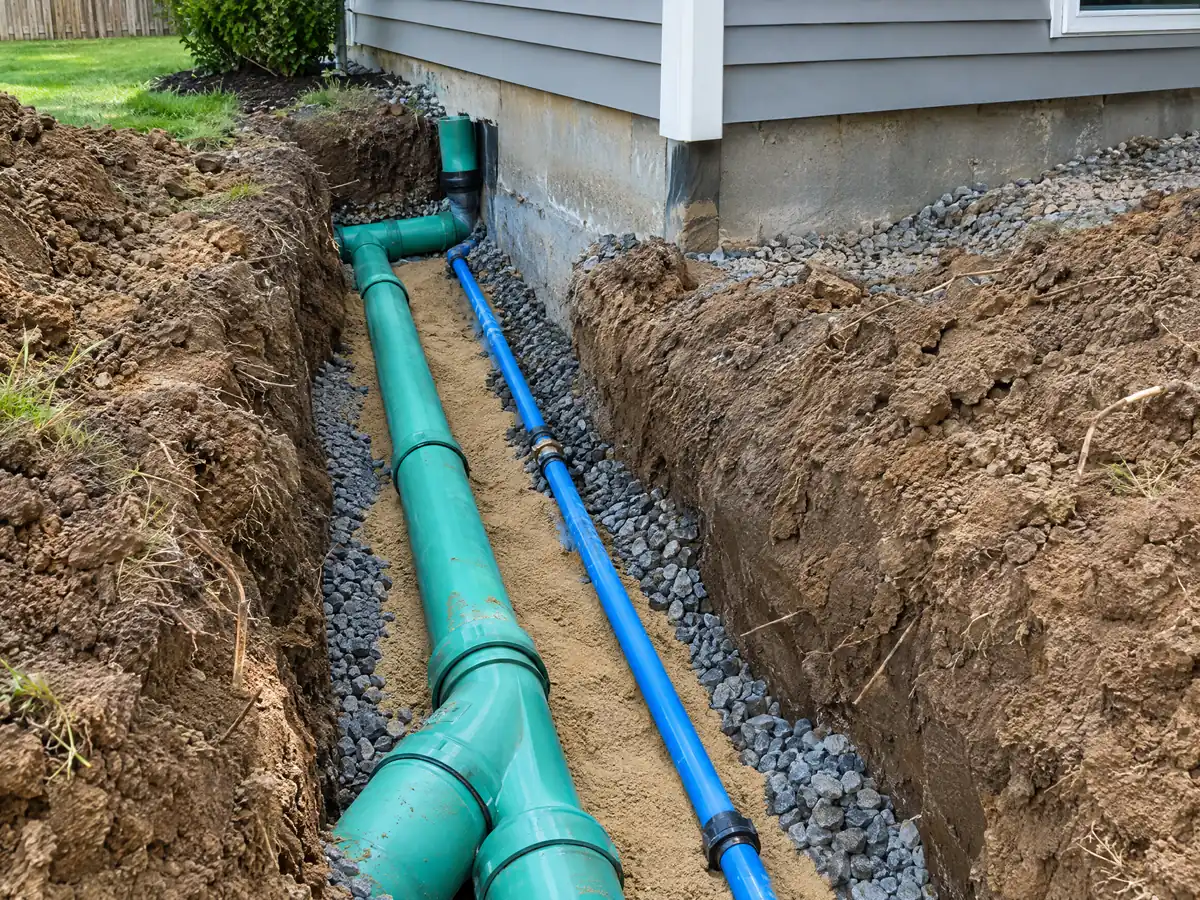
On site, a detached unit goes up in a set order: trenches for utilities, a slab or footings, wall framing and sheathing, roof trusses, then rough plumbing, electrical and mechanical work before insulation and drywall.
Newly built detached ADUs must carry solar panels under the Energy Code; conversions and additions do not (HCD ADU Handbook, page 39). Free pre-approved plans exist, but only in narrow cases: Los Angeles County offers three for unincorporated areas, and the City's Standard Plan Program has LADBS pre-check the code items while still reviewing zoning and the foundation for your site.
What changed in California ADU law in 2026?
SB 543 took effect on January 1, 2026. Under Government Code 66317, the city must tell you in writing within 15 business days whether your application is complete. After that it has 60 days to approve or deny a unit on a lot with an existing house, and if it does nothing, the permit is deemed approved. A denial must list every defect, and you can appeal in writing for a final answer within 60 business days.
Review is ministerial: no hearing and no vote. Only objective standards can be applied, such as height, setbacks and size, and no city may set a minimum lot size (Government Code 66314). There is no owner-occupancy requirement for ADUs, though a city may require rentals of 30 days or longer (Government Code 66315).
- Sprinklers: not required in the ADU if the main house does not need them, and the ADU cannot trigger them in the main house (Government Code 66314).
- Certificate of occupancy: the ADU's cannot be issued before the main house's, except in counties under an emergency declaration (Government Code 66328).
- Coastal zone: the coastal permit is decided within 60 days, at the same time as the building permit (Government Code 66329).
- Hillside fire zones: Los Angeles Municipal Code 12.22 A.33(c)(4) bars ordinance ADUs on lots that are both in a Very High Fire Hazard Severity Zone and a Hillside Area, but the City says it may not enforce that bar on the state-protected types. CAL FIRE's recommended 2025 maps may add parcels once the City adopts them, so we check the parcel first.
How does MDG Builders run an ADU project?
MDG is a licensed general contractor, CSLB #1040337. We design, permit and manage the job, while licensed subcontractors do the concrete, framing, plumbing, electrical and finish work. You can ask for each subcontractor's license and certificate of insurance.
- You call, we check the parcelBefore we talk price, we look up zoning, fire hazard zone, utility easements and the permit history for your address.
- Site visitWe measure the garage or yard, locate the panel, the water line and the sewer line, and note access for equipment.
- Written proposalThe contract follows Business and Professions Code 7159: license number, project description, start and completion dates, a down payment capped at $1,000 or 10 percent (whichever is less), and payments tied to completed work.
- Plans and permit submittalWe prepare the drawings and energy calculations and file them, which starts the 15-business-day and 60-day clocks.
- Scheduling subcontractorsEach licensed trade is booked against the permit schedule, and utility work is coordinated with the provider.
- Build and inspectionsWork is inspected at each stage, and any change to scope is priced in writing before it is done.
- Final inspection and walkthroughWe close out the permit, collect the certificate of occupancy and walk the unit with you.
What should the inside of a studio or one-bedroom ADU include?
Bedrooms drive three rules at once. The size cap a city must allow rises from 850 to 1,000 sq ft once the unit has more than one bedroom (Government Code 66321). Where parking is required at all, it is limited to one space per ADU or per bedroom, whichever is less (Government Code 66314). And a larger footprint pushes you past 750 sq ft, where impact fees begin.
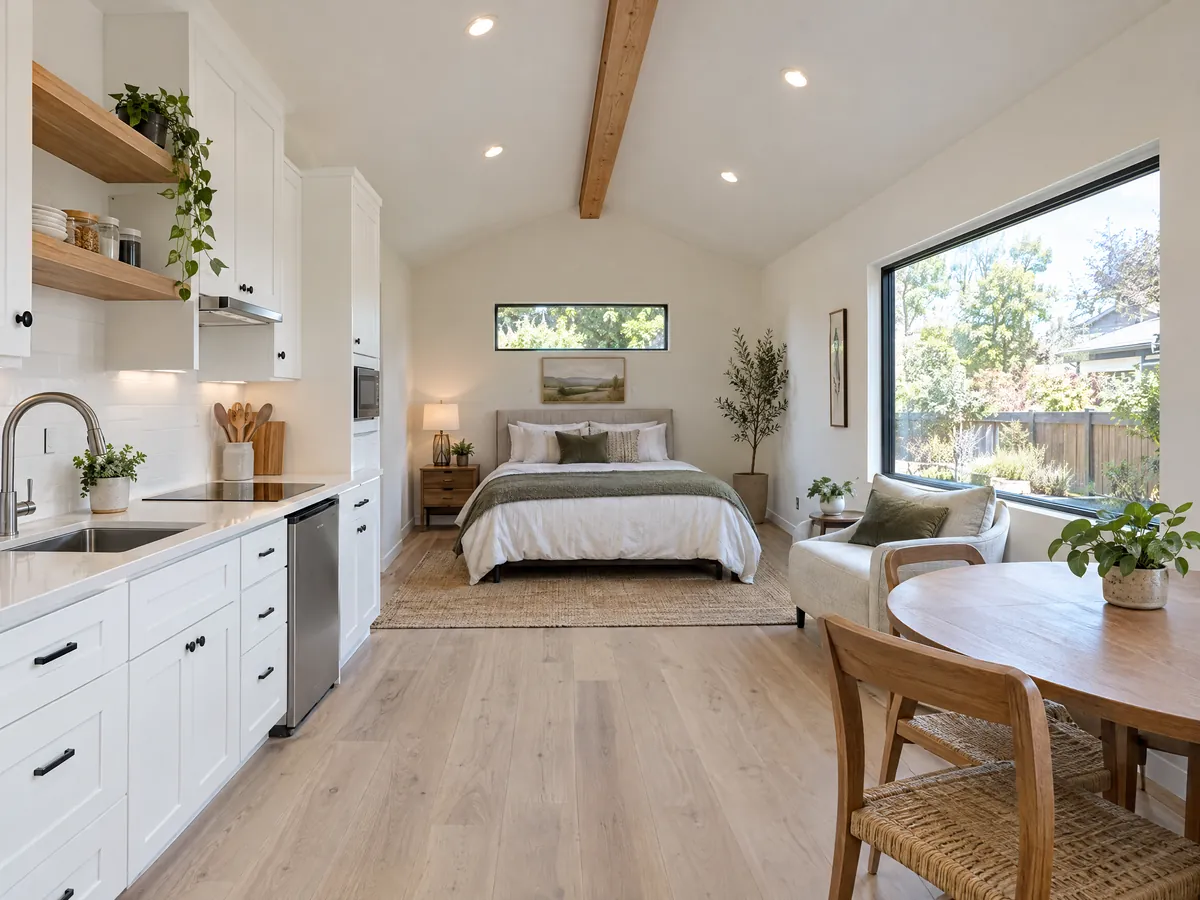
That is why most lots suit a studio or one bedroom under 750 sq ft: it stays under the fee line and fits the 800 sq ft state-protected detached type. Because cities must allow 16 feet of height on a detached unit, a vaulted ceiling with an exposed beam is usually possible, subject to your zone's height and setback standards.
We design each ADU as a complete separate home: its own entrance, bathroom, kitchen or kitchenette, smoke alarms and Title 24 energy compliance. A JADU is the exception, since the statute only requires an efficiency kitchen and allows a shared bathroom.
How much does it cost to build an ADU in Los Angeles?
Our working ranges come from independent studies dated 2018 to 2026, shown row by row below. Builder websites quote higher and rarely say how they got their numbers, so we left them out.
| What it covers | Typical range | What moves the price |
|---|---|---|
| Garage conversion to a studio or one bedroom | $100,000 to $200,000 | Slab and wall condition, new bathroom and kitchen, panel and sewer work, a fire-rated wall near the property line, finish level. |
| New detached ADU, 400 to 800 sq ft | $200,000 to $400,000 | Size, foundation, slope and soil, utility trench length, required solar panels, finishes. |
| UC Berkeley survey, Los Angeles County median, 2018 and 2019 projects | $100,000 overall; $90,000 garage; $180,000 detached | Owner-reported costs from 153 Los Angeles County responses. They predate the 2020s and carry some response bias, as the authors note. |
| Terner Center and Berkeley CCI, 2020 | $148,000 Los Angeles estimate; $167,000 statewide average | A 2020 estimate built from project data, before later cost increases. |
| Remodeling Cost vs. Value 2025, Los Angeles | $178,536 job cost | One reference unit whose size and specification are not published. Resale value was $71,300, so 39.9 percent of cost came back. |
| Electrical and plumbing, Angi Los Angeles, January 2026 | Electrical $2,600 to $7,800; plumbing $3,900 to $10,400 | General home project figures, not ADU-only. Utilities are part of the budget above, not added on top. |
| City permit and plan check fees | Not priced here | We could not verify the City's current fee amounts. Your proposal lists the actual fees for your address. |
How we got these numbers: the two top rows are MDG's reading of the sources below, not a quote. The UC Berkeley Center for Community Innovation survey (2021, funded by HCD) covers 2018 and 2019 projects; the Terner Center report is from 2020; Remodeling magazine's Cost vs. Value report is from September 2025 and covers Los Angeles; Angi's figures are from January 2026. Confidence is medium to low, because the survey data is older and the 2025 report uses a single reference unit. Your real price is the written MDG proposal for your lot.
How do water, sewer and power work for an ADU, and what fees apply?
Utilities are where budgets slip, because the work is underground and behind walls. A detached ADU needs a sewer connection, a water line, electrical service and sometimes gas, each trenched from the house or the street. Trench length, depth, soil and the distance to the main line decide the cost.
For a conversion, the City's bulletin calls for a separate electrical panel and water shut-off valve, plus LADWP approval if the structure is in or within 10 feet of a public utility easement. Whether your service can carry a second unit comes from a load calculation, not a rule of thumb. Angi's Los Angeles page (January 2026) lists electrical work at $2,600 to $7,800 and plumbing at $3,900 to $10,400, for home projects in general.
On fees, Government Code 66311.5 bars impact fees on an ADU of 750 sq ft or less (500 sq ft for a JADU). Above 750 sq ft, fees must be proportional to the main house's size. That exemption does not cover utility connection and capacity charges, but an ADU converted from existing space cannot be forced to take a new utility connection or pay a related fee. ZA Memo 143 names the City fees that touch ADUs (the Residential Development Fee and the Dwelling Unit Construction Tax), exempts ADUs from park fees and the Affordable Housing Linkage Fee, and says LAUSD school fees apply above 500 sq ft.
How long does it take to build an ADU in Los Angeles?
The permit clocks are set by statute. The design and construction ranges are MDG's planning estimates, not independent data, and your written proposal states actual start and completion dates.
- 4 to 10 weeksDesign and plansFloor plan, structural sheets and Title 24 calculations. A conversion needs fewer sheets than a detached unit.
- 15 business daysCompleteness checkThe city's deadline to tell you in writing whether the application is complete.
- 60 daysCity decisionFrom a complete application on a lot with a house. A correction round adds time, and an appeal gets a final answer within 60 business days.
- 2 to 6 weeksScheduling and site prepOrdering materials, booking subcontractors, and marking utilities before the first trench.
- 3 to 5 months for a garage; 5 to 9 months for a detached unitConstructionFoundation or slab, framing, roof, rough utilities, inspections, then finishes.
- 1 to 3 weeksFinal inspectionFinal inspections, certificate of occupancy and a punch-list walkthrough.
Can I rent or sell my ADU once it is finished?
You can rent it, and you do not have to live on the lot (Government Code 66315). A city may require tenancies of 30 days or longer. Los Angeles has separate home-sharing rules that are strict, so read the current ordinance before planning on nightly rentals.
An ADU generally cannot be sold apart from the house (Government Code 66314). There are two exceptions: a sale to a qualified low-income buyer through a qualifying nonprofit (Government Code 66341), and a city that has adopted a condominium ordinance (Government Code 66342).
For property tax, the State Board of Equalization says new construction is reassessed on the new portion only, at the market value it adds, not at what it cost to build.
ADU Construction by city
Projects that often go with ADU construction
Room Additions
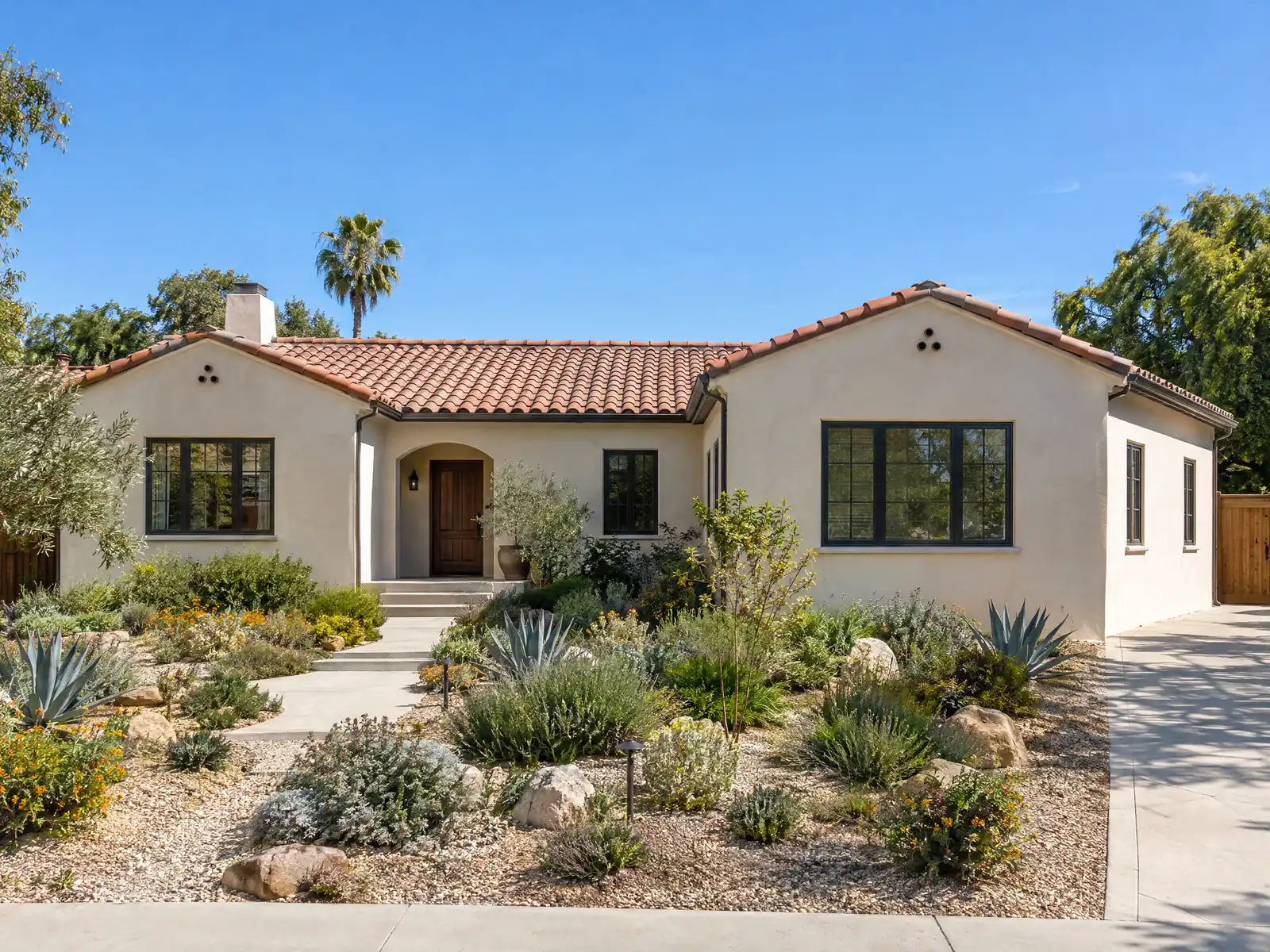
Family rooms, primary suites and second stories, from zoning check to final inspection, with sourced prices.
See room additions →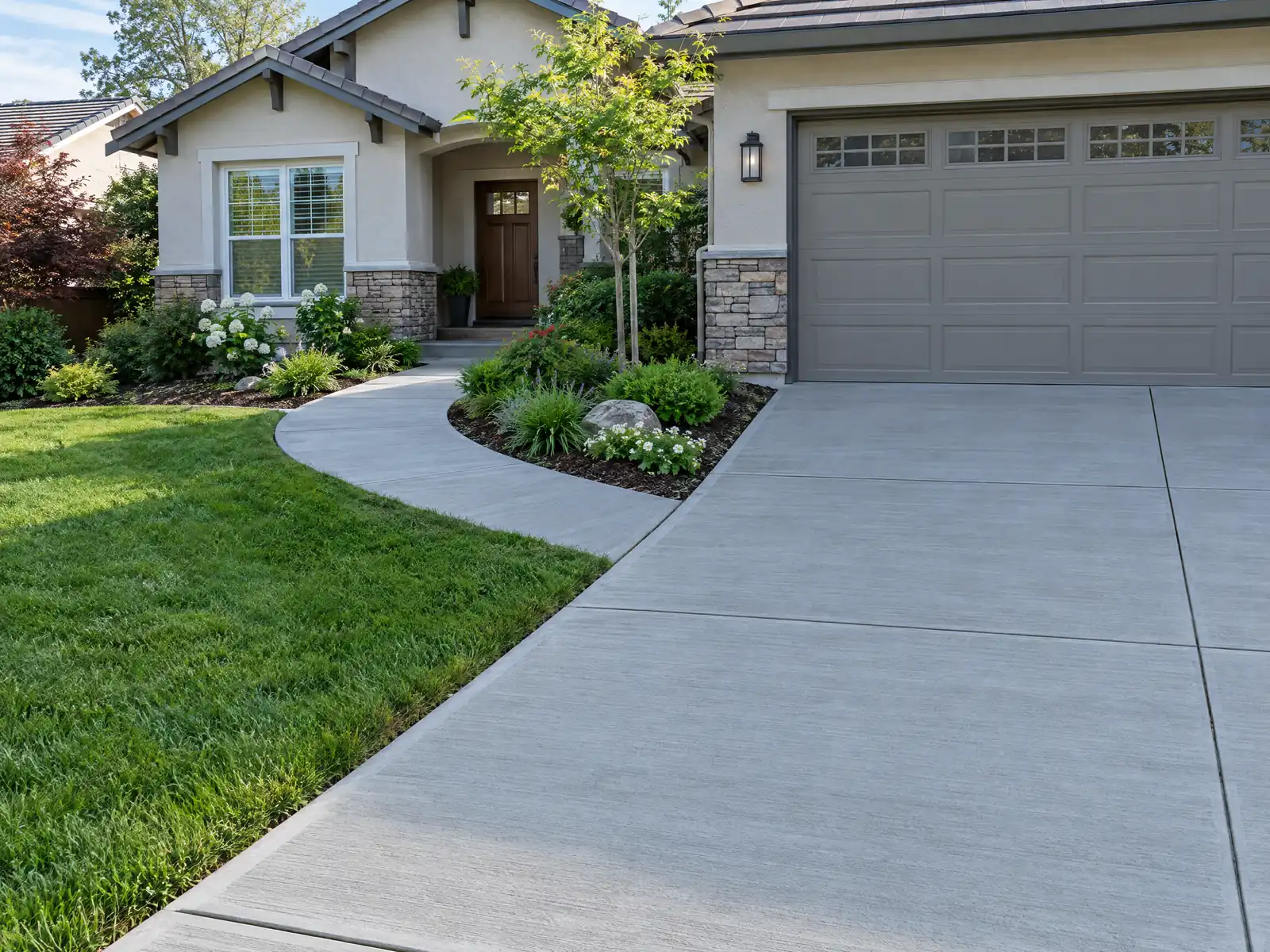
Concrete
Patios, driveways, walkways and retaining walls, poured by licensed specialists and priced from sources.
See concrete work →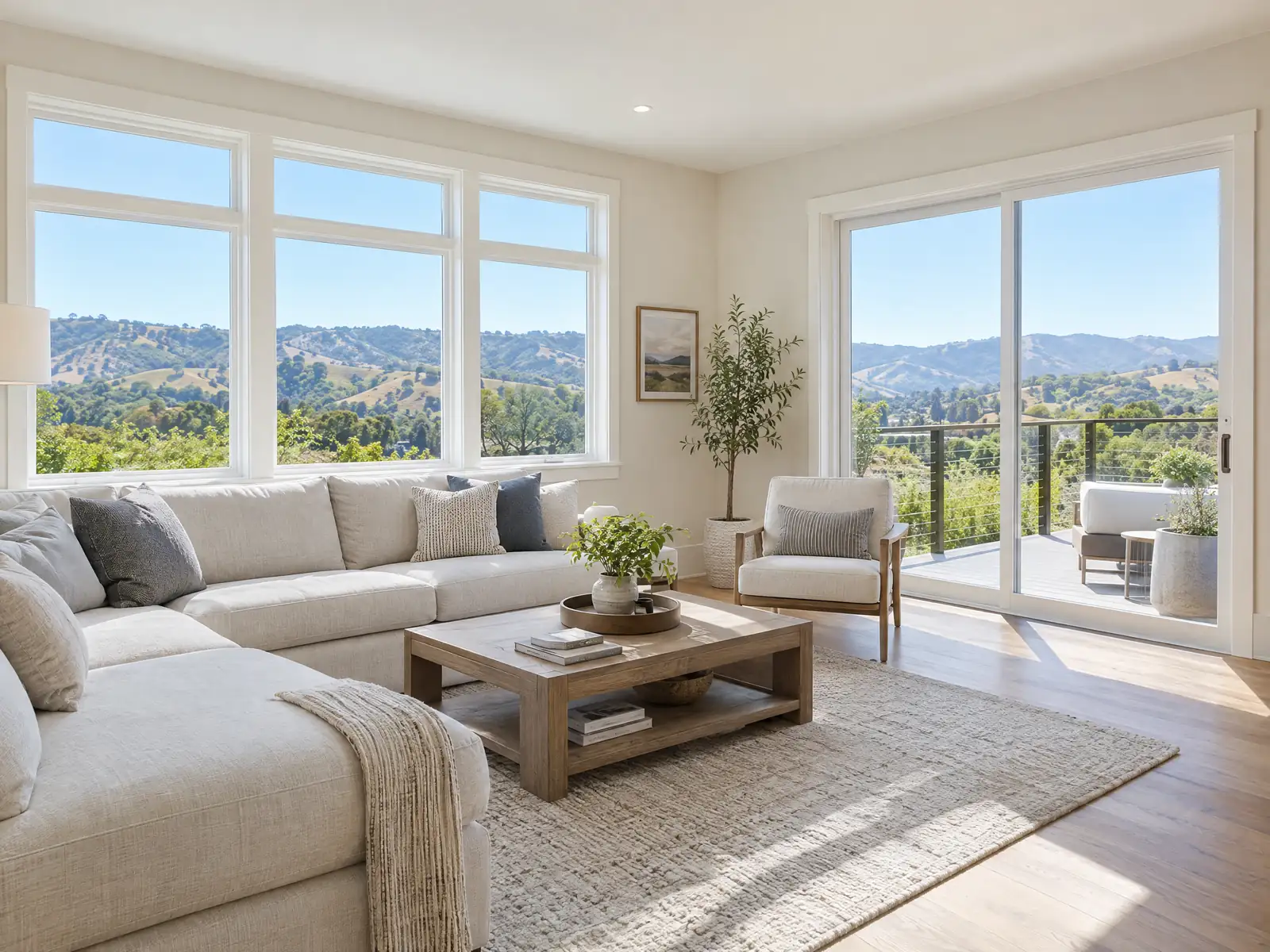
Windows
Replacement windows and sliding doors, with the LADBS permit path, glass ratings and sourced prices explained.
See window replacement →ADU Construction guides and answers
How Much Does an ADU Cost in California?
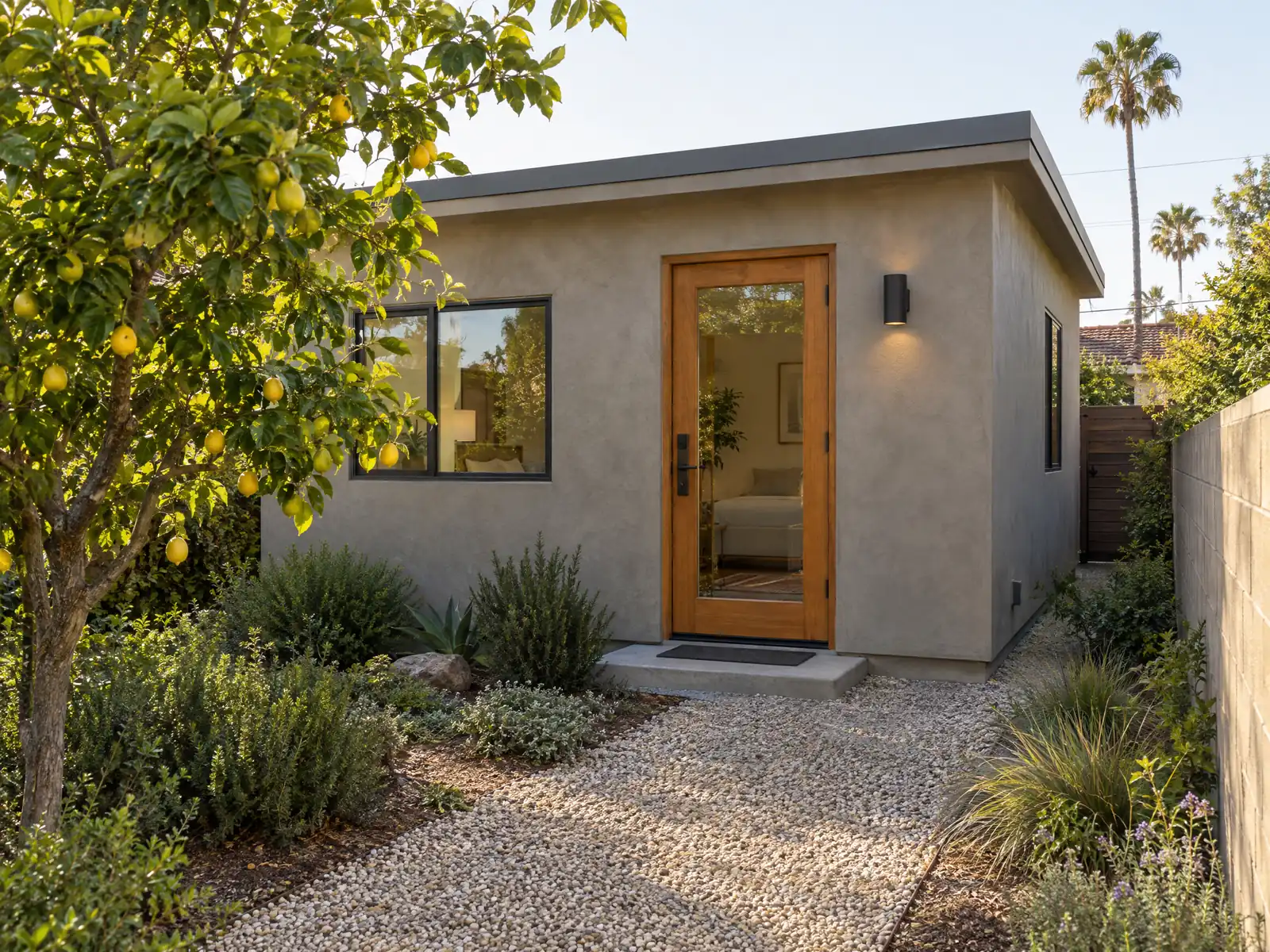
Sourced 2026 ranges for garage conversions and detached ADUs in Los Angeles, and how old the survey numbers are.
Read the guide →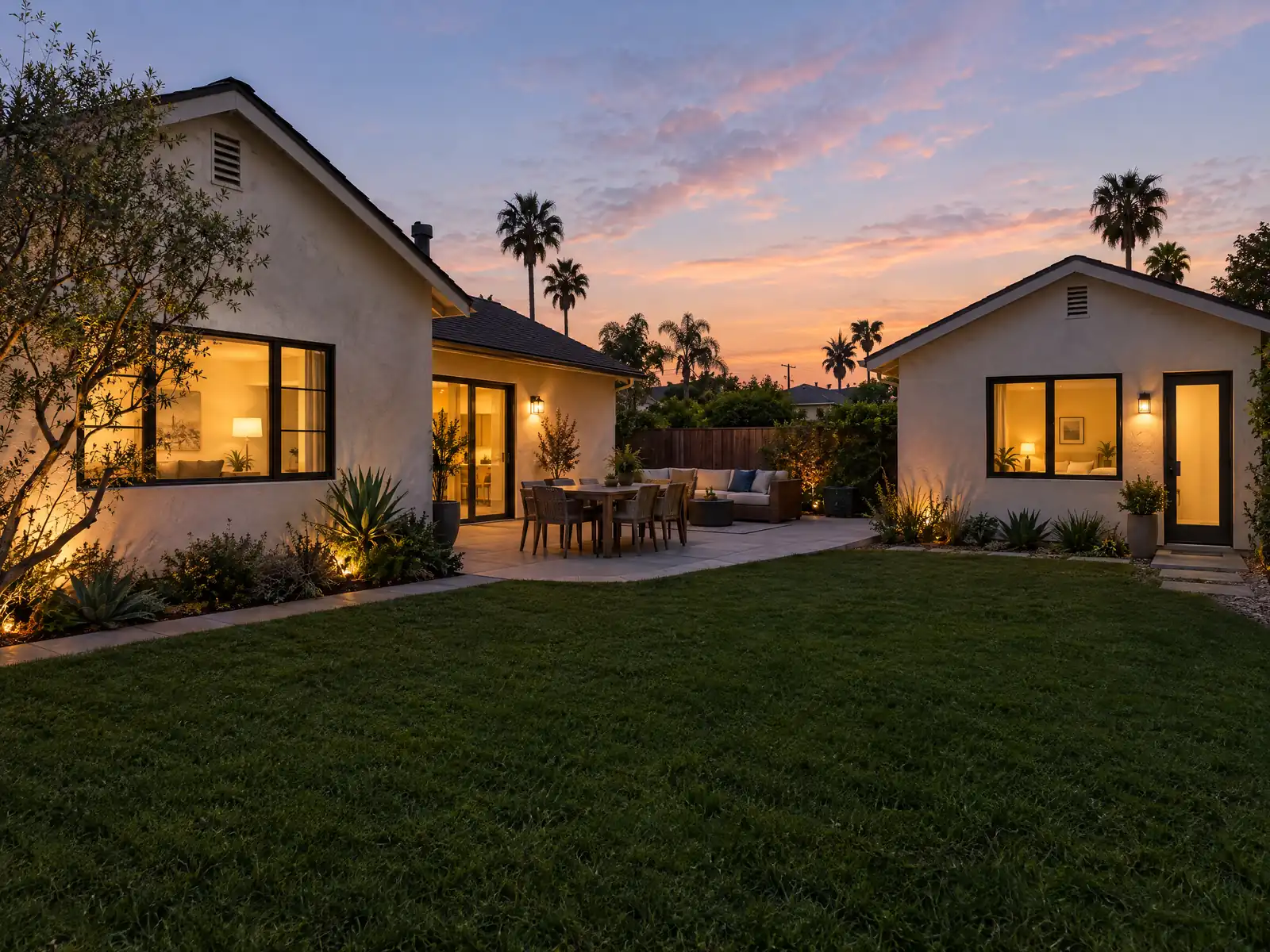
ADU vs JADU in California: What Is the Difference?
Size, kitchen, owner occupancy, rent rules and parking: how a junior ADU differs from a full ADU under current state law.
Read the guide →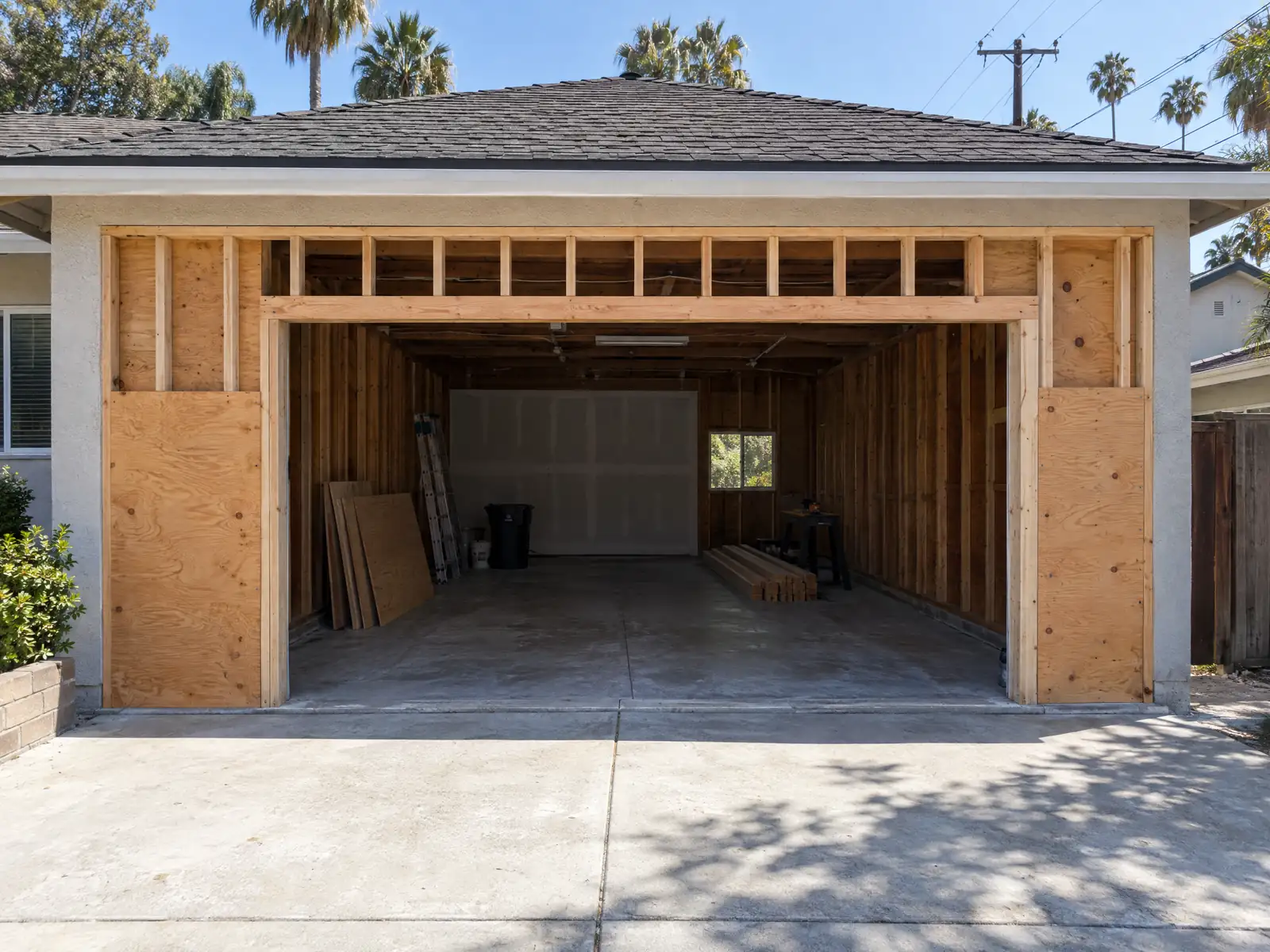
Garage Conversion Permit Steps in Los Angeles
The permit path for turning a Los Angeles garage into an ADU, with the LADBS conversion checklist and the state deadlines.
Read the guide →ADU questions Los Angeles homeowners ask
What is the difference between an ADU and a JADU?
An ADU is a complete second dwelling, up to 1,200 sq ft if detached, while a JADU is capped at 500 sq ft and must sit inside the single-family house. A JADU needs only an efficiency kitchen and can share a bathroom, in which case the owner must live on the property.
Do I have to replace the parking when I convert my garage?
No. A city cannot require replacement parking when a garage, carport or covered space is converted or demolished for an ADU (Government Code 66314 and 66322). Your zoning may still limit how the driveway is used, so we check that during the parcel review.
How long does it take to get an ADU permit in Los Angeles?
By statute, the city has 15 business days to call your application complete and 60 days after that to decide, or it is deemed approved (Government Code 66317). No independent source tracks how long LADBS actually takes, so we do not quote a number.
How much does it cost to build an ADU in Los Angeles County?
Our sourced working ranges are $100,000 to $200,000 for a garage conversion and $200,000 to $400,000 for a detached unit. The cost table lists each study, its year and its limits. Your price is the written proposal.
How big can an ADU be in California?
A detached ADU can be up to 1,200 sq ft, and an attached one up to 50 percent of the existing house (Government Code 66314). A city must allow at least 850 sq ft, or 1,000 sq ft with more than one bedroom, and 800 sq ft with 4-foot setbacks (66321).
Can I build more than one ADU on my property?
Yes, on a single-family lot you can combine a converted ADU, a JADU and one new detached ADU of up to 800 sq ft with 4-foot side and rear setbacks (Government Code 66323). A lot with an existing multifamily building can add up to eight detached units, not exceeding the existing unit count.
Can my HOA stop me from building an ADU?
Not outright. The HCD ADU Handbook explains that Civil Code 714.3 and 4751 void HOA rules that effectively prohibit or unreasonably restrict an ADU or JADU on a single-family lot. Since June 2025 (AB 130), reasonable HOA rules also cannot include fees or financial requirements.
Can I legalize an unpermitted garage conversion?
Often yes. For a unit built before January 1, 2020, a city cannot deny a permit over building-code violations unless correction is needed to remove a health and safety hazard (Government Code 66311.7). LADBS describes its path in Information Bulletin P/BC 2026-161.
Can you finance an ADU in California?
Yes. According to the HCD ADU Handbook, FHA, Freddie Mac and Fannie Mae loans can count ADU rental income, and FHA 203(k) renovation loans work only for an attached ADU. The CalHFA ADU Grant of up to $40,000 had run out of funds when the handbook was written.
Does an ADU need a new electrical panel or separate meters?
A converted unit in the City of Los Angeles needs its own electrical panel and water shut-off valve under LADBS Information Bulletin P/BC 2026-150. Separate utility meters depend on the provider. A converted unit cannot be forced into a new connection (Government Code 66311.5).
Tell us about your lot
Send the address and what you have in mind. We check zoning, fire zone and permit history, then write back with next steps.