
Concretein Los Angeles and Southern California
Plain concrete patios, walks and slabs of 300 square feet or more cost about $8 to $14 per square foot installed in Los Angeles, decorative finishes $15 to $30, and driveway replacement $9 to $20 with demolition. Retaining walls over 4 feet, or carrying extra load, need a permit. MDG Builders (CSLB #1040337) manages licensed concrete subcontractors.
How much does a concrete patio cost per square foot in Los Angeles?
Plain concrete patios, walks and slabs of 300 square feet or more run about $8 to $14 per square foot installed in Los Angeles. Decorative finishes and driveway replacement cost more, and retaining walls are priced from the site.
| What it covers | Typical range | What moves the price |
|---|---|---|
| Patio, walkway or slab, broom finish, 300 sq ft or more | $8 to $14 per square foot | Base depth, reinforcement, forms, access, drainage |
| Decorative: stained, stamped or exposed aggregate | $15 to $30 per square foot | Pattern, color, sealer, joints |
| Driveway replacement, with demolition of the old slab | $9 to $20 per square foot | Thickness, haul-off, grading, approach at the curb |
| 20 by 20 foot plain patio (400 sq ft) | About $3,200 to $5,600 | Our arithmetic from the plain range |
| 20 by 20 foot decorative patio (400 sq ft) | About $6,000 to $12,000 | Our arithmetic from the decorative range |
| Small jobs under 300 sq ft | Usually above the per-foot range | Contractors apply minimum charges |
| Retaining walls | Set by the written proposal | No per-foot price published. Height, drainage, footing, steel and engineering drive it |
How we got these numbers: Angi's Los Angeles pages for concrete patios (August 2026), stamped patios (July 2026) and driveways (May 2026), HomeGuide's patio guide (July 2025) and the Concrete Network's patio cost page (January 2026, national, no regional adjustment). Published sources start lower for the simplest plain slab: Angi $4 to $13 per square foot, HomeGuide $4 to $12, Concrete Network $5 to $8. We print the higher working range because it is aimed at a finished patio or walk of 300 square feet or more, and small jobs price above per-foot averages. Confidence is medium for plain flatwork and medium-low for decorative work. As a labor check, the Bureau of Labor Statistics put the mean wage of cement masons in the Los Angeles area at $33.67 an hour in May 2025. MDG's written estimate for your site is the real price.
- Angi, Los Angeles concrete patio (2026)
- Angi, Los Angeles stamped patio (2026)
- Angi, Los Angeles concrete driveway (2026)
- HomeGuide concrete patio cost (2025)
- Concrete Network patio cost (2026)
- BLS wages, cement masons (2025)
- 2022 California Building Code 105.2 (2022)
- CSLB C-8 Concrete (current)
- CSLB C-29 Masonry (current)
- Business and Professions Code 7048 (2026)
What happens before concrete is poured?
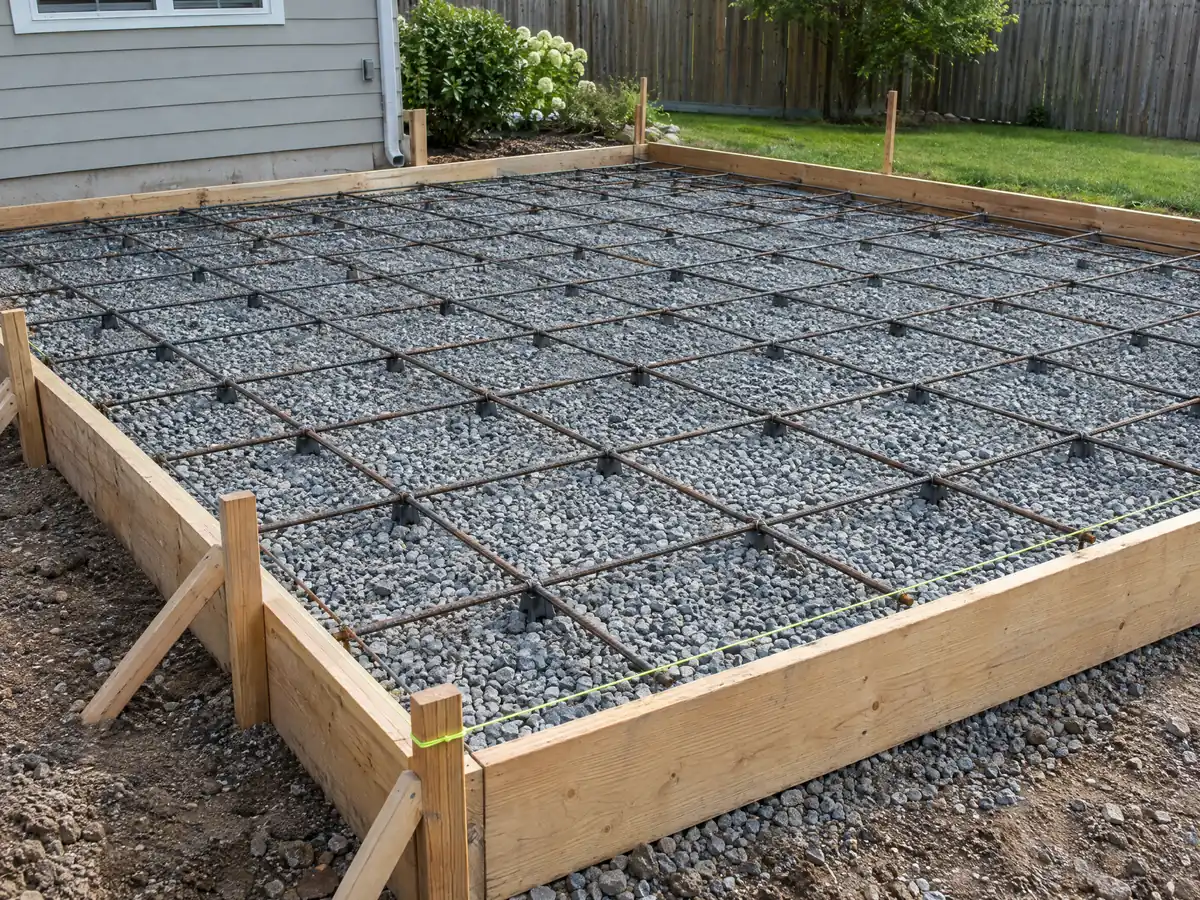
The pour is the shortest part of the job. Before it, the crew sets the grade so water runs away from the house, compacts a gravel base, builds wood forms, lays a rebar grid on supports and stretches string lines to hold the slope. The photo shows that stage, with forms, rebar and gravel ready and no concrete yet.
Four inches is the common thickness for patios and walks. That figure is trade practice rather than a section of the building code, so a good proposal states the thickness, base depth and reinforcement for your job in writing. A slab that carries cars is a different specification from one that carries chairs.
Anything that must sit under the slab goes in first: irrigation sleeves, conduit for lighting, a drain line. Cutting through cured concrete later costs more than placing a sleeve now.
Is stamped concrete cheaper than pavers?
Published sources do not agree, so do not trust a blanket answer. One trade publisher's cost page calls stamped concrete the most expensive option and also says it is one-third less than other materials. We found no independent Los Angeles price for pavers, so compare two written quotes for the same square footage, base and edge.
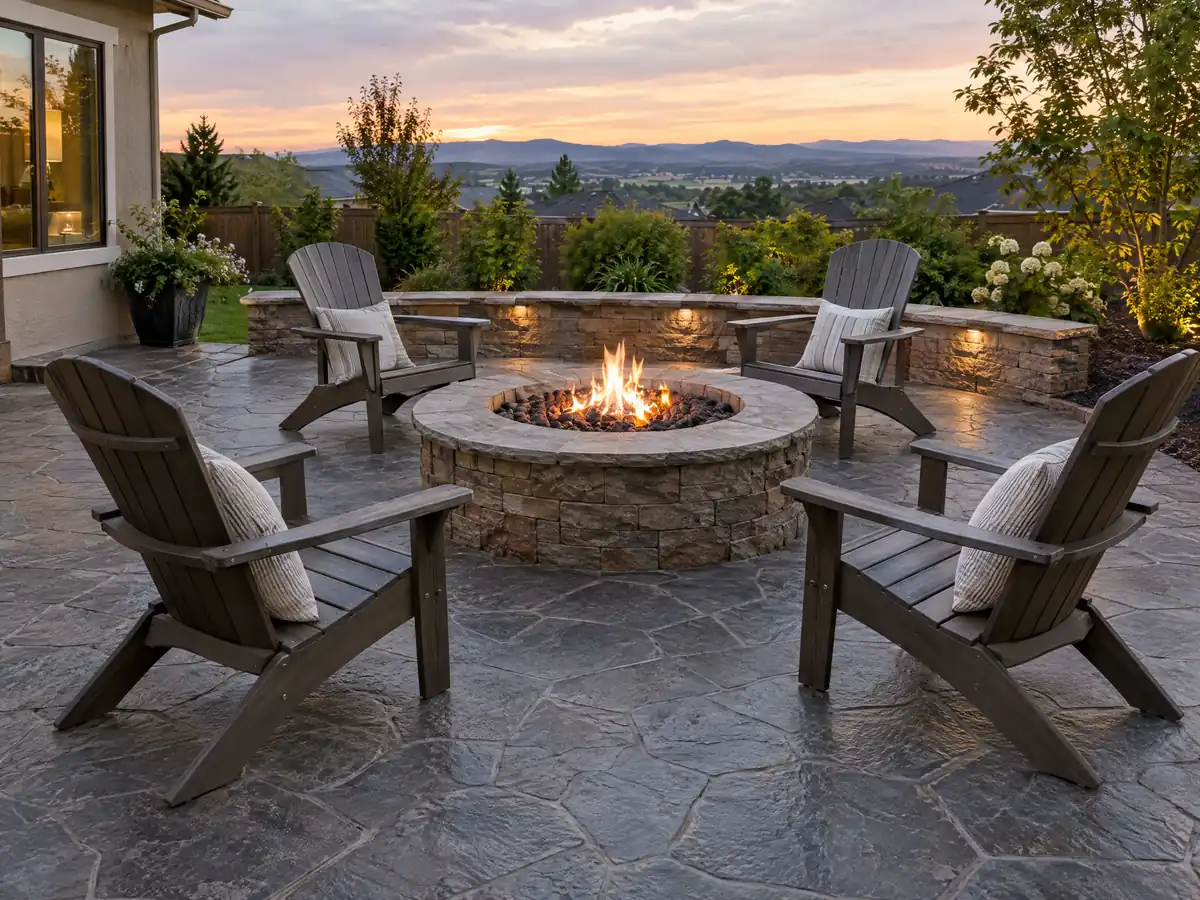
Stamped concrete is still concrete. It can crack, and because color and pattern sit on the surface, a repair shows more than it would on plain broom-finished concrete. The slate pattern in the photo needs the same planned joints as any other pour, usually hidden in the pattern lines.
Do I need a permit to pour a patio or driveway in Los Angeles?
It depends on what you are pouring and where. The 2022 California Building Code exempts sidewalks and driveways not more than 30 inches above adjacent grade, not over a basement or story below and not part of an accessible route. A patio slab on grade is not named in that list, so ask LADBS or your city whether a private ground-level patio needs a permit.
Work in the public right of way, such as a driveway approach, curb ramp or sidewalk, is permitted separately from the slab on your lot. Ask your city's public works or engineering office before anyone demolishes anything at the curb.
License rules matter at this size. Business and Professions Code 7048 requires a license for work of $1,000 or more or whenever a permit is required. CSLB describes the C-8 concrete class as forming, pouring, placing, finishing and installing mass, pavement, flat and other concrete work. MDG Builders manages the job under CSLB #1040337, and a licensed concrete subcontractor does the pour.
How tall can a retaining wall be without a permit in California?
The 2022 California Building Code exempts a retaining wall of 4 feet or less, measured from the bottom of the footing to the top of the wall, unless it supports a surcharge: extra load above the wall, such as a slope, a driveway or a building. A taller wall, or any wall with a surcharge, should be treated as permit-required and designed by an engineer.
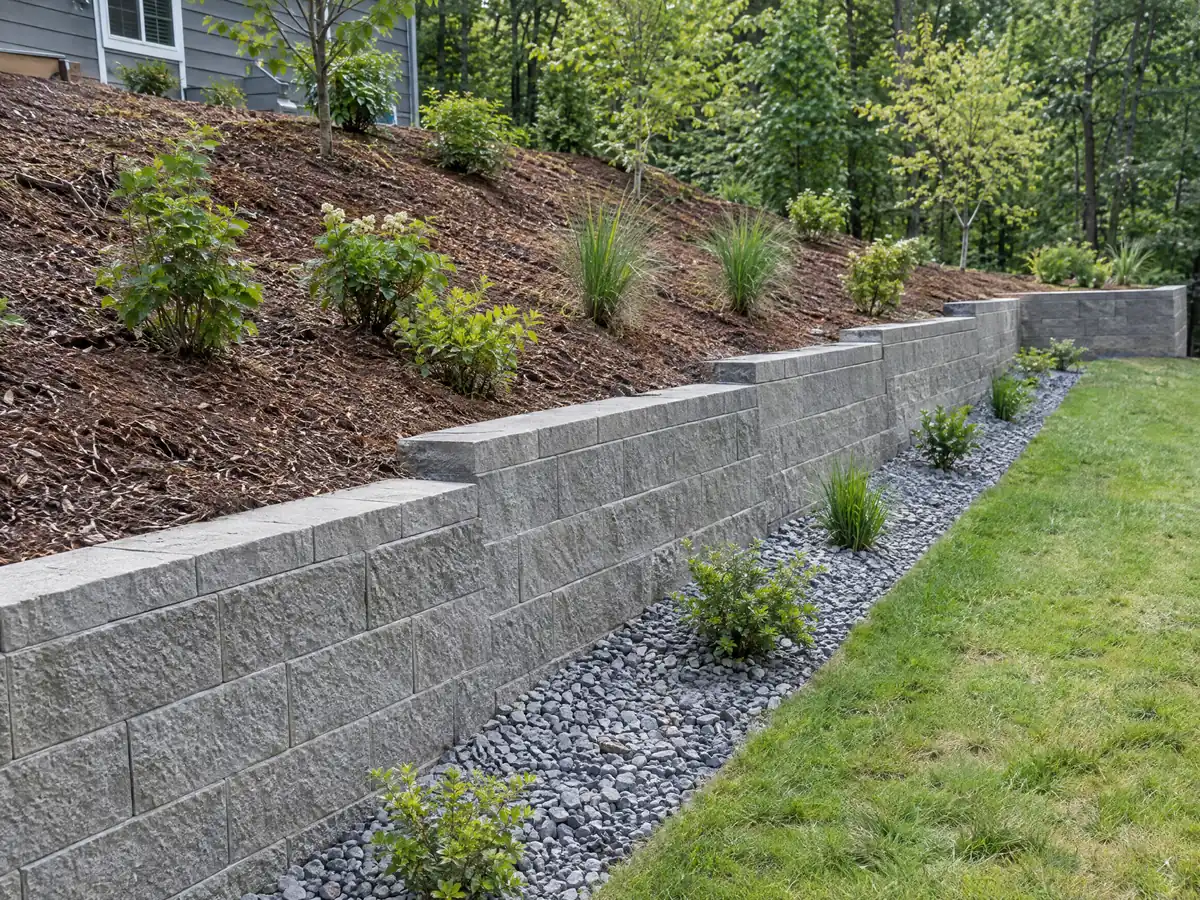
Water is the real enemy of a retaining wall, which is why the photo shows a gravel drainage strip behind the new block wall. A wall holds back soil and whatever water the soil carries, so drainage is a design item, not an extra.
CSLB's C-29 masonry class covers concrete block for load-bearing and non-load-bearing walls for structures and fences, while C-8 covers forming and pouring concrete. Which class a wall needs depends on how it is built, so ask the contractor which license applies and check it.
We print no per-foot price for retaining walls. Height, length, footing, steel, drainage and engineering decide the cost, and on a hillside lot the review LADBS requires depends on the address. The written proposal sets the price.
How does a concrete job run from estimate to cleanup?
MDG Builders sells and manages the work, and a licensed concrete contractor performs it. Ask for that contractor's license number and certificate of insurance, and check the license on the CSLB site.
- Call and sketchCall (888) 666-8224 or use the contact page. Tell us what you want poured, the rough size, the finish and what is there now.
- Site visitWe measure the area, check slope and drainage, see how a truck or pump reaches the site, and note anything to remove.
- Written estimateDemolition, base, reinforcement, thickness, finish, joints, permits and haul-off are separate lines. The law limits the down payment to $1,000 or 10 percent, whichever is less (Business and Professions Code 7159.5).
- Permits and the curbWe confirm whether the work needs a permit and whether any part touches the public right of way. For a slab inside a larger project, see garage conversion permit steps in Los Angeles.
- Forms, steel and pourThe subcontractor sets forms and rebar, we inspect them with you, and the pour is scheduled for a dry day.
- Cure, seal and walkthroughWe check joints and edges and confirm in writing when foot and vehicle traffic are allowed.
Why does concrete crack, and do control joints stop it?
Control joints do not stop cracking; they decide where it happens. A joint is a planned weak line, saw-cut or tooled into the slab, so that shrinkage cracks follow it instead of wandering across the surface. Panels are normally laid out roughly square, with joints that line up with corners. This is trade practice rather than a code section.
Slabs also crack when soil settles or moves, when the base was not compacted, when the mix dries too fast, or when reinforcement was left out. Hairline cracks along joint lines are common. A crack where one side sits higher than the other is the kind to have looked at.
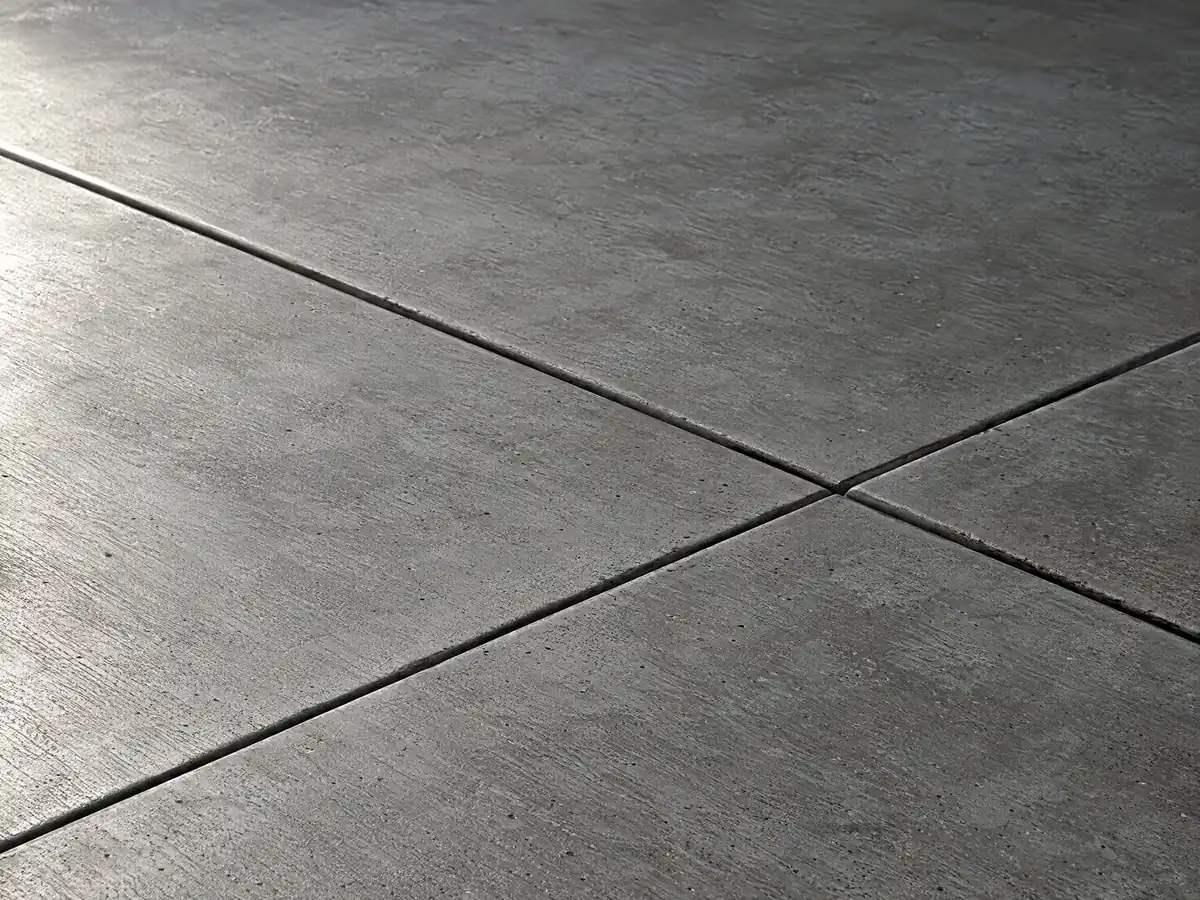
No honest contractor promises a slab will never crack, and your proposal should say what happens if one does. The trowel-finished slab in the photo shows saw cuts at regular spacing, which is what planned joints look like.
How long does a concrete job take, and when can I walk or park on it?
Walkable, drivable and fully cured are three different milestones, and weather moves all of them. The crew should give you each date in writing before the pour.
- Set by the agencyPermits and approvalsWalls above 4 feet and work at the curb need approval first. A private patio may not, so we ask before pricing.
- Before forms go inDemolition and gradingOld concrete is broken out and hauled away, then the soil is graded so water leaves the slab.
- Ready before the truck arrivesBase, forms and rebarGravel is compacted, forms are set, and rebar sits on supports so it ends up in the middle of the slab.
- Usually one day for a patioPour and finishConcrete is placed, leveled, finished and edged. The crew reschedules if rain threatens a fresh surface.
- Mix and weather decideJoints and cureSaw cuts go in once the slab can take them. Keep foot and vehicle traffic off until the crew says otherwise.
- After the surface has curedSealing and cleanupSealer goes on decorative surfaces, forms come out, and we walk the site with you.
Which walkway finish is best: broom, exposed aggregate or stained?
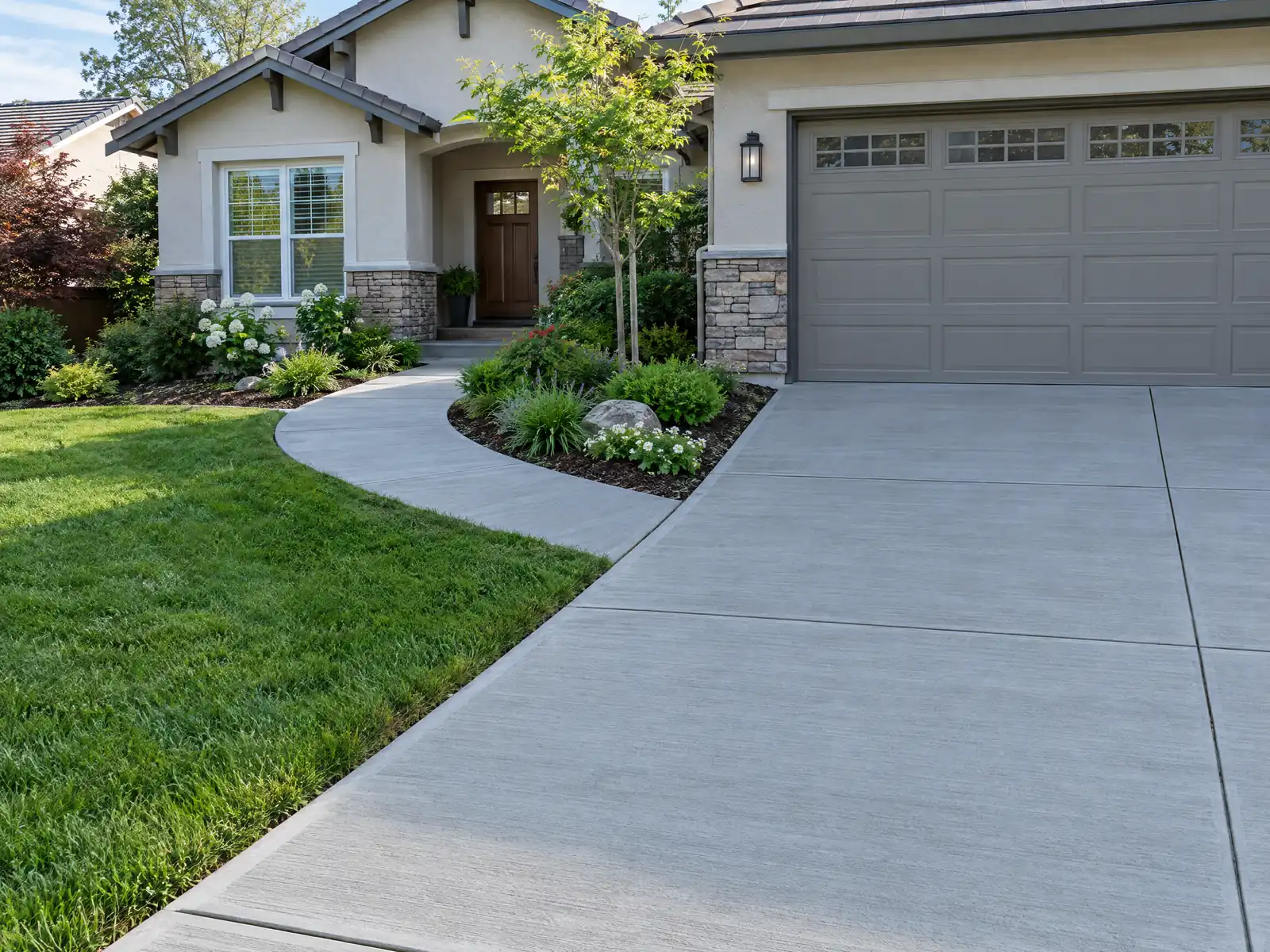
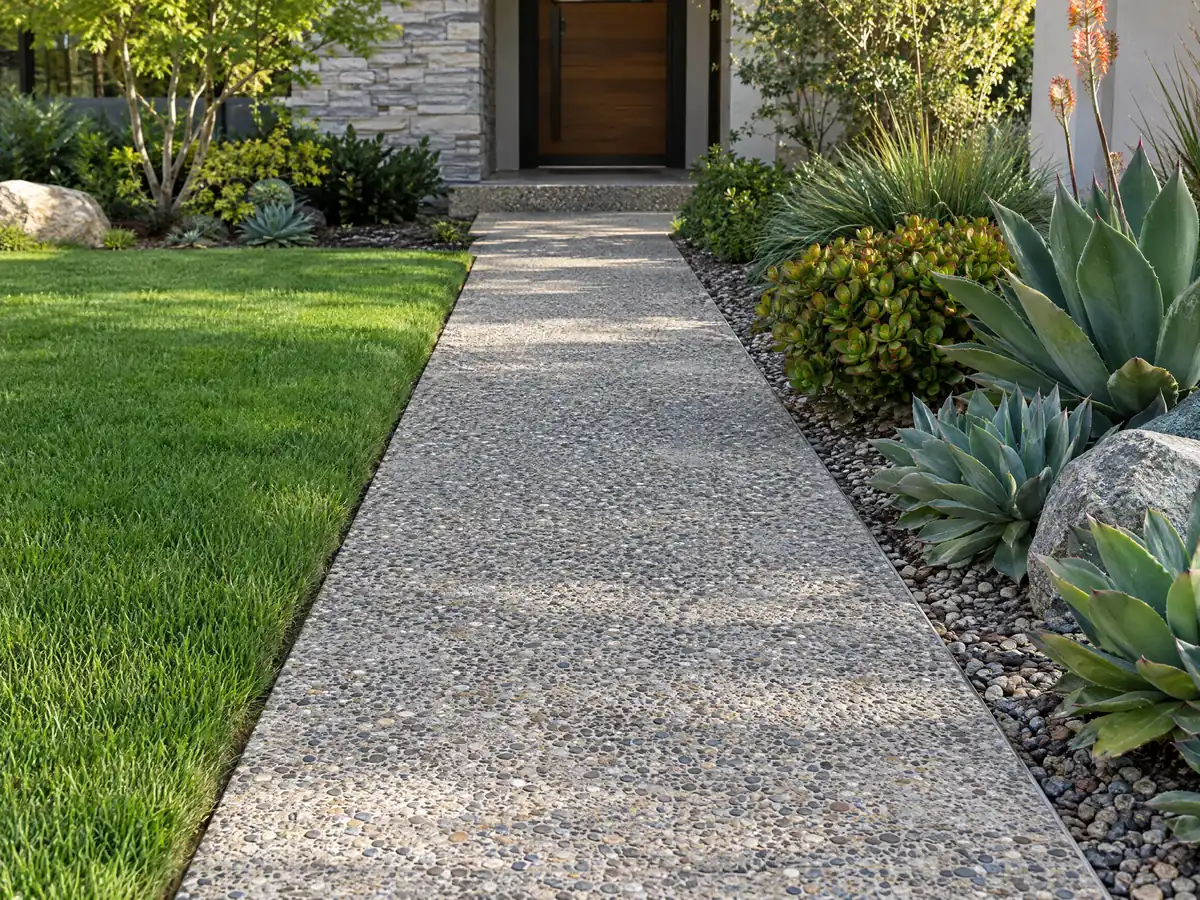
A broom finish is the standard for driveways, walks and most patios because the lines give traction and hide small marks, and it sits in the lowest price band in the table above. Exposed aggregate, like the walkway in the photo, washes the top layer of cement paste off to show the stone, and it falls in the decorative band.
Stained and stamped finishes change color and pattern, not strength. They sit on the surface, so ask what sealer is used and how often it must be renewed. A sealer protects color; it does not replace good joints.
Plan the edge as well as the surface: the neat edge against lawn in the photo comes from forms set straight. Decide where plants, lighting and irrigation go before the pour.
Concrete by city
Projects that often go with concrete work
Fencing
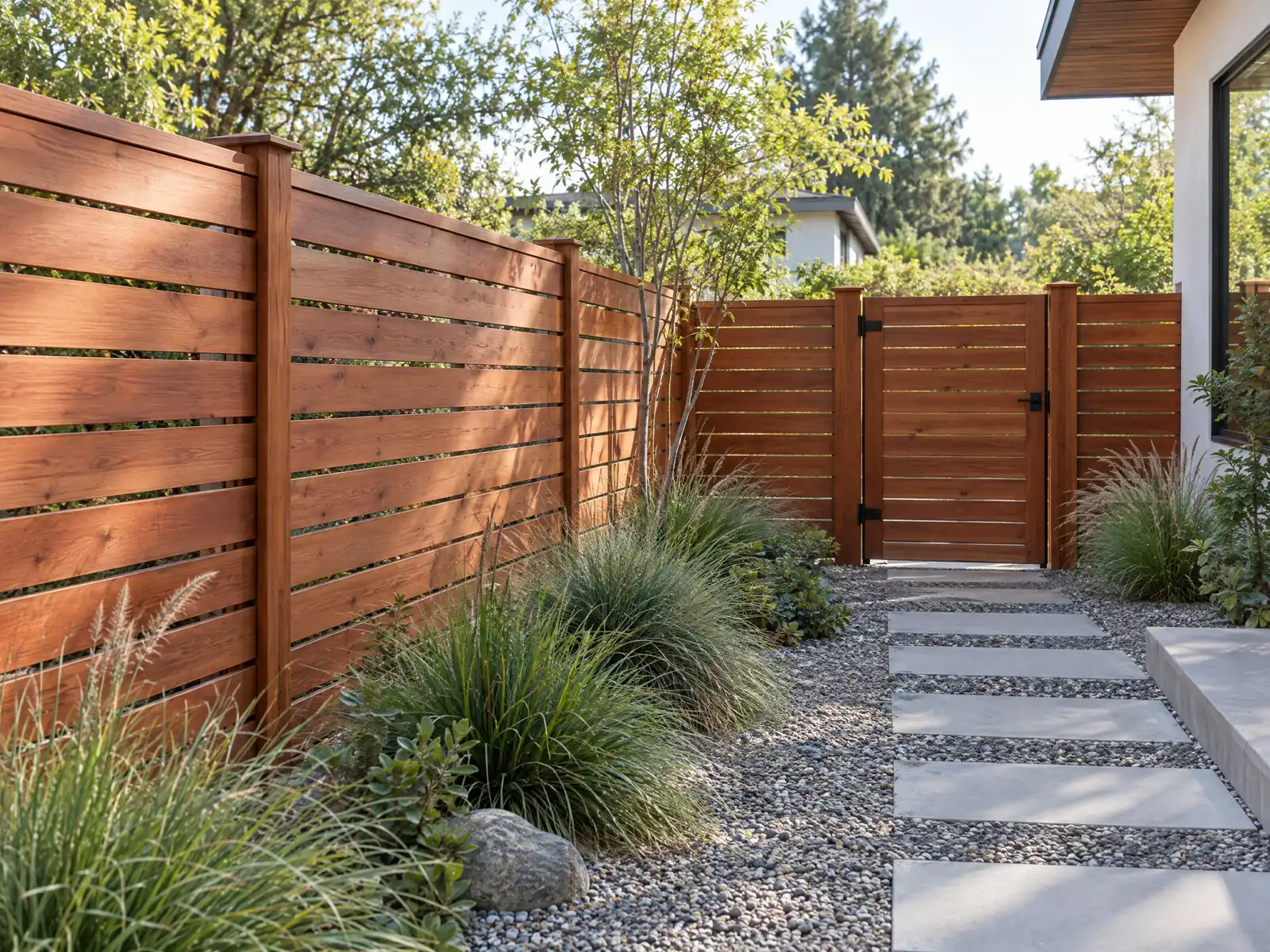
Wood, vinyl, iron and block fences with the permit and height rules checked first.
See fencing →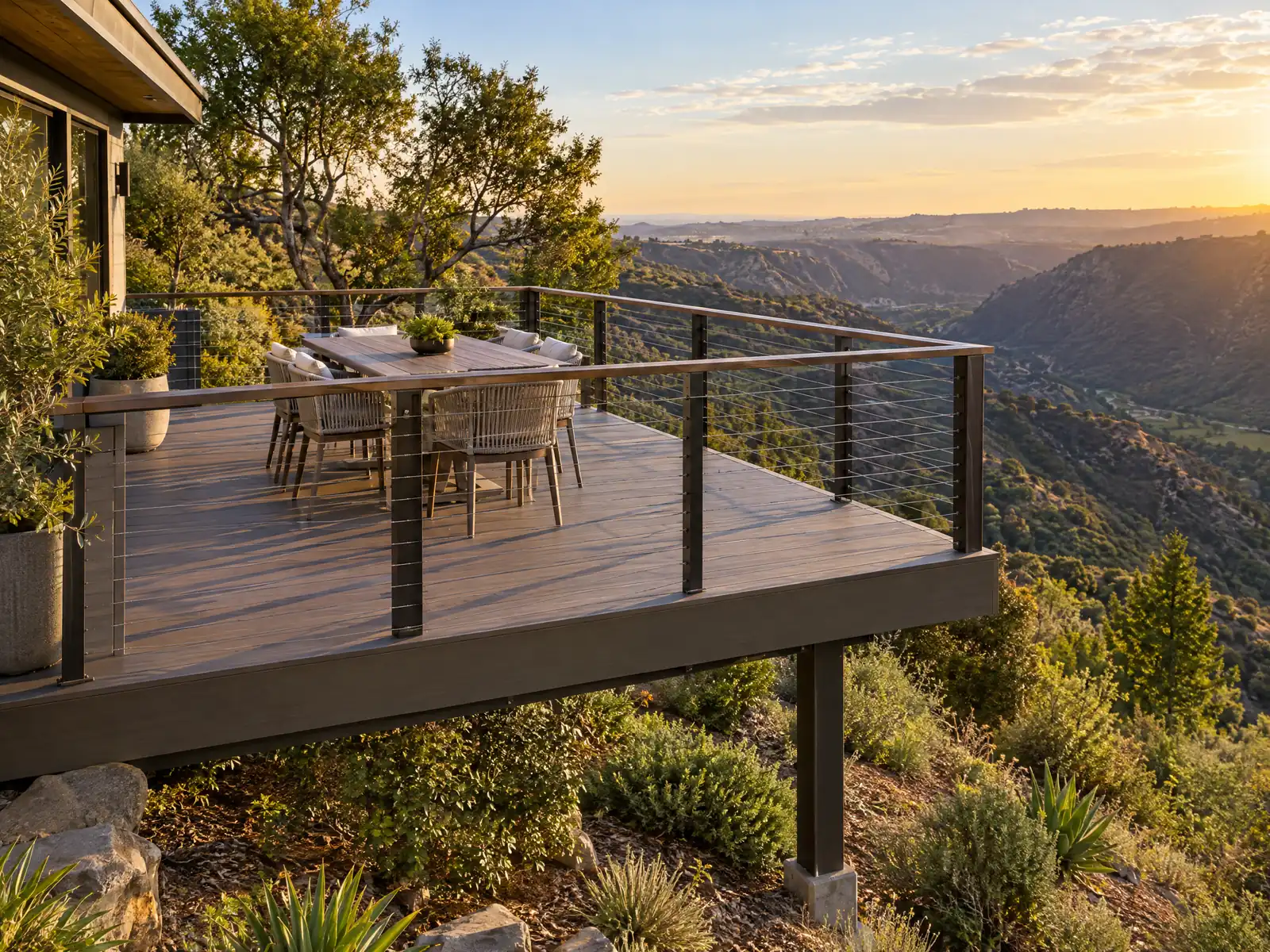
Decks
Wood and composite decks, hillside decks and stairs, with permits and code checked before framing.
See deck building →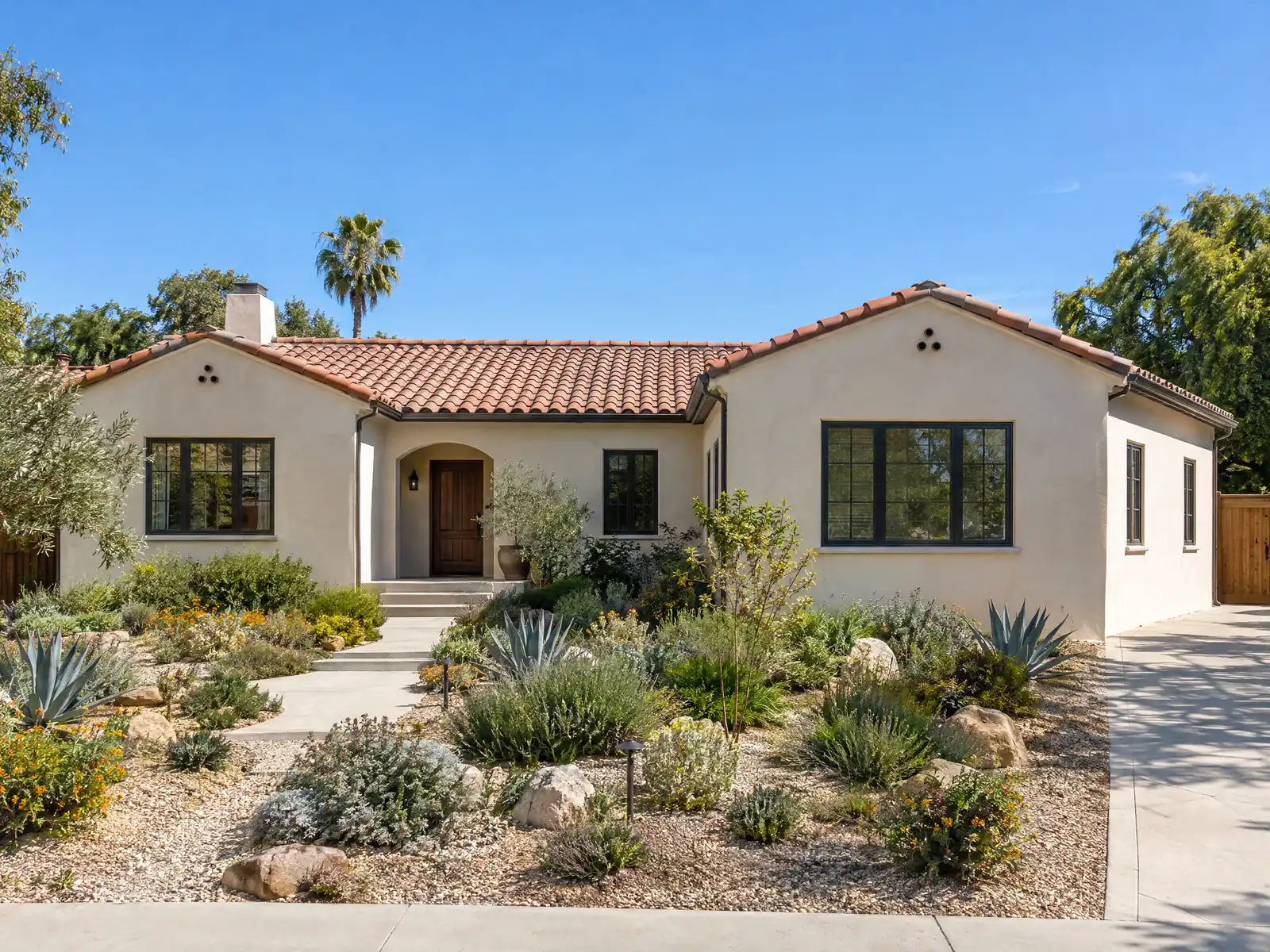
Room Additions
Family rooms, primary suites and second stories, from zoning check to final inspection, with sourced prices.
See room additions →Concrete guides and answers
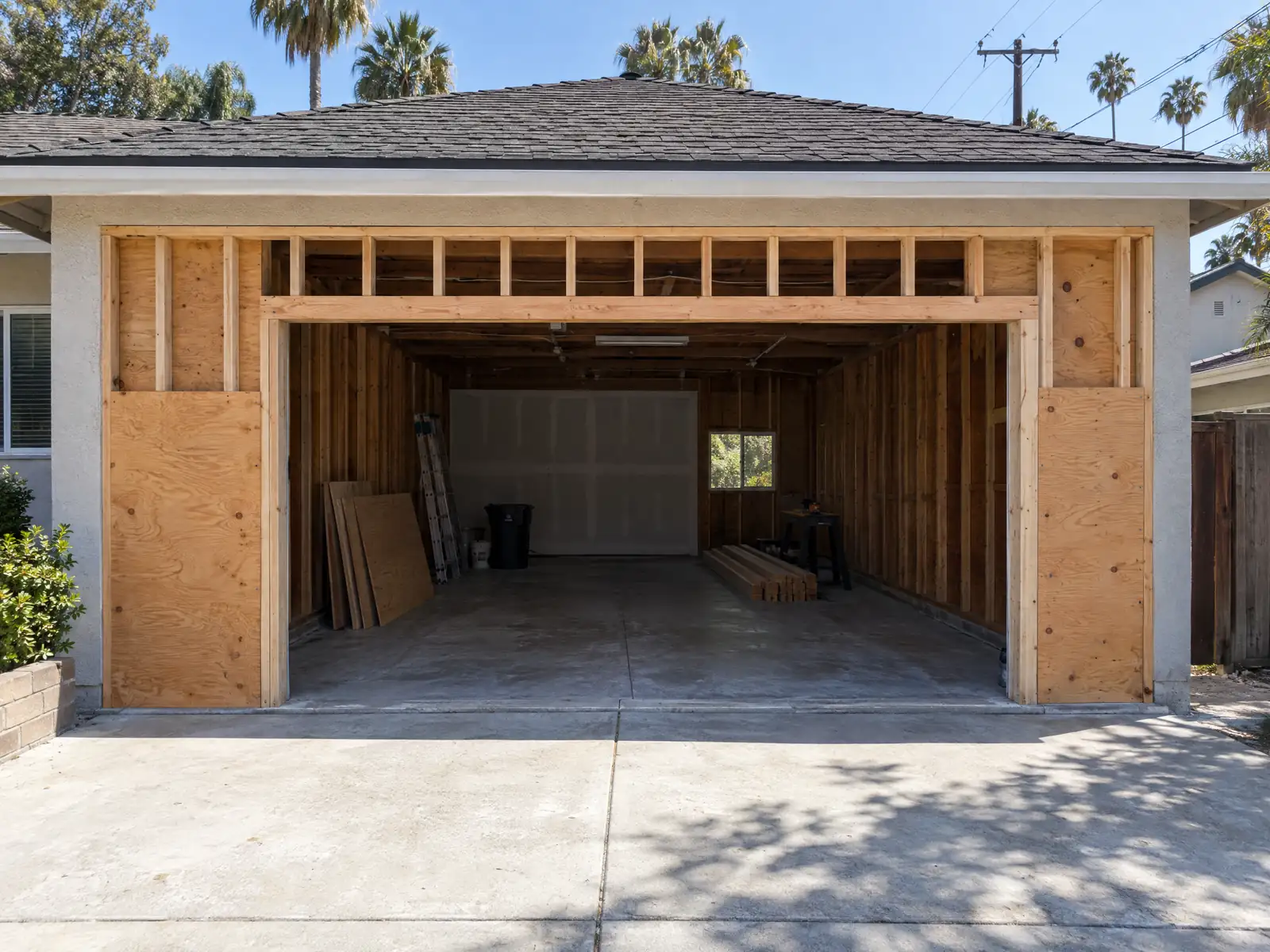
Garage Conversion Permit Steps in Los Angeles
The permit path for turning a Los Angeles garage into an ADU, with the LADBS conversion checklist and the state deadlines.
Read the guide →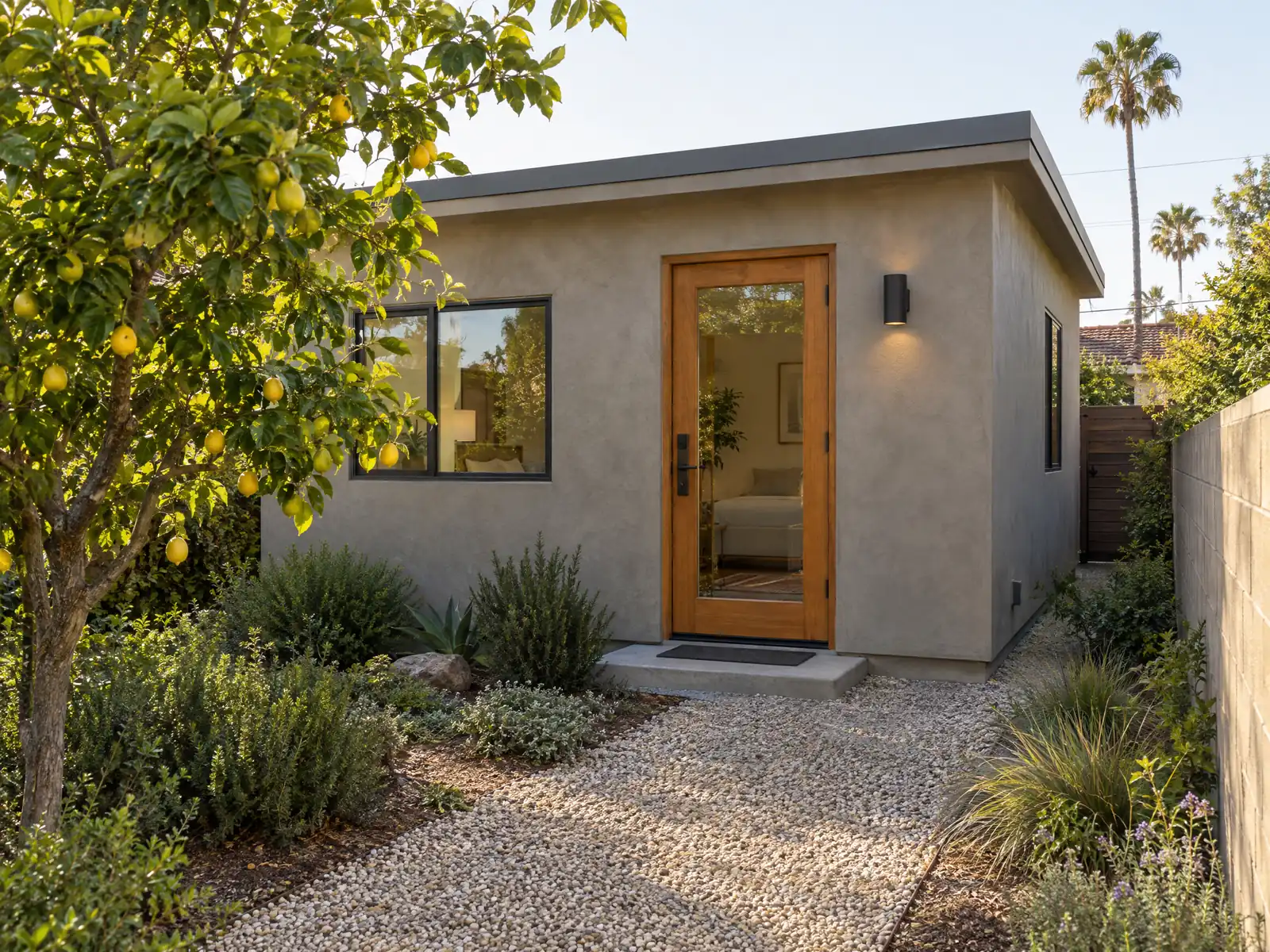
How Much Does an ADU Cost in California?
Sourced 2026 ranges for garage conversions and detached ADUs in Los Angeles, and how old the survey numbers are.
Read the guide →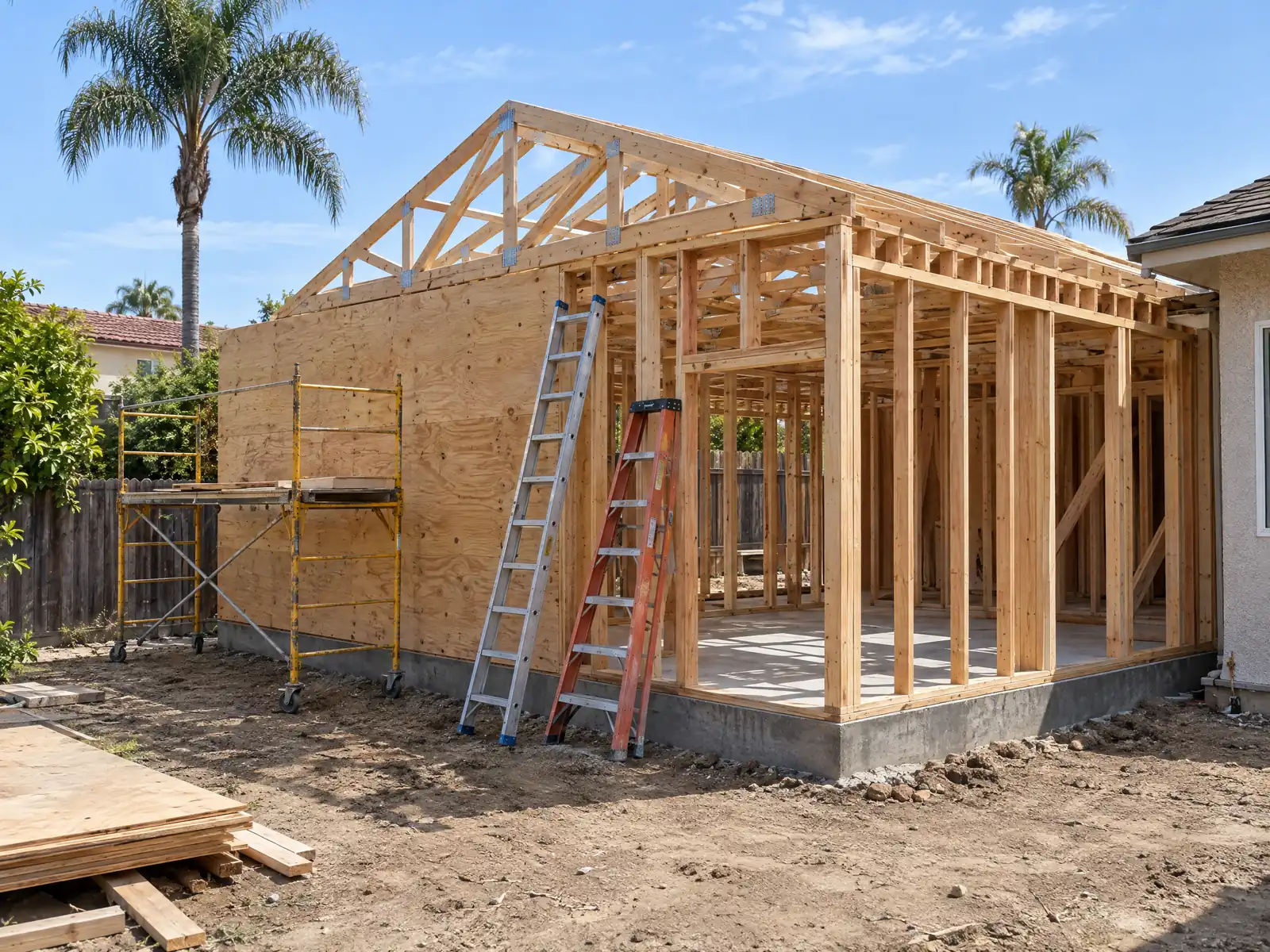
How General Contractors Use Subcontractors
Why most general contractors hire specialists for the field work, what that means for you, and what to ask for in writing.
Read the guide →Concrete questions from Los Angeles homeowners
How much should a 20x20 concrete patio cost?
A 20 by 20 foot plain patio is 400 square feet, which comes to roughly $3,200 to $5,600 at our $8 to $14 per square foot range for broom-finished concrete. Angi and HomeGuide list lower starting figures for the simplest slab.
How much would a 20x20 stamped concrete patio cost?
Roughly $6,000 to $12,000 at $15 to $30 per square foot for 400 square feet, based on Angi's Los Angeles stamped patio page. HomeGuide shows a wider $9 to $30 band. Pattern, color, sealer and joint layout decide where yours lands.
Can I pour a concrete patio without a permit?
Possibly, but the code does not name a ground-level patio slab in its exemptions, so ask LADBS or your city first. The California Building Code exempts sidewalks and driveways not over 30 inches above grade. A license is still required for work of $1,000 or more.
Do I need a permit to add or widen a driveway?
Possibly two separate permits. The slab on your own lot may be exempt if it is not more than 30 inches above grade, but work at the curb is a public right of way matter permitted separately. Ask your city's public works or engineering office first.
What is the maximum height of a retaining wall without a permit in California?
Four feet, measured from the bottom of the footing to the top of the wall, under the 2022 California Building Code, and only if the wall supports no surcharge such as a slope, driveway or building above it. Taller walls, or any with a surcharge, should be treated as permit-required.
Does a 4 foot retaining wall need drainage?
Plan on it. A retaining wall holds back soil and the water in that soil, so the design normally includes a gravel strip or other drainage behind it. The plans or the engineer specify what your wall needs, and the proposal should list it.
Is 4 inches of concrete thick enough for a driveway?
Four inches is the common thickness for patios and walks, but a driveway that carries cars is specified separately, and we found no single code number to quote. Ask for thickness, base depth and reinforcement in writing before you sign.
Is it cheaper to get stamped concrete or pavers?
Published sources conflict, and we found no independent Los Angeles price for pavers. Stamped concrete is $15 to $30 per square foot on Angi's Los Angeles page. Get two written quotes for the same square footage, base and edge, and compare the totals.
What is the downside of stamped concrete?
It is still concrete, so it can crack, and a repair to a stamped or colored surface shows more than a repair to plain gray. The sealer also needs renewing to hold the color.
How long does concrete take to cure?
There is no single date, because walkable, drivable and fully cured are three different milestones, and mix, thickness and weather decide each one. Ask the crew to put foot and vehicle dates in the estimate.
Can you pour concrete in the rain?
Not onto a flooded base or with rain hitting a fresh surface, because water can damage the finish. Crews watch the forecast and reschedule or cover the slab. Ask who decides to postpone.
Who is licensed to pour concrete in California?
A contractor holding the C-8 concrete classification, which CSLB describes as forming, pouring, placing, finishing and installing concrete work. A license is needed for work of $1,000 or more. MDG Builders holds CSLB #1040337 and hires licensed concrete subcontractors.
Request a concrete estimate
Tell us what you want poured and roughly how many square feet. We will ask about drainage, access and the curb when we call.