
Microcement Surfacesin Los Angeles and Southern California
Microcement is a thin, trowel-applied cement coating that gives floors, walls, counters and showers one continuous surface with no grout lines. We found no independent Los Angeles price for it, so a written proposal sets the cost. In wet areas, the waterproofing underneath matters more than the coating. MDG manages the job; a licensed specialty subcontractor applies it.
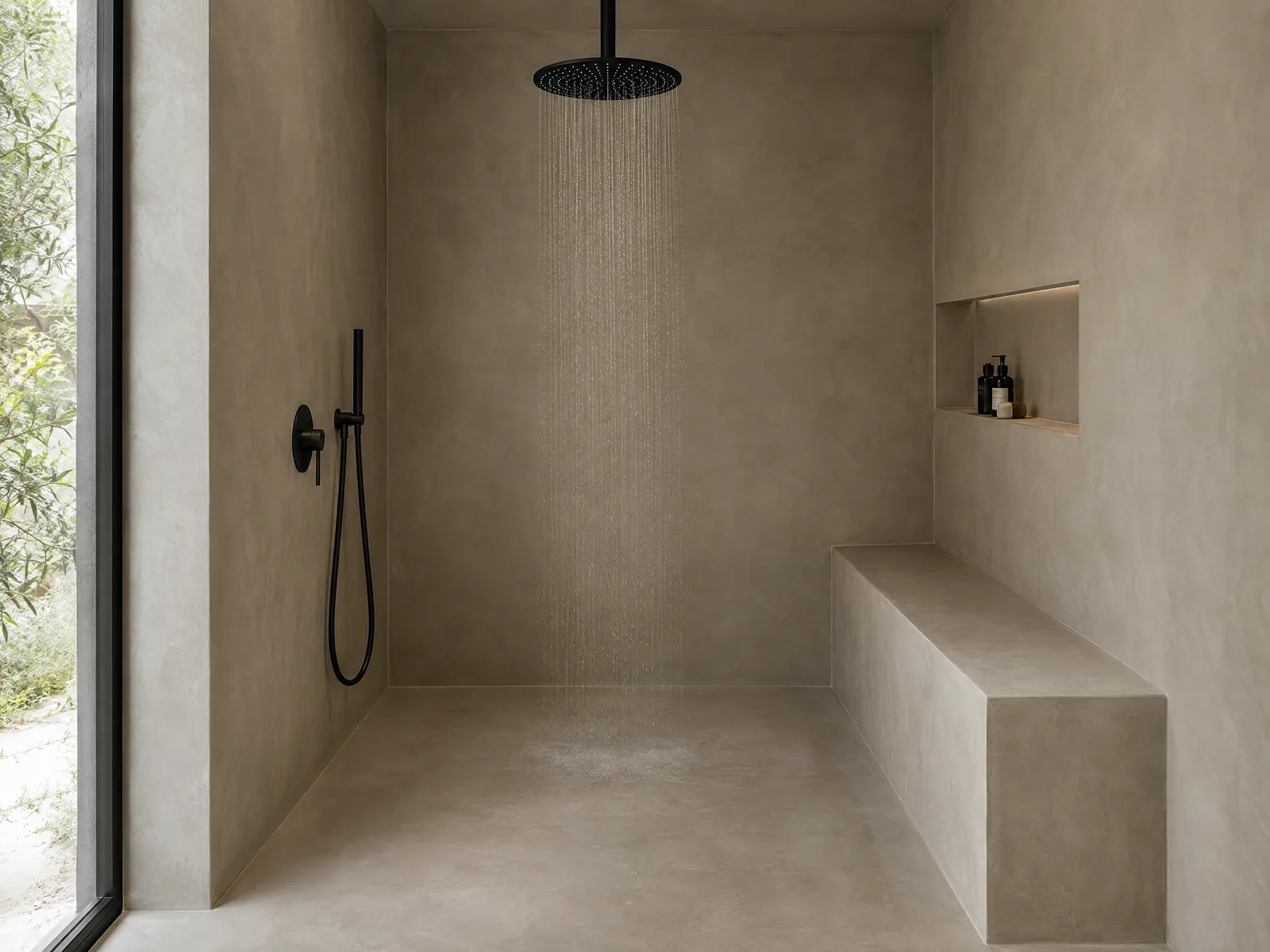
What is microcement, and how is it applied to a wall?
Microcement is a thin cement-based coating, applied in several layers by steel trowel and finished with a sealer. The name suggests a small version of concrete, but it is a finish laid over a surface that already does the structural work.
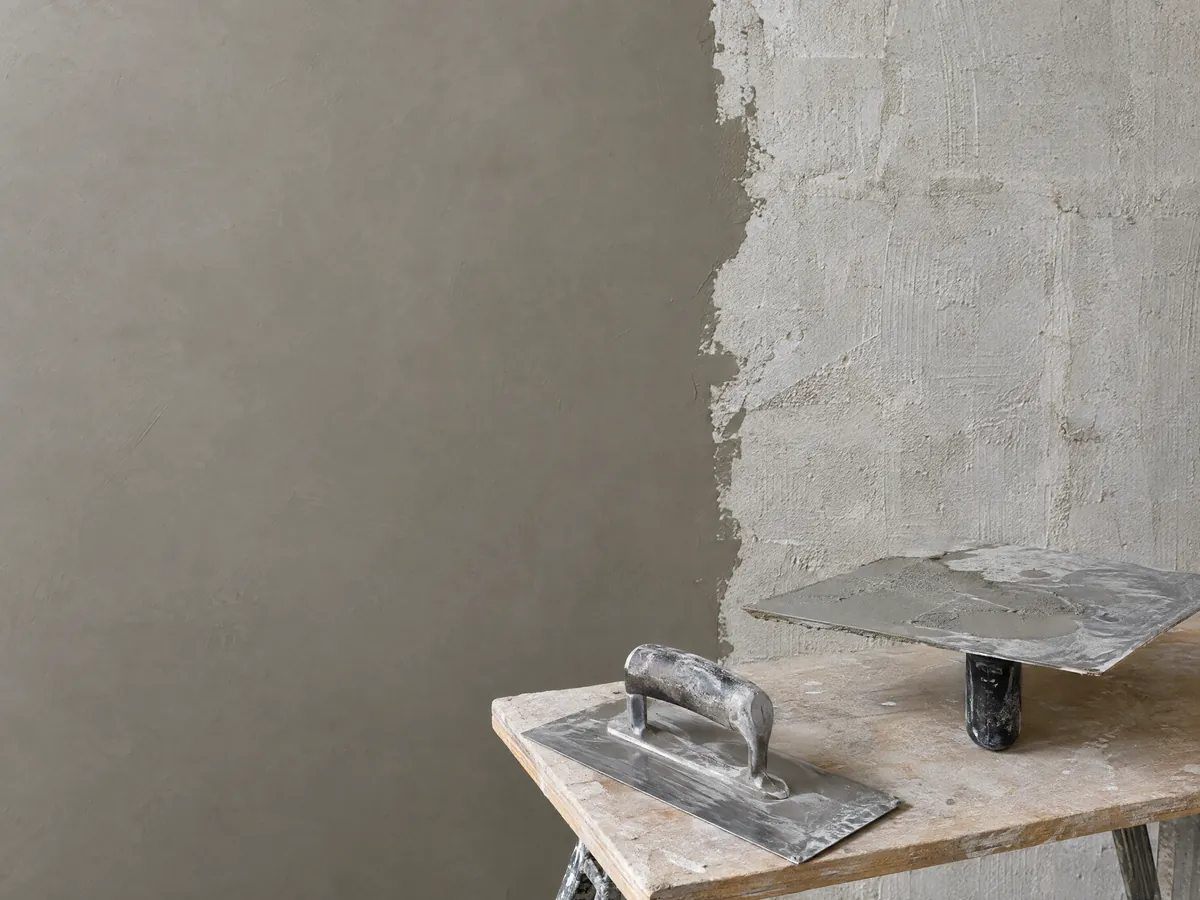
The work goes in stages. The installer prepares and primes the surface, applies a base coat, lets it dry, applies finish coats by trowel and then seals the result. A wall caught halfway shows both stages side by side. The soft, cloudy variation people like comes from the trowel passes, so the installer's hand shows. Ask to see finished work in person, and ask for the manufacturer's system sheet.
Two Los Angeles installer pages say microcement can go over existing tile or concrete. Whether it can go over yours depends on how sound, flat and clean the surface is, because a thin coating copies whatever lies under it. Ask the installer to explain the method, the primer and what they do at grout lines.
If the walls are painted and the house was built before 1978, ask whether the prep will sand or scrape the paint. The EPA's lead-safe rule covers paid renovation in housing built before 1978, and a firm that disturbs painted surfaces would need to be certified.
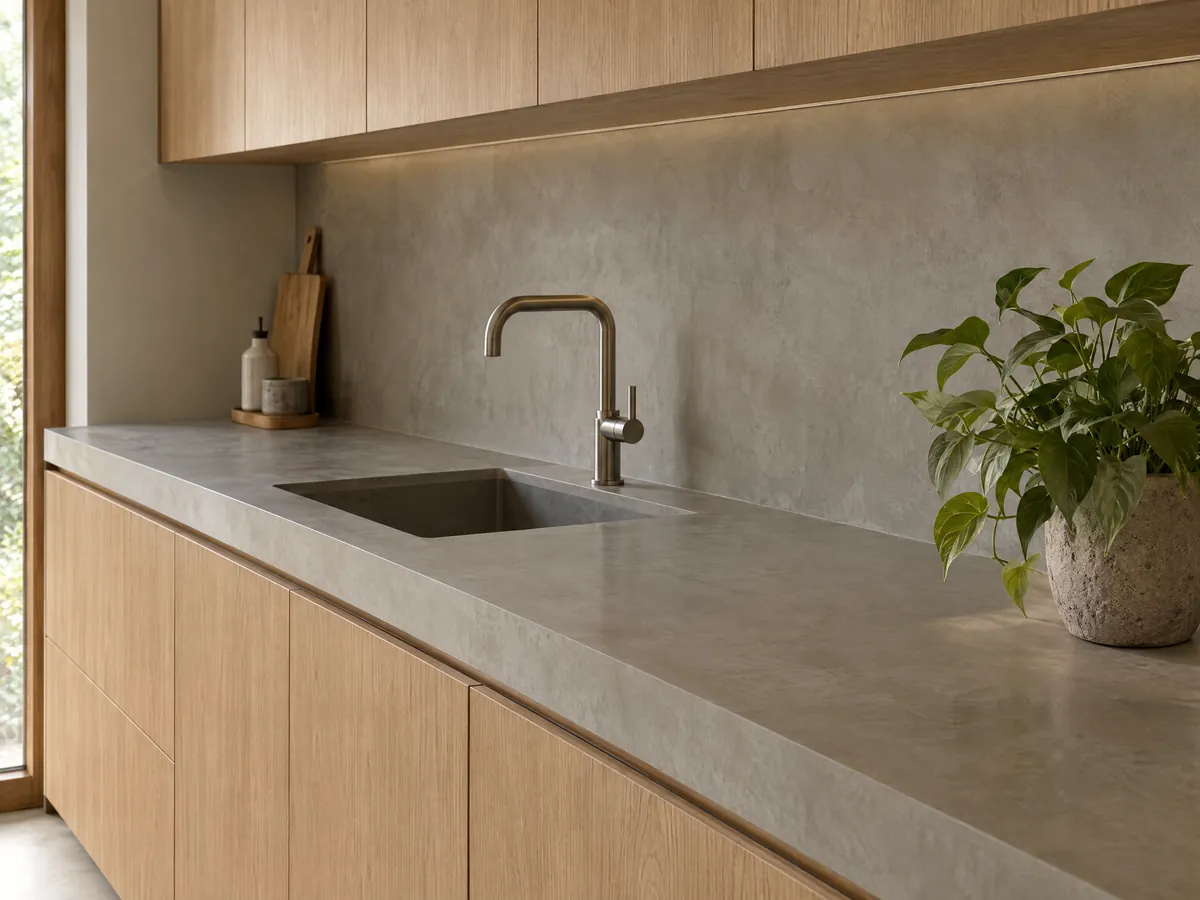
Can microcement be used on a kitchen counter and backsplash?
Installers apply it to counters and backsplashes to get one continuous surface from the counter up the wall, which leaves fewer joints to clean than tile does.
A counter takes knives, hot pans, oils and acids, which is harder duty than a wall. The sealer is what protects the surface, so the sealer's name and the maintenance schedule matter. We found no independent test data for how a microcement counter wears or repairs, so ask the installer to answer in writing rather than rely on a brochure.
Sinks, faucets and appliances change the order of trades. MDG coordinates that order so the plumber and cabinet crew finish before the finish coats go on.
- Can hot pans go on it, and what do you recommend instead?
- Which sealer is used, and what cleaner is safe?
- How is a chip or burn repaired, and will the repair show?
- What does the maker's warranty cover on a counter?
What sets the price of a microcement job?
We could not find an independent Los Angeles price for microcement. The published figures come from installers and suppliers who sell it, and they differ by more than double. So this page lists what moves the price and leaves the number to a written proposal.
Surface preparation
Drywall, cement board, concrete, paint and tile each need different prep. A poor base is the most common reason a quote grows after the first visit.
Tile removal or not
Some installers coat over sound tile, and others take it out first. The choice changes labor, disposal and the finished thickness at doors and edges.
Waterproofing in wet areas
A shower needs a waterproof assembly under the coating, with correct slopes and sealed corners. That work is priced separately from the microcement.
Size and shape
Small jobs carry a minimum charge at some installers. Stairs, curves, many corners and built-in benches add hours.
System and finish
The number of layers, the color, the texture and the sealer type all matter, and a thin overlay is a different product from a full wet-area system.
Access and protection
Moving furniture, protecting adjacent rooms and working around other trades take time and appear as lines in the scope.
Is a microcement floor slippery, cold or likely to crack?
A microcement floor rides on the slab or subfloor beneath it, so the first questions are about that layer. We found no independent test data on cracking or lifespan for microcement, and we will not promise either one. What you can do is ask the installer what is under the floor, how existing cracks and joints are treated, whether the system uses reinforcing mesh or a membrane, and what the maker's warranty says about cracks.
How slippery a floor is depends on the sealer and finish, not on the cement. Ask for a sample, wet it, and walk on it in the shoes or bare feet you would use in that room. Cement-based surfaces also feel cool underfoot, which many people like in Los Angeles summers.
If you have underfloor heating or plan to add it, ask the installer and the system maker in writing whether that exact system is approved for it, and who stands behind the combination. We have not verified heating limits for microcement.

How does a microcement project run from first call to handover?
Because the result depends on the installer's hand and the surface beneath it, the early steps matter most.
- Call and describe the surfacesTell us which areas, what is there now, the year the home was built and whether any area gets wet.
- Site visitWe inspect the substrate, check flatness and moisture, and look at tile, paint and any cracks. We bring a licensed specialty subcontractor when the surface needs a closer look.
- Sample board and written proposalYou approve color and texture on a sample, and the proposal states the system, the layers, the sealer, the waterproofing and the contract price.
- Permits and schedulingWe ask the city whether the work needs a permit, order materials and schedule the trades in the right order. CSLB #1040337.
- BuildPrep and waterproofing come first, then coating and sealing. Changes are written as change orders before they are done.
- HandoverWe walk the finished surface with you in daylight, give you the care and resealing instructions and close the punch list.
Microcement vs tile, polished concrete, epoxy and tadelakt: how do they differ?
These finishes get confused because several look like concrete or plaster. They are different materials with different trades behind them, so it helps to know which one you are being quoted.
- Tile: individual pieces with grout joints. A cracked tile is swapped out, while a damaged microcement spot is a patch-and-blend repair. We found no independent Los Angeles comparison of cost, so ask for both quoted to the same scope.
- Polished concrete: the slab itself, ground and polished. It works only when the existing slab is concrete in good shape, where microcement can coat other sound surfaces.
- Epoxy: a resin coating that forms a plastic-like film, common in garages and workshops. Microcement is cement-based and reads as mineral.
- Tadelakt and Venetian plaster: lime-based plasters traditionally burnished by hand. Tadelakt is polished with soap for water resistance. They are different materials, different trades and different looks.
- Stucco: a thicker cement plaster used mostly on exteriors.
Ask every bidder to name the product and the manufacturer, since microcement, microtopping and thin overlays are not the same thing.
Does microcement stain, need sealing or change color over time?
The cloudy variation in the finish is part of the look, and it is made by hand, so two walls by two installers will not match. A color sample is a guide, not a promise. Ask for a sample board and approve it in your own light before the walls are done.
Microcement needs a sealer, because bare cement absorbs liquids. Vendor websites describe resealing every few years, but we found no independent source for how often, so ask the installer to put the sealer and the schedule in the proposal.
Questions about staining, mold and cracking come up often, and we found no independent test data on lifespan, staining or cracking. Any promise of years rests on the seller's word. Ask for the manufacturer's written warranty, what it covers and excludes, and the installer's own workmanship terms.

How long does a microcement installation take?
Independent timing data does not exist, so these are planning ranges built from installer and supplier statements. The written schedule is the one that counts.
- 1 to 2 weeksSample and proposalYou approve a sample board in your own light, the surfaces are measured and the scope is written down.
- 2 to 5 daysPreparation and waterproofingTile or old finishes are dealt with, repairs are made, and in wet areas the membrane goes in and cures as its maker requires.
- 3 to 5 daysBase and finish coatsOne Los Angeles installer lists 3 to 5 days for a project. Layers need drying time between them.
- 1 to 2 daysSealingThe sealer is applied in coats, and the system maker's instructions set the time between them.
- 14 days before waterCure before useA supplier's FAQ says to wait at least 14 days after the final sealer before water exposure. Follow the written cure time for your product.
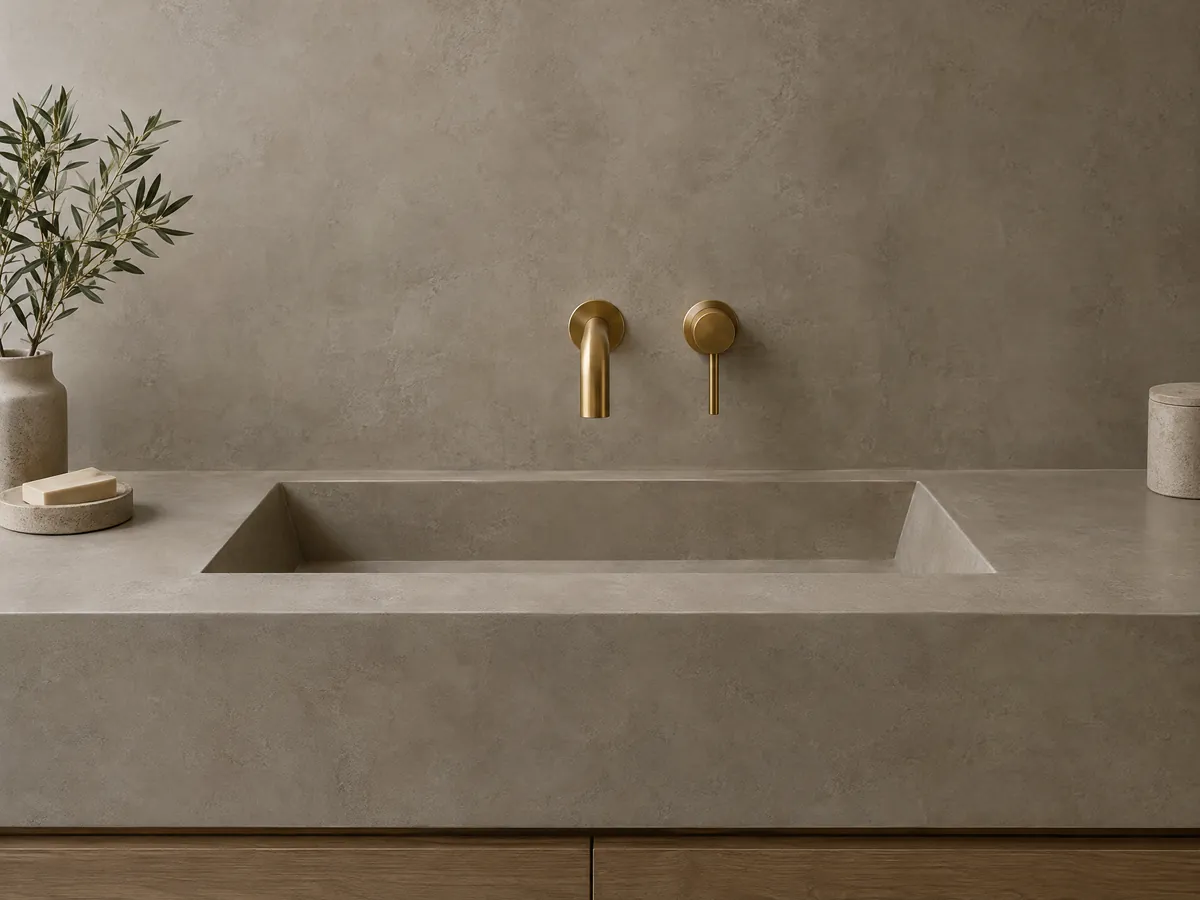
Can microcement be used for a vanity top, basin or shower?
Installers do build vanity tops, integrated basins and shower walls in microcement, and the wet-area details decide whether it works. Microcement is a coating, not a waterproofing system. A U.S. microcement supplier states in its FAQ that a waterproof coating does not replace the required shower assembly, and that you should wait at least 14 days after the final sealer before water exposure.
In a shower, waterproofing goes behind and under the coating: a membrane over the substrate, correct slopes to the drain, and sealed corners and penetrations. Ask who installs the membrane, who warrants it, and whether any water test happens before the coating covers it.
A basin cut into a vanity top sees water all day, so ask about the detail where basin meets top. Changing shower plumbing or enlarging a shower is a separate question from coating one, and it may involve a permit; the building department in your city answers that. See microcement vs tile for the wet-area trade-offs.
Microcement by city
Projects that often go with microcement
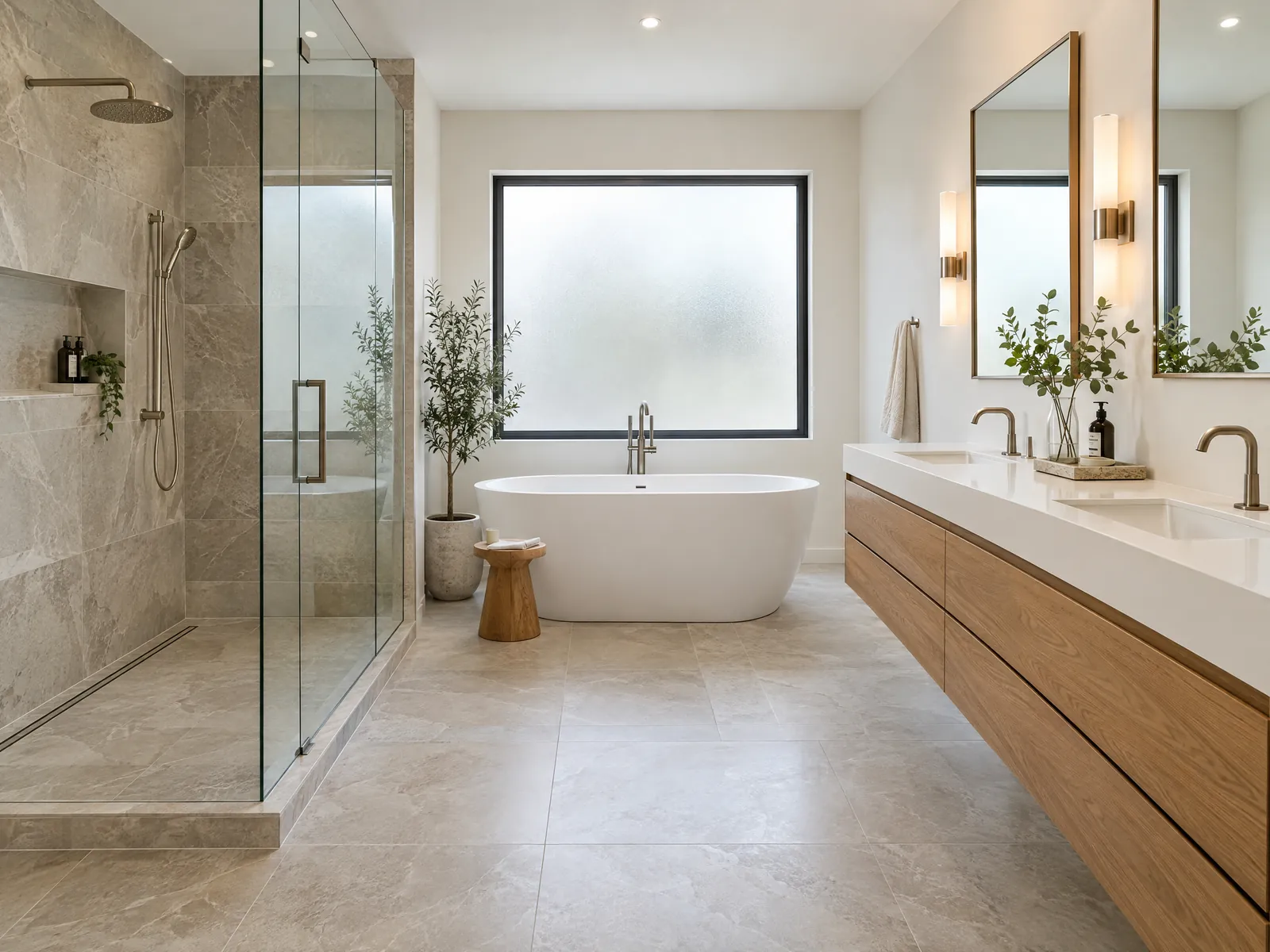
Bathroom Remodeling
Showers, tubs, vanities and full baths, with the permit path, waterproofing and prices from named sources.
See bathroom remodeling →
Kitchen Remodeling
Cabinets, counters, layout changes, permits and a written schedule, with prices tied to named sources.
See kitchen remodeling →
Flooring
Hardwood, engineered wood, vinyl plank, laminate and tile, with slab testing and a written scope.
See flooring →Microcement guides and answers
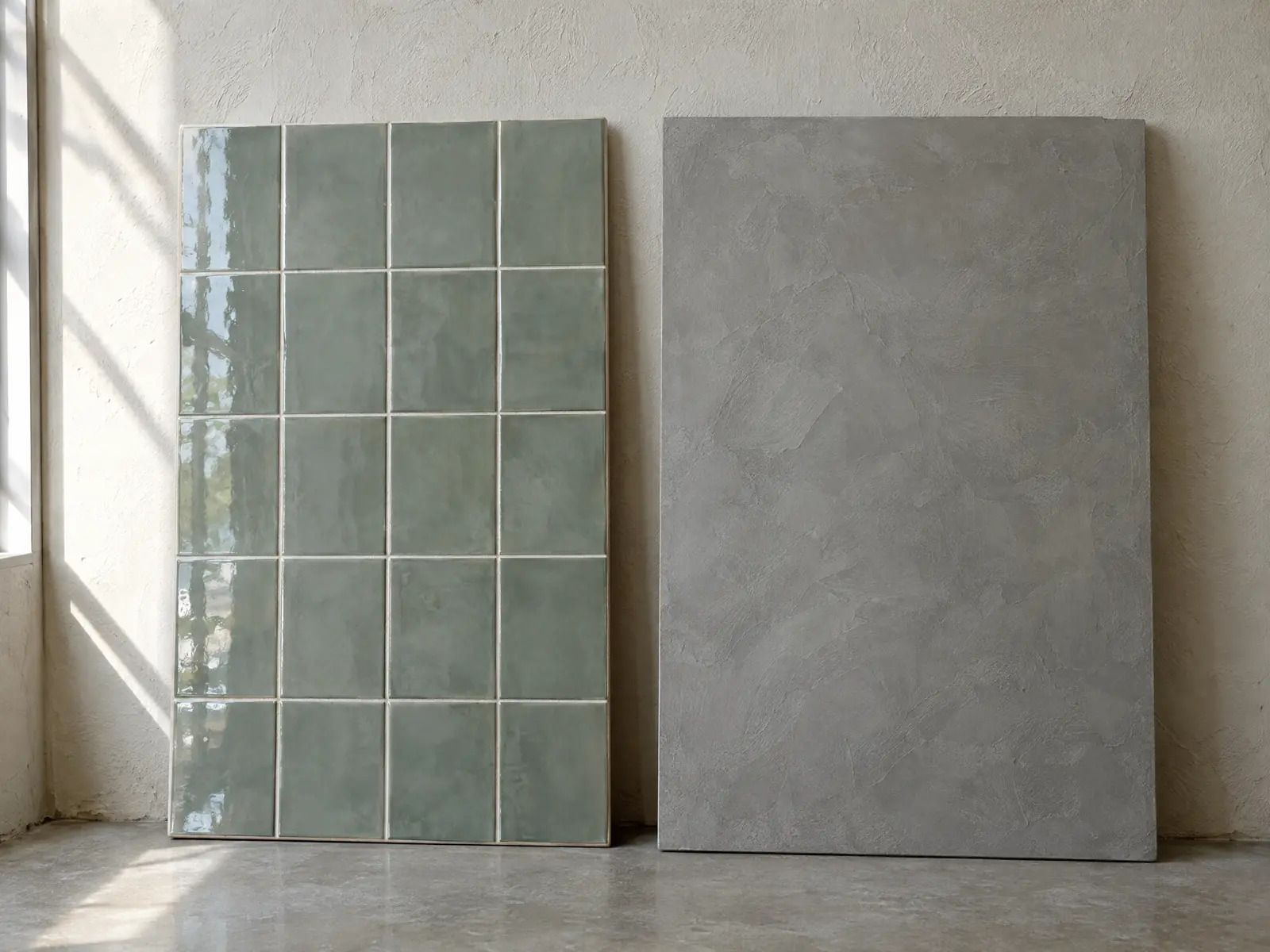
Microcement vs Tile: Which Holds Up Better in a Bathroom?
How microcement and tile differ in installation, wet-area performance and upkeep, using only facts we could verify.
Read the guide →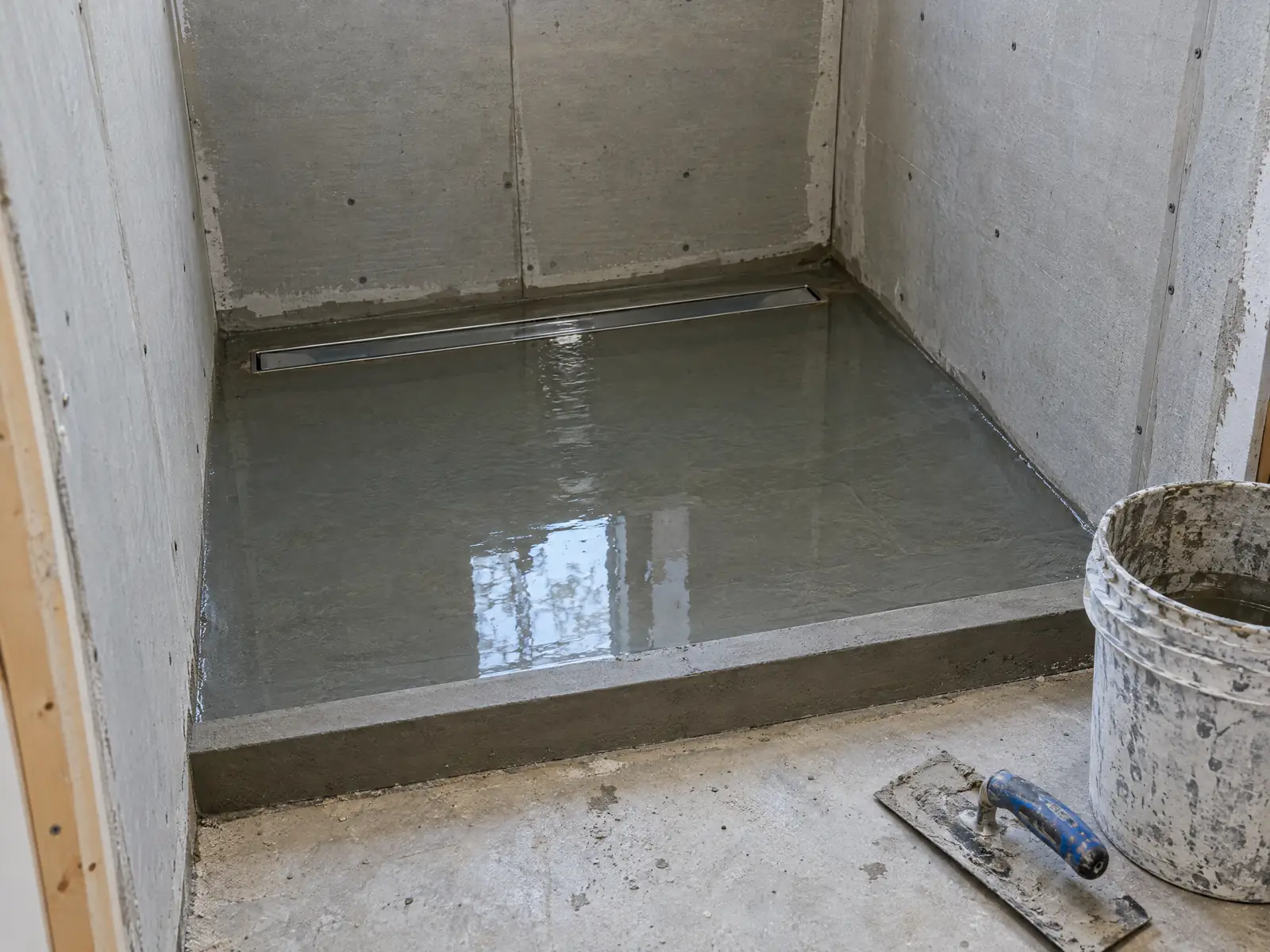
How Much Does a Bathroom Remodel Cost in California?
Los Angeles bathroom remodel prices by scope, what a new bathroom adds, and the permit and contract rules that touch the total.
Read the guide →
How General Contractors Use Subcontractors
Why most general contractors hire specialists for the field work, what that means for you, and what to ask for in writing.
Read the guide →Microcement questions homeowners ask
How much does microcement cost in Los Angeles?
There is no independent Los Angeles price for microcement. Figures online come from installers and suppliers who sell it, and they differ by more than double. The price depends on prep, tile removal, waterproofing, size and the system used. A written proposal after a site visit is the only reliable number.
Is microcement cheaper than tiling?
That depends on the job, and we found no independent comparison to settle it. Tile prices swing with the tile chosen, and microcement prices swing with prep, thickness and wet-area work. Ask for both quoted to the same scope, including demolition and waterproofing, then compare the totals.
What are the downsides of microcement?
The main ones are that the result depends on the installer's skill, the surface needs sealing and care, and color varies by hand. In wet areas it works only over proper waterproofing. We also found no independent data on lifespan, so promises of long life come from sellers.
How long does microcement last?
We found no independent test data on how long microcement lasts, so we will not state a number. Any figure you hear comes from the installer or supplier. What you can check is the manufacturer's written warranty, what it excludes, the sealer used and the reseal schedule, together with the installer's own workmanship terms.
Is microcement waterproof, and can I use it in a shower?
The coating alone is not a waterproofing system. A U.S. microcement supplier says in its FAQ that a waterproof coating does not replace the required shower assembly. Showers work when a membrane, correct slopes and sealed corners sit under the microcement. Ask who installs and warrants the waterproofing.
Can microcement go over existing tile?
Some installers apply it over sound, flat tile after filling the grout lines, and two Los Angeles installer pages say so. Others remove the tile first. The right choice depends on how well the tile is bonded and how much added thickness your doors and edges allow. Ask the installer to explain the method.
Does microcement crack easily?
We found no independent test data on cracking, so we cannot give a yes or no. Ask the installer what is under the surface, how existing cracks and joints are handled, whether the system includes reinforcing mesh or a membrane, and what the manufacturer's warranty says about cracks.
Does microcement need to be sealed?
Yes, a sealer is part of the system, and bare cement absorbs liquids. Which sealer, how many coats and how often it is renewed are details to put in the proposal. Vendor sites suggest resealing every few years, but we found no independent source, so rely on the maker's written instructions.
Does microcement work with underfloor heating?
We have not verified that, so ask. Get the installer and the system maker to confirm in writing that the exact system is approved for underfloor heating, with any temperature limits and warm-up rules, and ask who is responsible if the combination fails.
Is a microcement floor slippery?
It depends on the sealer and finish more than the cement. A matte or textured finish grips differently from a satin one, and wet differs from dry. Ask for a sample and test it wet, in the footwear you would use in that room, before you approve the finish.
Is microcement toxic or low-VOC?
That depends on the products. Ask for the safety and VOC data sheets for the base coat and the sealer. The South Coast Air Quality Management District's Rule 1113 limits VOCs in coatings, including tile and stone sealers at 100 grams per liter in the version we read, but we have not confirmed which category covers a given microcement sealer.
Ask for a written microcement proposal
Tell us which surfaces you have in mind and whether any of them get wet. We will inspect the substrate and send a proposal that states the system and the price.