
Decksin Los Angeles and Southern California
A deck in Los Angeles costs about $45 to $75 per square foot in pressure-treated wood and $65 to $110 in composite, so a 16 by 20 foot deck runs roughly $14,500 to $24,000 in wood. Treat any attached deck, or one over 30 inches high, as permit-required. MDG Builders (CSLB #1040337) handles permits and manages licensed builders.
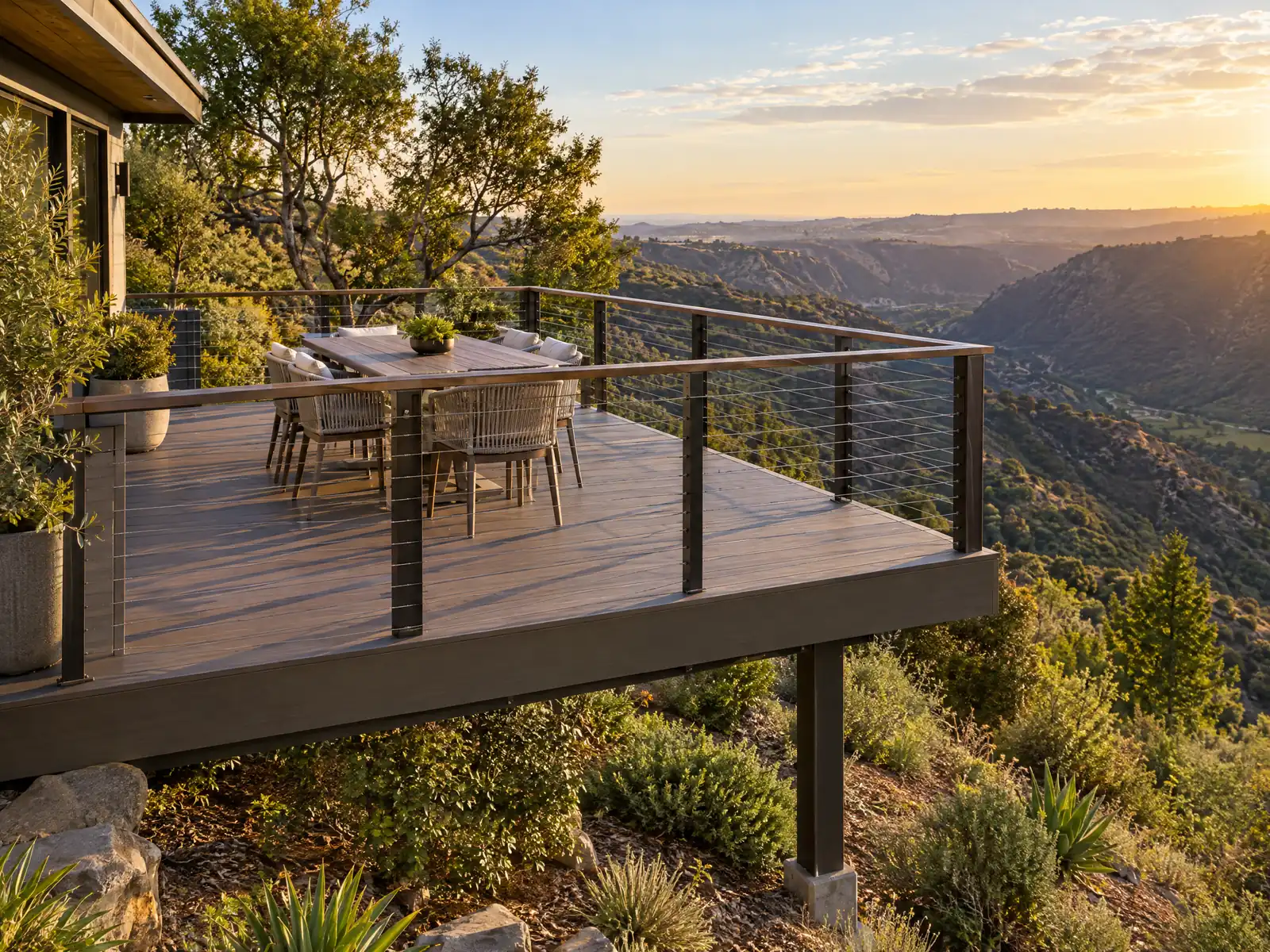
Do I need a permit to build a deck in Los Angeles?
Treat a deck as permit-required if it is attached to the house, more than 30 inches above grade, larger than 200 square feet, or on a hillside. That is a working rule, not a statute, because each agency words its exemption differently.
The model residential code (IRC R105.2) exempts a deck of 200 square feet or less that is no more than 30 inches above grade at any point, is not attached to a dwelling and does not serve the required exit door. Los Angeles County's Title 26 exempts decks, walks and driveways not more than 30 inches above grade and not over a basement or a story below. The 2022 California Building Code has no deck line in its exemptions. The City of Los Angeles may word its exemption differently, so ask LADBS before relying on 200 square feet.
Zoning is a second check. LADBS bulletin P/ZC 2023-004 lets an open deck project up to 6 feet into a required yard and stand no more than 6 feet above natural grade. A detached deck is a separate structure only when it is 10 feet or more from the building, and a 42 inch guard counts toward fence or wall height.
What goes into the framing under a deck?
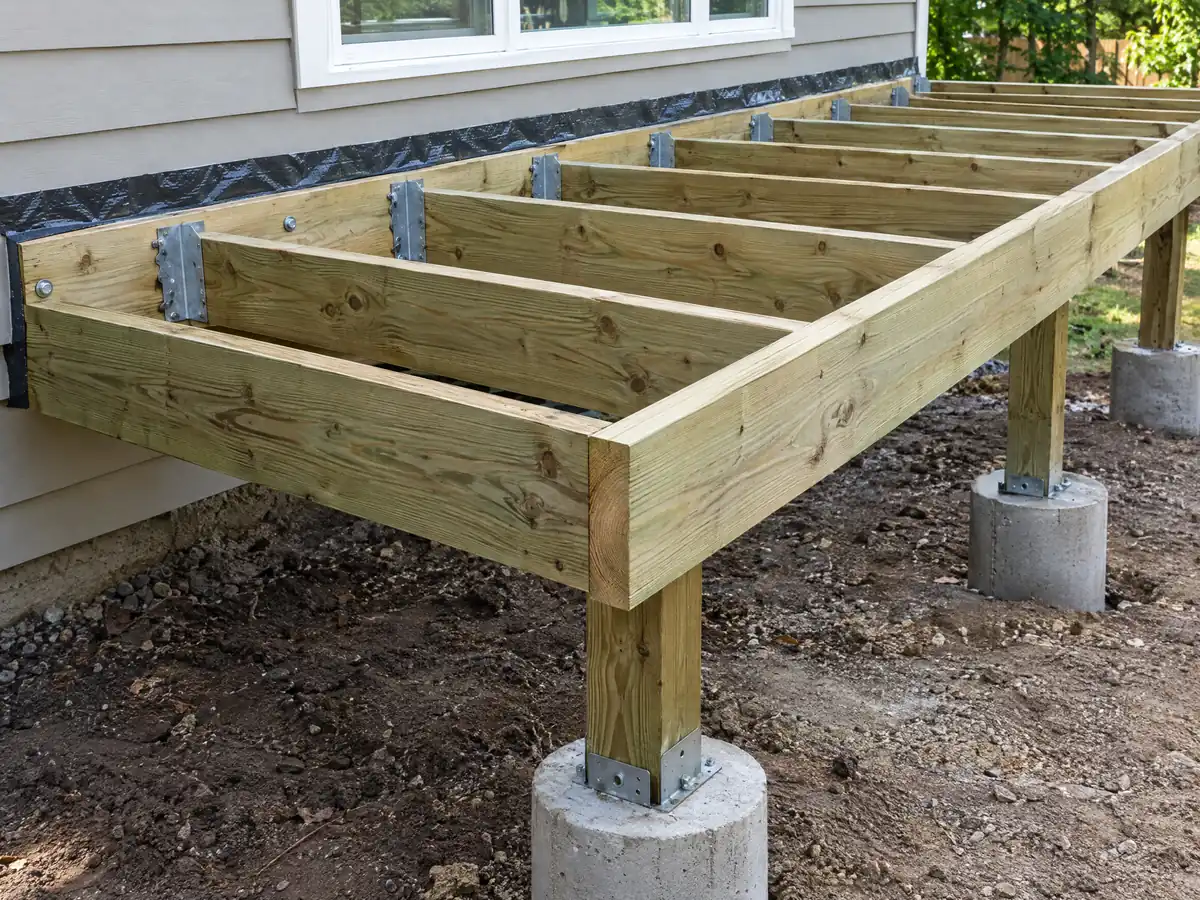
Much of what an inspector looks at is hidden once the boards go down,. The 2022 California Residential Code spells out the ledger, the board that ties the deck to the house: at least a pressure-treated 2 by 8 (R507.9.1.1), no concentrated loads from beams or girders, and no fastening to stone or masonry veneer.
Fasteners must be hot-dip galvanized or stainless steel, and the ledger is flashed under section R703.4 so water cannot soak the wall behind it (R507.9.1.3). The flashing tape over the ledger in the photo is that step.
Earthquakes add a second requirement. Section R507.9.2 calls for lateral hold-downs tying the deck to the house: two devices of 1,500 pounds each within 24 inches of each end, or four of 750 pounds each.
Below the joists, load travels down posts to concrete footings. A freestanding deck needs them too. Footing size and depth come from the approved plans and the soil, not from a rule of thumb.
Composite or wood decking: which is worth the money in Los Angeles?
JLC and Zonda's 2025 Cost vs. Value report for Los Angeles prices a defined 16 by 20 foot deck: treated posts and joists, a built-in bench and planter, three steps and full railing. In wood it costs $18,419, and the report puts resale value at $18,341, or 99.6 percent recouped. In composite it costs $26,872 with a resale value of $19,845, or 73.9 percent. Over 320 square feet, that is about $58 per square foot for wood and $84 for composite (our arithmetic).
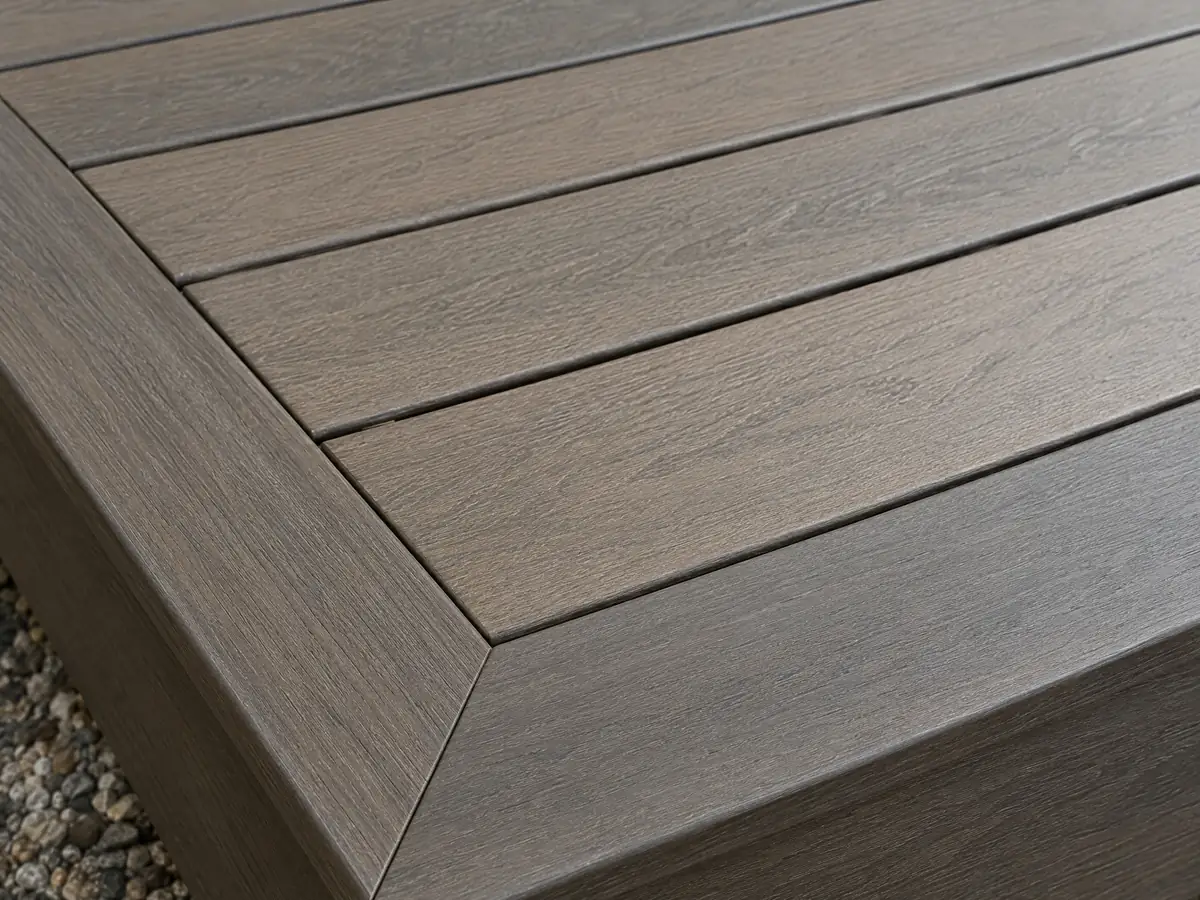
Composite boards, like the hidden-fastener surface in the photo, are normally laid on joists that are often treated wood, so termite and moisture care stays. The University of California's pest management program says drywood termites infest decks in Southern California and advises fixing moisture problems and sealing exterior wood.
Where wildfire construction rules apply, the surface is regulated. Residential code section R337.9.3 lists decking allowed in wildland-urban interface areas: products tested under ASTM E2632 or E2726, ignition-resistant material, fire-retardant-treated wood and noncombustible material. Composite products differ, so ask for the State Fire Marshal listing for the exact board.
How much does a 16 by 20 deck cost in Los Angeles?
A flat-lot, attached deck in pressure-treated wood runs about $45 to $75 per square foot in Los Angeles, and composite about $65 to $110, before permits and engineering. No number is printed where independent pricing is missing.
| What it covers | Typical range | What moves the price |
|---|---|---|
| Pressure-treated wood deck | $45 to $75 per square foot | Height, stairs, railing type, footings, access |
| Composite deck | $65 to $110 per square foot | Board line, fascia, hidden fasteners, railing |
| 16 by 20 foot wood deck (320 sq ft) | About $14,500 to $24,000 | Built-in bench, planter, number of steps |
| 16 by 20 foot composite deck | About $21,000 to $35,000 | Same drivers, plus the surface upgrade |
| Hillside, second-story, rooftop and ipe decks | Priced by site visit | No independent Los Angeles price found. Post height, engineering, waterproofing and weight drive it |
| Permits and engineering | Quoted as separate lines | Agency fees, hillside review, drawings |
How we got these numbers: JLC and Zonda's 2025 Cost vs. Value report for Los Angeles (a defined 16 by 20 foot deck: $18,419 in wood, $26,872 in composite), Angi's Los Angeles deck page (October 2025) and HomeGuide (February 2026), which runs lower and publishes no method, so it served only as a cross-check. Confidence is medium for wood and medium-low for composite. As a labor check, the Bureau of Labor Statistics put the mean wage of carpenters in the Los Angeles area at $37.79 an hour in May 2025. The real price is whatever MDG's written proposal says for your deck.
- JLC and Zonda, Cost vs. Value 2025, Los Angeles (2025)
- Angi, Los Angeles deck cost (2025)
- HomeGuide deck cost (2026)
- BLS wages, carpenters (2025)
- 2022 CRC chapter 5 (ledger, hold-downs) (2022)
- 2022 CRC chapter 3 (guards) (2022)
- LADBS P/ZC 2023-004 (2023)
- LA County exempt work (current)
- CSLB C-5 Framing (current)
What changes when a deck sits on a hillside lot?
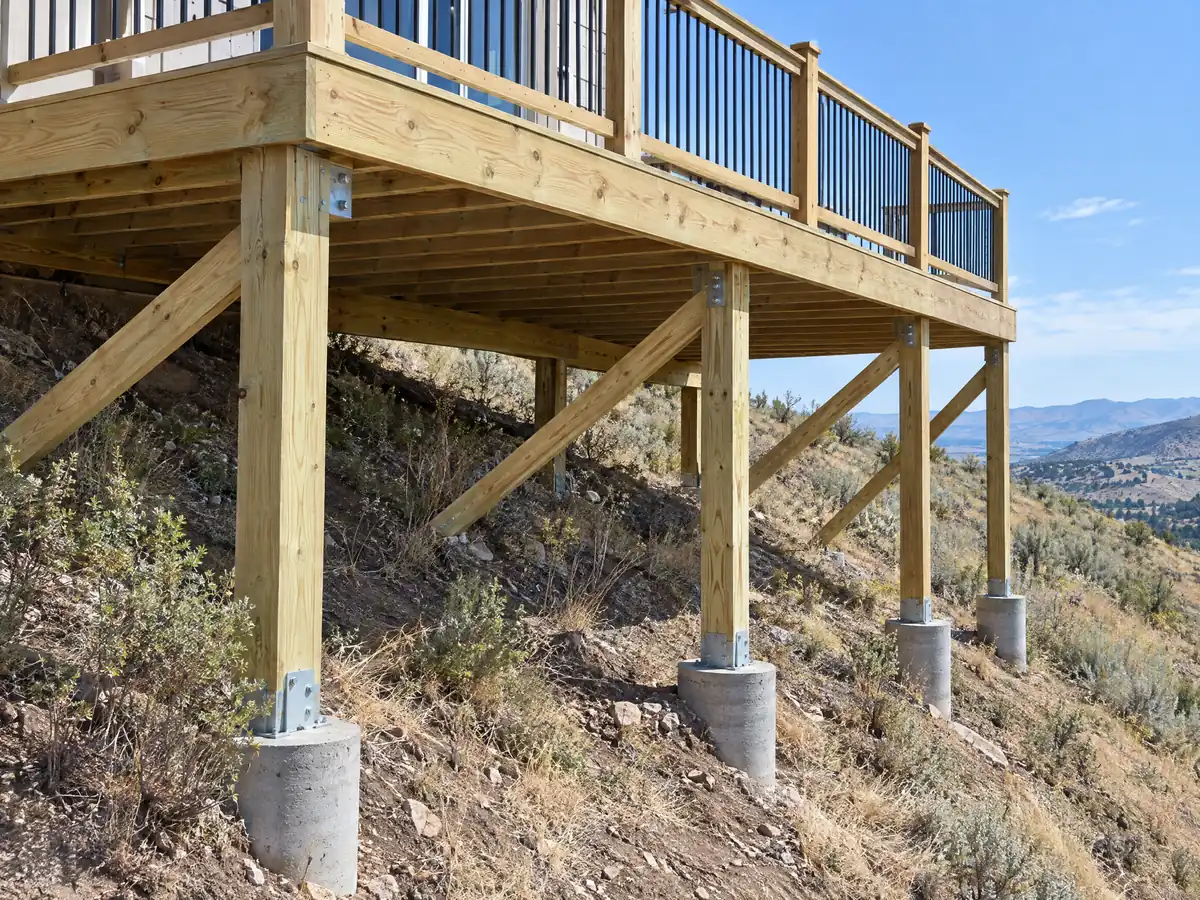
A deck on tall posts over a slope is a different job from a deck on a flat lot. Posts are longer, diagonal bracing resists sideways movement, and every footing has to land on sound ground, as the photo shows.
The paperwork changes too. Under the Hillside Ordinance, LADBS does not allow decks in the front yard of a lot that fronts a sub-standard street (bulletin P/ZC 2023-004). Ask LADBS what grading, soils or retaining wall review applies to your lot, because the answer depends on the address.
We do not print a price for hillside decks. We found no independent Los Angeles pricing for them, and the cost depends on post height, footing count, engineering and how the crew and concrete reach the site. The price comes from a site visit and the written proposal.
How long does it take to build a deck?
Approvals and inspections set the calendar more than carpentry does. Your proposal states the schedule for your deck.
- Before anything is filedPlans and measurementsSize, height, stairs, railing and surface are fixed in drawings; a hillside deck may add engineering.
- Set by the agencyPermit reviewThe department reviews ledger, hold-down and guard details while zoning review runs alongside.
- Concrete sets before posts take loadFootingsHoles are dug to plan depth and the concrete cures before framing loads the posts.
- Before boards cover the workFraming and inspectionPosts, beams, joists, ledger flashing and hold-downs go in, and the inspector sees them while visible.
- Depends on material and sizeSurface, railing and stairsDecking, fascia, guards and stairs are installed to the approved plans.
- Last visitFinal inspection and walkthroughThe final inspection closes the permit, and we walk the deck with you.
Is deck railing height 36 inches or 42 inches?
The California Residential Code sets a minimum guard height of 42 inches (R312.1.2). Online guides disagree because other codes use different numbers; in California, 42 is the one to follow. A guard is required where the walking surface is more than 30 inches above grade within 36 inches of the edge (R312.1.1).
So a deck 3 feet high needs a guard, because 36 inches is over the 30 inch line.
Gaps count as much as height. Section R312.1.3 requires openings small enough to stop a 4 inch sphere, which applies to the spaces between balusters and to the rows of a cable railing.
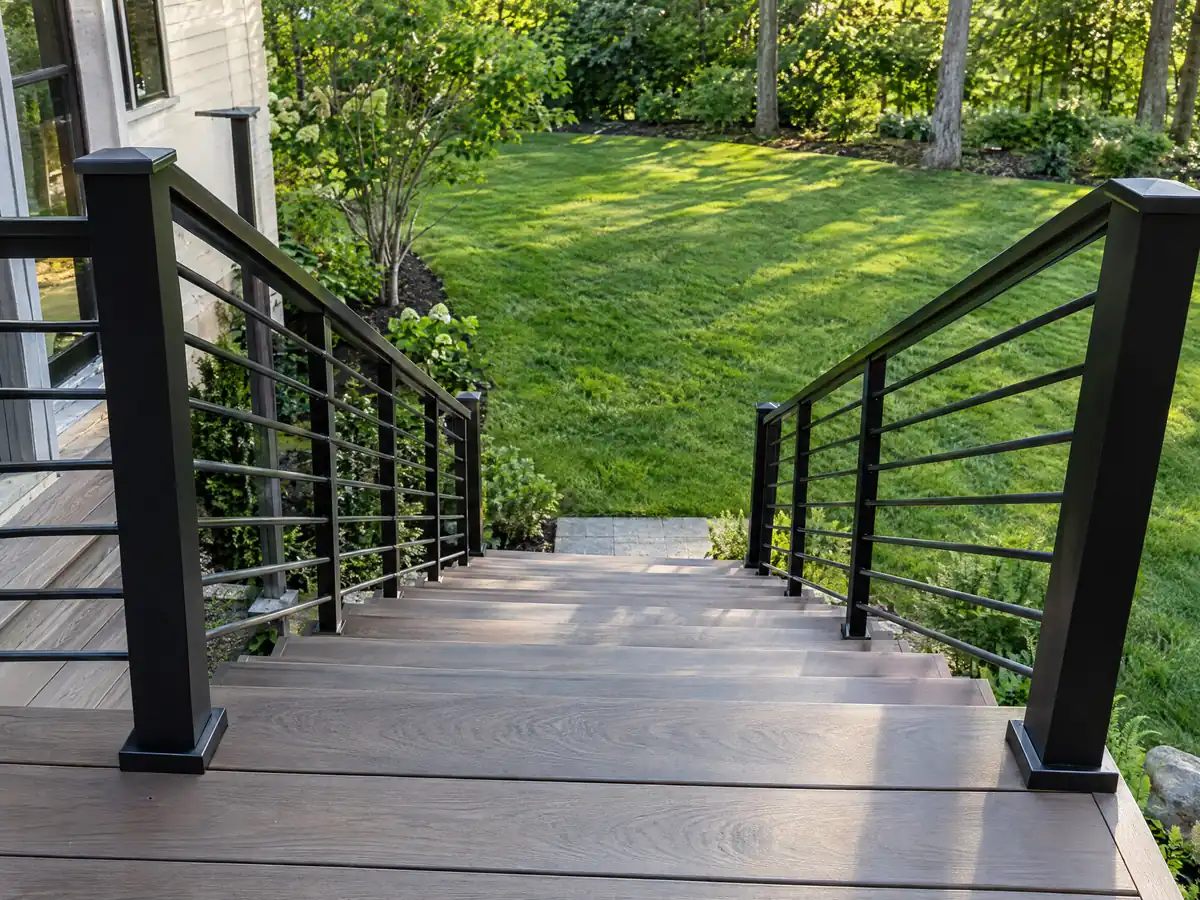
Stairs are inspected too. The photo shows wide treads and a black metal railing; rise, run and handrail details come from the approved plans and the code where the deck is built.
What else needs approval when a deck gets a pergola and lights?
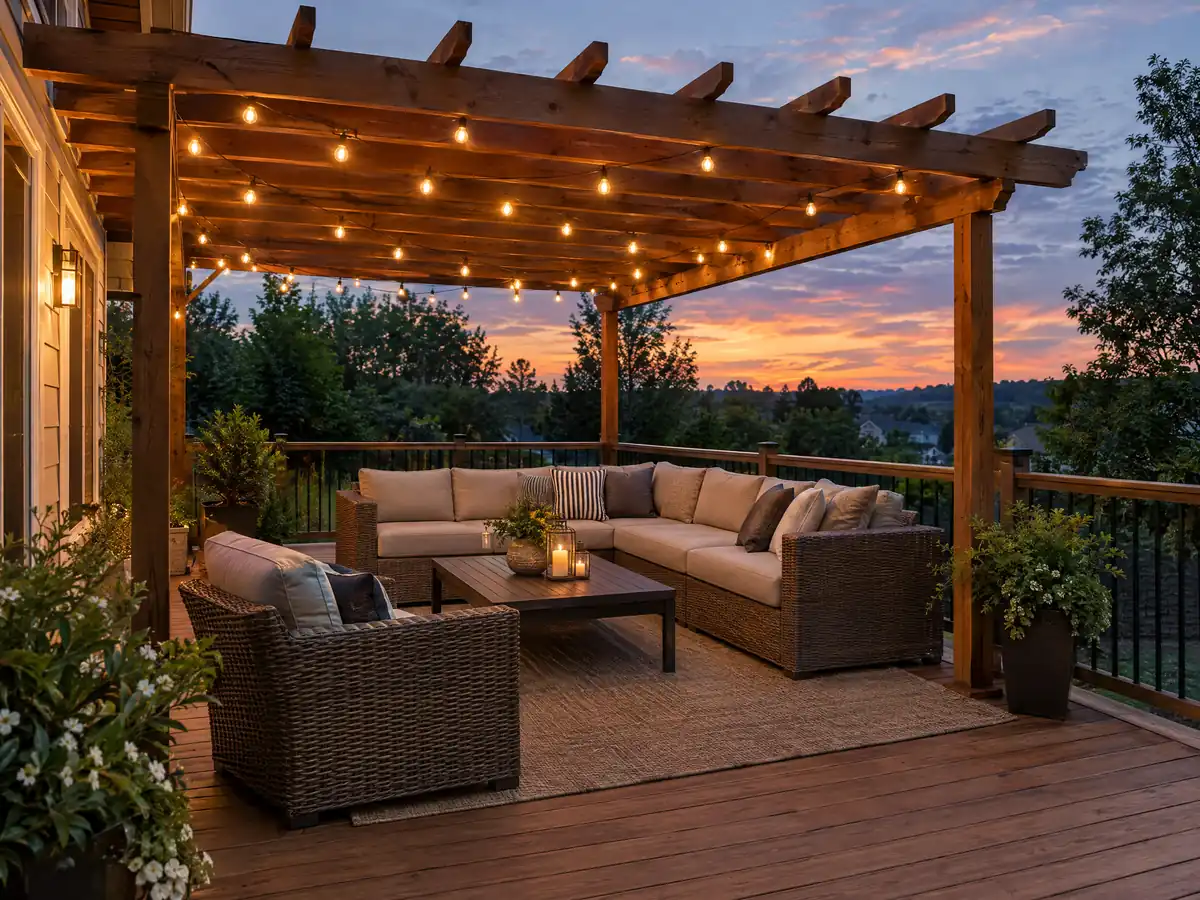
A pergola, string lights or a shade structure turn a deck into a bigger project with its own approvals. A pergola has posts that need footings and a frame that catches wind, so it belongs on the permit drawings from the start.
Ask the building department whether a roof or cover over the deck changes the permit or the zoning review. The answer depends on the jurisdiction, and we will not guess for yours.
Lighting and outlets are electrical work for a licensed electrical subcontractor, with its own permit where one is required. Ask for that license number like any other.
Homeowners associations get a say as well. Civil Code section 4765 requires a fair procedure, written decisions and reconsideration, so file the request before ordering materials.
How does MDG Builders run a deck project?
A wood deck is framing and carpentry, which CSLB's C-5 classification describes and Business and Professions Code 7057(b) lets a general building contractor take on. MDG holds the contract and manages the schedule; licensed subcontractors do the field work.
- Call and rough scopeTell us the size, height, whether the deck touches the house and the surface you want. Call (888) 666-8224 or send the contact form.
- Site visitWe check the grade, the house wall where a ledger would attach, access for concrete and lumber, and any slope behind the yard.
- Written proposalFootings, framing, surface, railing, stairs, permits and engineering are separate lines. The deposit cannot exceed $1,000 or 10 percent of the contract, whichever is smaller (Business and Professions Code 7159.5).
- Drawings and permitWe prepare or coordinate the plans and file them with the building department for your address.
- Footings, framing and inspectionLicensed subcontractors pour the footings and frame the deck, and we schedule the inspection before any boards cover the work.
- Surface, railing and stairsDecking, guards and stairs go in once the framing passes. Ask each subcontractor for a license number and certificate of insurance.
- Final walkthroughWe walk the finished deck with you, check the railing and stairs, and close out the permit.
Decks by city
Projects that often go with deck building
Concrete
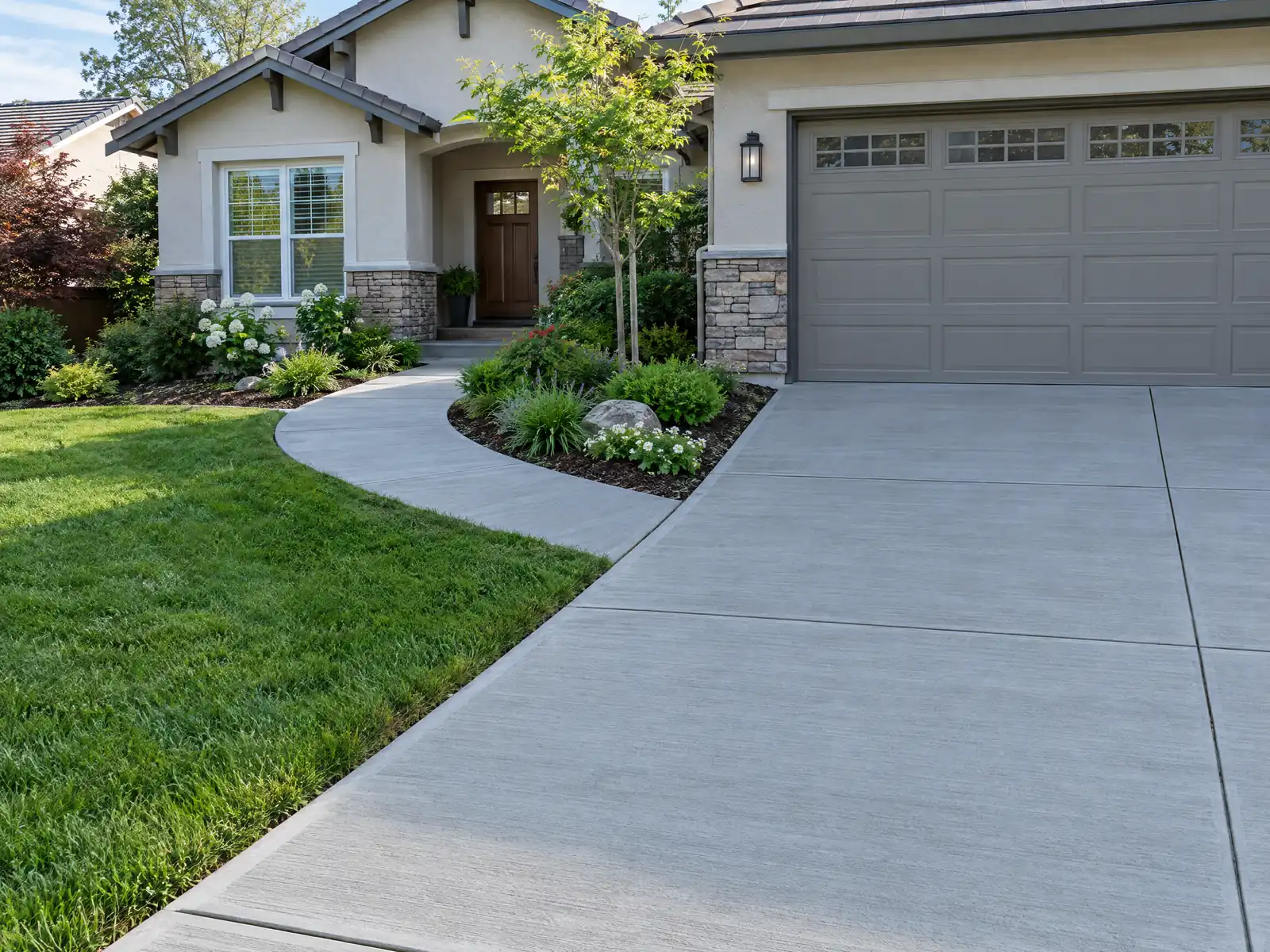
Patios, driveways, walkways and retaining walls, poured by licensed specialists and priced from sources.
See concrete work →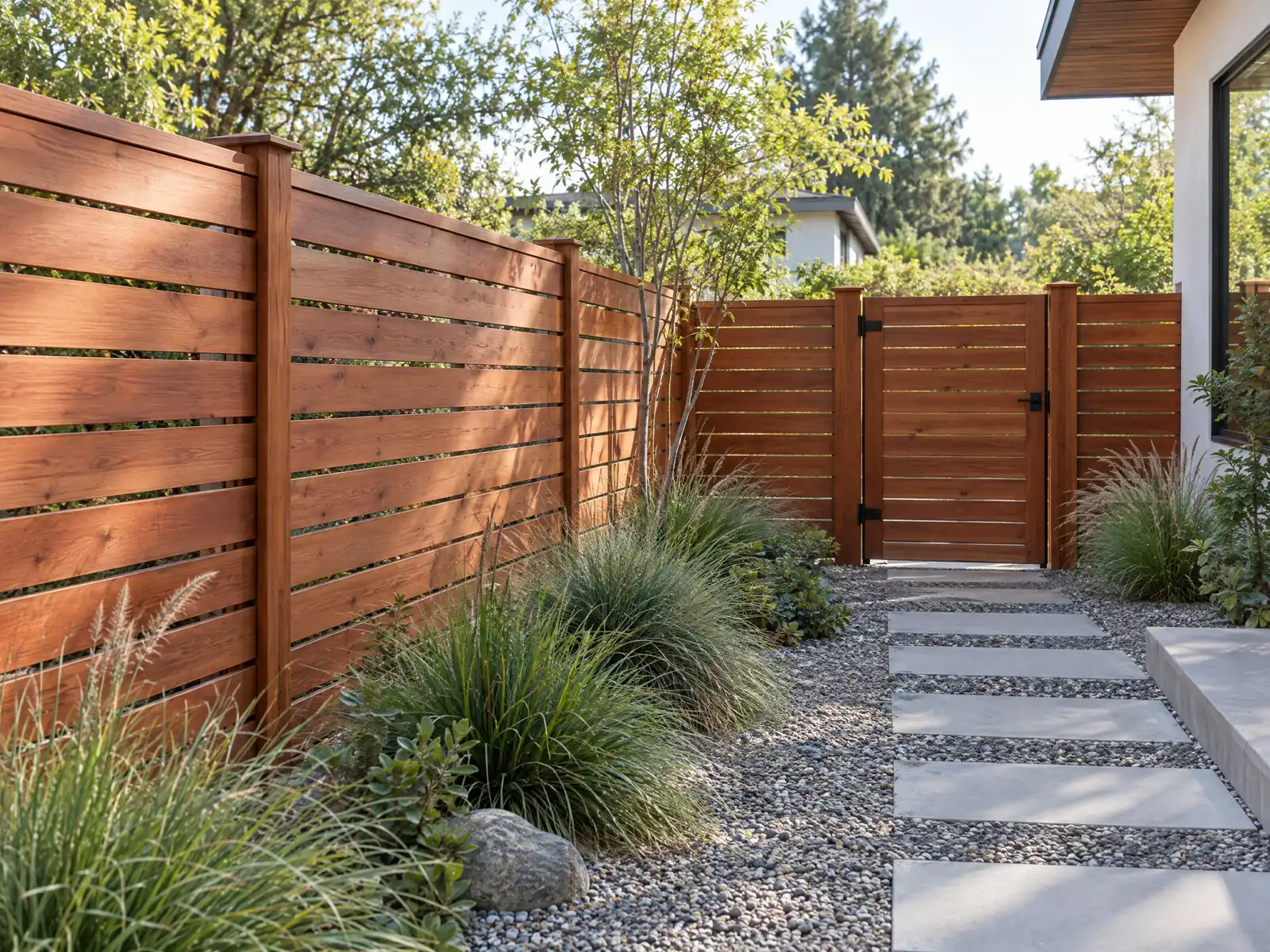
Fencing
Wood, vinyl, iron and block fences with the permit and height rules checked first.
See fencing →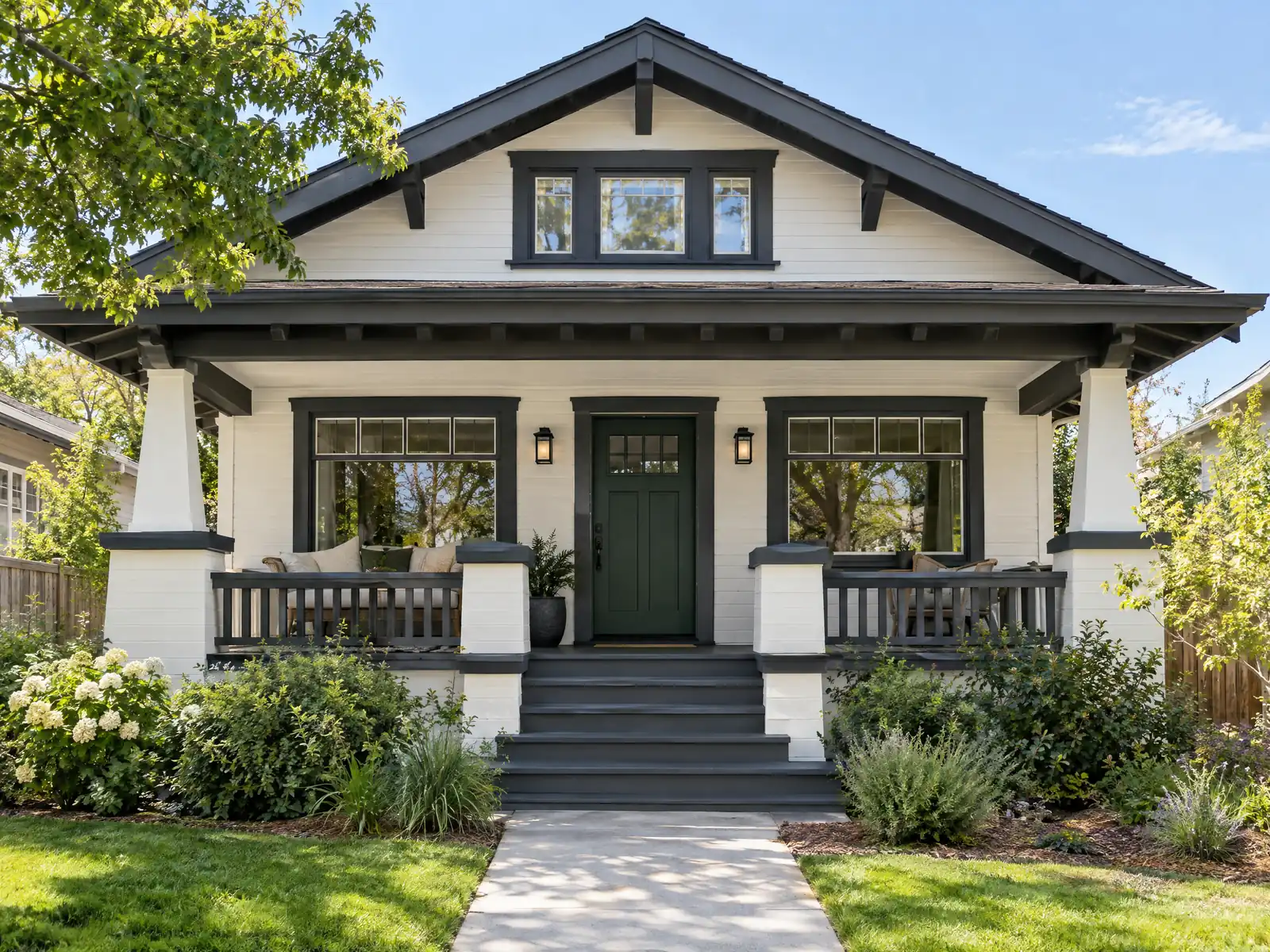
Painting
Interior, exterior, stucco and cabinet painting with real prep, lead-safe rules followed and a written scope.
See painting →Decks guides and answers
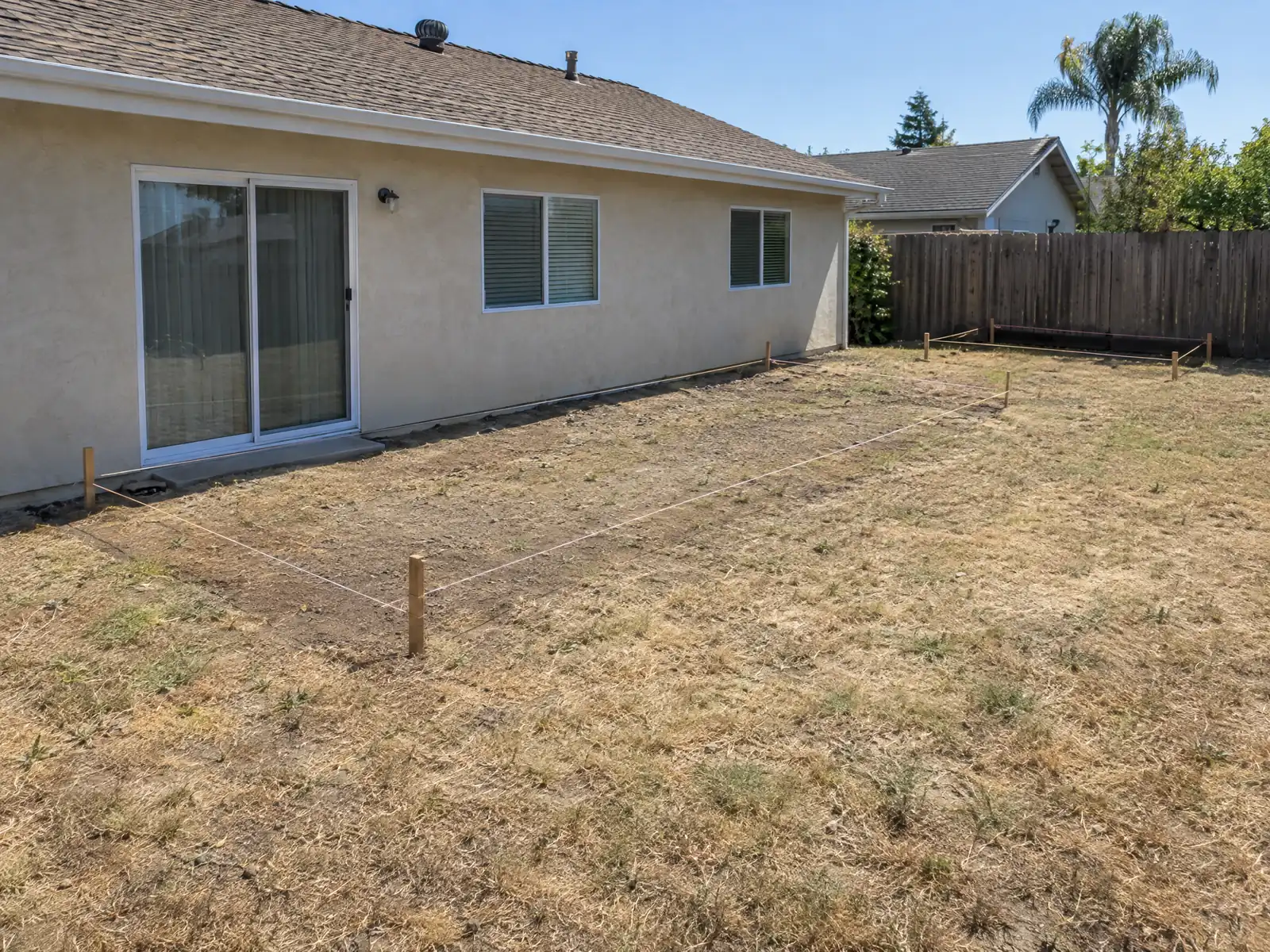
Room Addition vs ADU: Which Should You Build?
Cost, permits, rules and income compared for a Los Angeles homeowner choosing between building onto the house and building a second unit.
Read the guide →
Do You Need a Permit for a Kitchen Remodel in Los Angeles?
Which kitchen changes get an LADBS Express Permit, which go to plan check, what the 2025 Energy Code adds, and what we could not confirm.
Read the guide →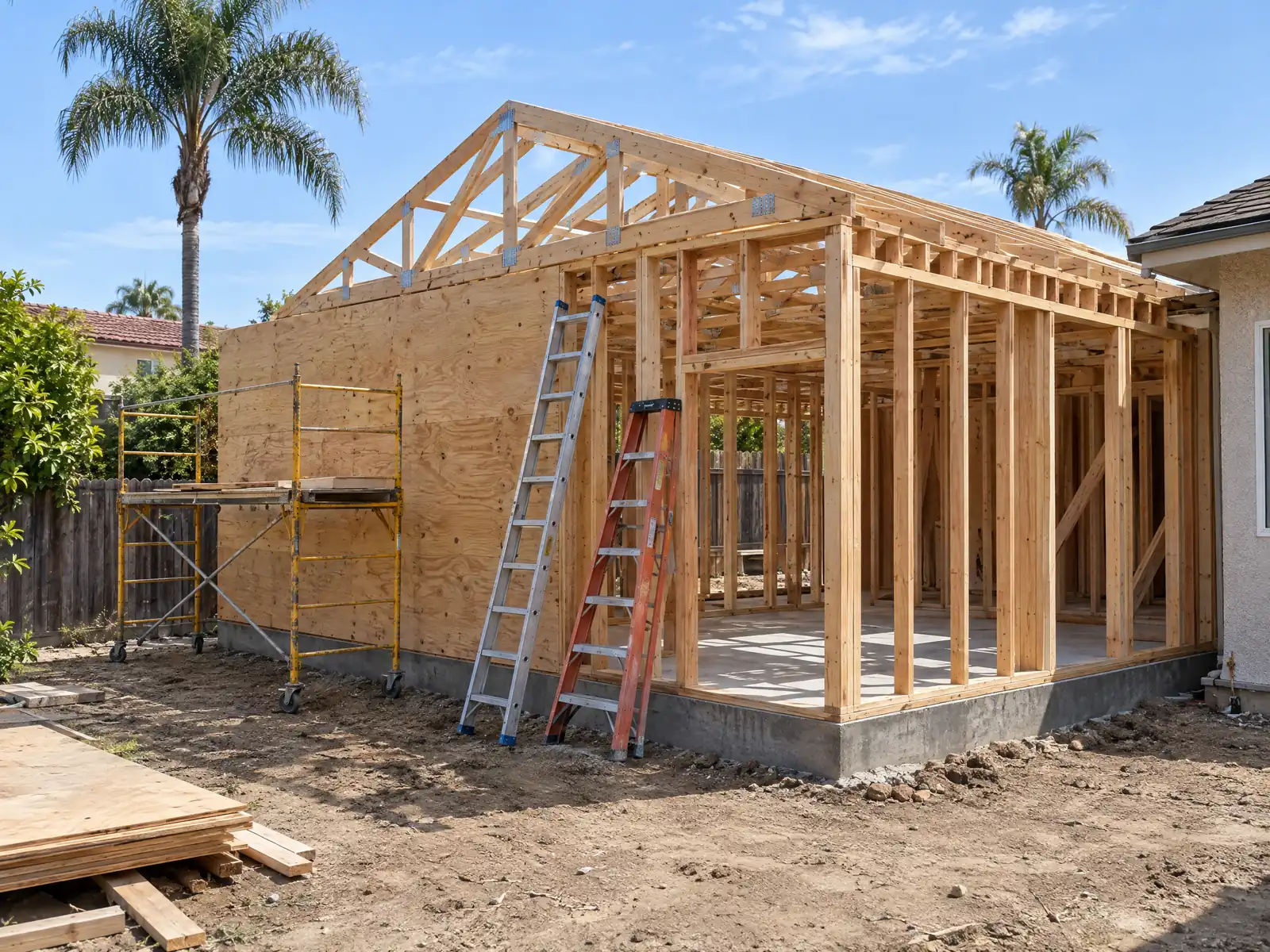
How General Contractors Use Subcontractors
Why most general contractors hire specialists for the field work, what that means for you, and what to ask for in writing.
Read the guide →Deck questions answered for Los Angeles homeowners
How much should a 16x20 deck cost?
In Los Angeles a 16 by 20 foot deck runs roughly $14,500 to $24,000 in pressure-treated wood and $21,000 to $35,000 in composite, before permits and engineering. JLC and Zonda's 2025 Cost vs. Value report prices a defined version at $18,419 in wood and $26,872 in composite.
How much would a 20x20 deck cost?
A 400 square foot deck comes to roughly $18,000 to $30,000 in pressure-treated wood and $26,000 to $44,000 in composite, using our $45 to $75 and $65 to $110 per square foot ranges. Height, stairs, railing and access move it; a hillside lot is priced by site visit.
Can I build a deck without a permit in California?
Only a small, low, freestanding deck, and only if your agency's exemption says so. The model code exempts decks of 200 square feet or less, no more than 30 inches above grade and not attached to a dwelling. Los Angeles County exempts decks up to 30 inches.
What is the largest deck you can build without a permit?
Under the model residential code, 200 square feet, if the deck is no more than 30 inches above grade, not attached to a house and not serving the required exit door. The City of Los Angeles may word its exemption differently, and zoning applies regardless, so confirm with LADBS.
Can I get a permit after the deck is built?
That is up to the building department, which decides whether and how a finished deck can be permitted. Ask before you build, or before you buy or sell a house with an older deck, because inspectors will want to see footings, ledger flashing and hold-downs that boards may now cover.
Can a deck fail a home inspection?
Yes. The code names the usual causes: missing ledger flashing, the wrong fasteners, no lateral hold-downs, guards that are too low or have wide gaps, and a ledger fastened to stone or masonry veneer (R507.9 and R312). A permitted deck with passed inspections gives you a record.
How high can a deck be without a railing in California?
A guard is required where the walking surface is more than 30 inches above grade within 36 inches of the edge (California Residential Code R312.1.1). At 30 inches or less, that section does not require one. Ask your building department about anything borderline.
Is railing height 36 or 42 inches for decks?
42 inches is the minimum guard height in the California Residential Code (R312.1.2). The openings must also stop a 4 inch sphere (R312.1.3), which is the 4 ball rule. Some guides show 36 inches because other codes differ.
Do freestanding decks need footings?
Yes, a freestanding deck still stands on posts set on concrete footings; it just does not hang from a ledger on the house. Footing size and depth come from the approved plans and your lot's soil.
Is it cheaper to build a wood deck or a composite deck?
Wood is cheaper to build. In JLC and Zonda's 2025 Cost vs. Value report for Los Angeles, the same 16 by 20 foot deck costs $18,419 in wood and $26,872 in composite, and wood recouped more at resale: 99.6 percent against 73.9.
What is the downside of composite decking?
In the Los Angeles data, the downside is price: about $8,450 more than wood for the same defined deck, with a lower resale recoup of 73.9 percent. In wildfire areas the board must also meet section R337.9.3, so confirm the product's listing before buying.
Does it cost money to get a permit to build a deck?
Yes, the building department charges a fee from its published schedule, and hillside or larger decks may add plan check or engineering costs. Our proposals list permits and engineering as separate lines.
Ask for a deck proposal
Tell us the size, the height and whether the deck is attached or on a slope. We will explain the permit path for your address when we call back.