
Microcement vs Tile: Which Holds Up Better in a Bathroom?
Neither is cheaper by default, because no independent Los Angeles price exists for microcement, so any claim that it beats tile is an installer's number. Tile is individual units set over a prepared surface with grout joints. Microcement is a hand-troweled cement coating whose performance depends on the layers under it.
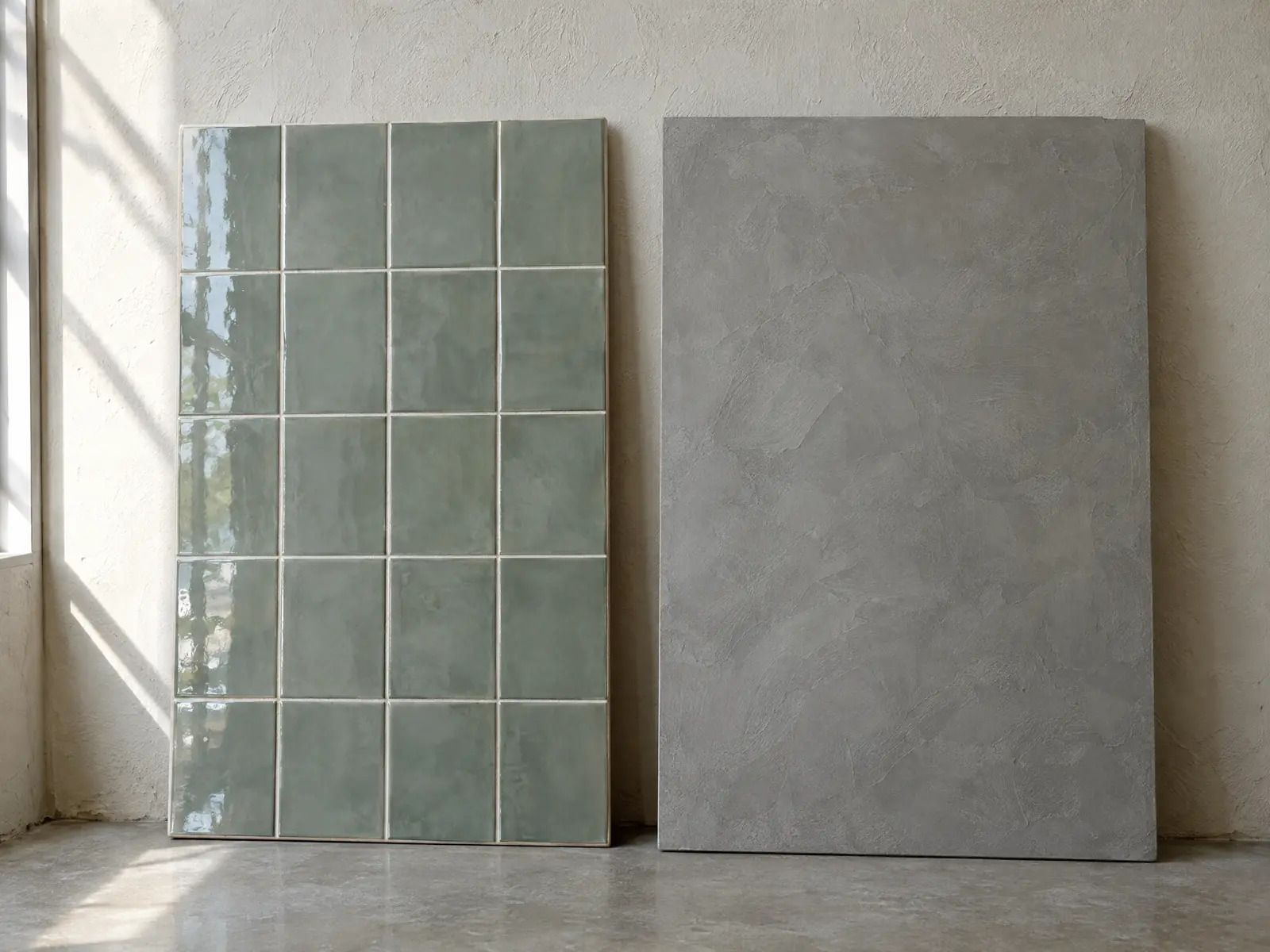
Is microcement cheaper than tile?
We cannot honestly say, and neither can most of the pages that claim it. Independent price data for microcement does not exist at the Los Angeles level. Every microcement price we found comes from an installer or a supplier, and the published figures from those two groups differ by more than a factor of two. The one independent number we found, Angi's national figure for a thin concrete overlay, describes a coating under one-eighth of an inch thick on simple designs, which is not a shower system.
A fair comparison needs the same room, the same scope and two written bids. Ask each contractor to price demolition or surface prep, waterproofing, the finish itself, sealer, disposal and any plumbing work, so that the totals describe the same job.
How is each one installed?
Tile is a unit system. Individual tiles are bonded to a prepared substrate with mortar or adhesive, and grout fills the joints between them. The waterproofing in a shower sits behind and beneath the tile, and the tile and grout are the wear surface. In California, tile is its own trade, the CSLB C-54 Ceramic and Mosaic Tile classification, which the CSLB describes as covering tile for bathtubs and showers.
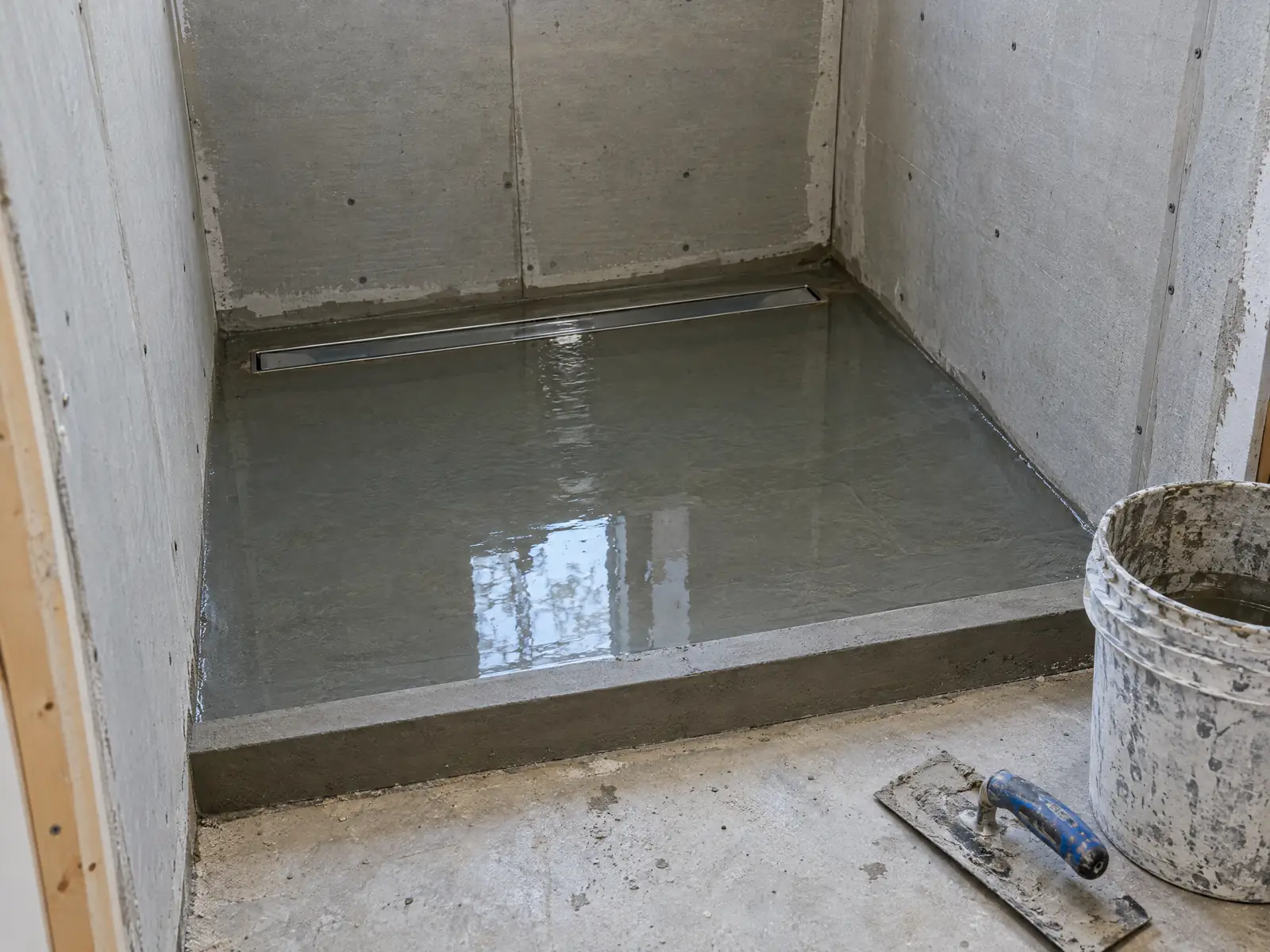
Microcement is a coating system. It is a polymer-modified cement material that a specialty finisher trowels onto a primed, prepared surface in thin coats, with reinforcement where the area will get wet, and then seals. There are no joints, so the surface reads as one piece, but it also means the finish itself is not the waterproofing. That layer has to be built beneath it.
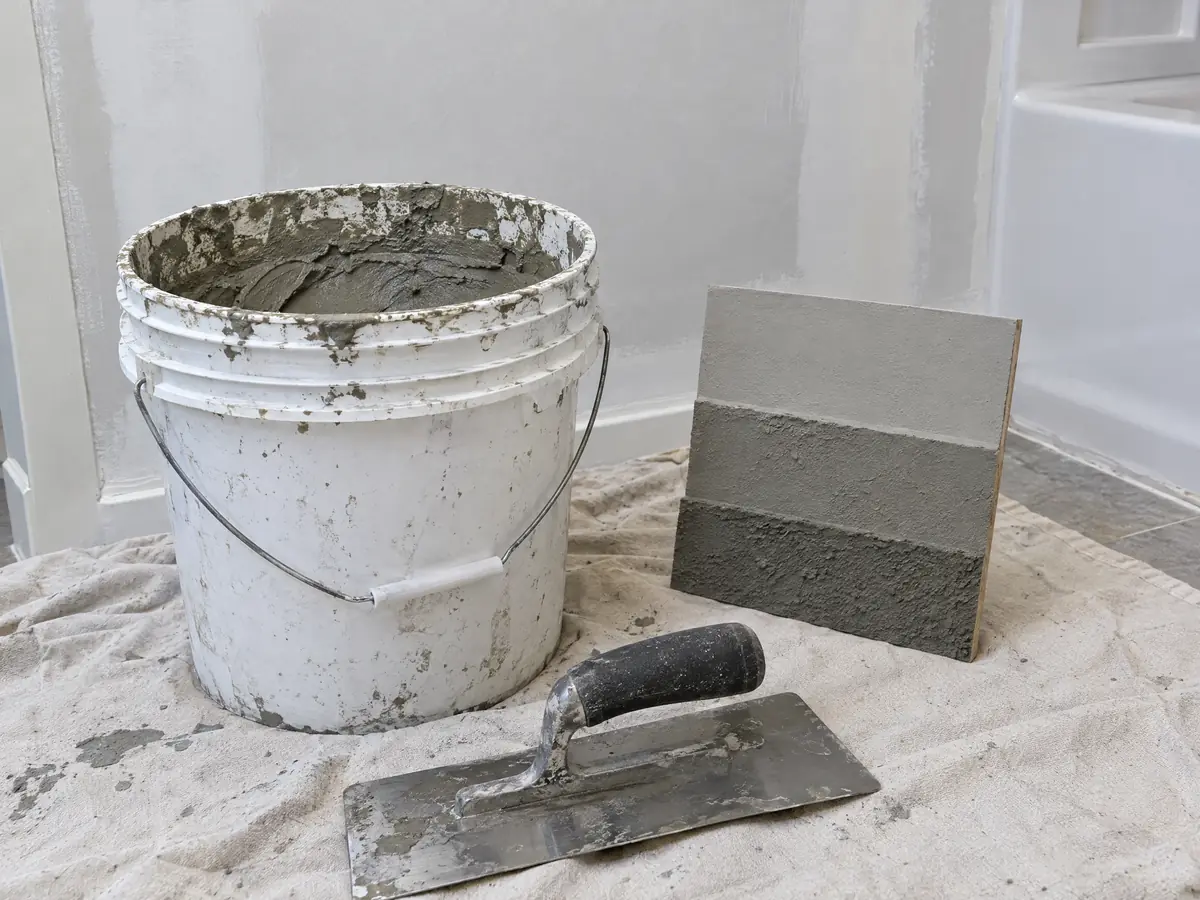
Is microcement waterproof, and can it go in a shower?
A sealed coating resists water, but it does not replace a shower assembly. One supplier of microcement systems says directly on its FAQ that wet areas need the correct substrate, waterproofing, reinforcement and sealer, and that you should wait at least 14 days after the final sealer before the surface sees water. A home design article from Real Homes in June 2024 describes microcement as suitable for showers when it is applied over a waterproofing membrane.
We found no independent test data on cracking, staining or service life in showers. Claims of 100 percent waterproof or no demolition appear on installer sites without a source, and we do not repeat them. In a shower, the question to ask is what the waterproofing layer is, who installs it, and whether it will be flood tested and photographed before the finish goes on.
If a bid for a microcement shower does not name the waterproofing system, it is not a complete bid.
A worked example: when can you shower in a microcement bathroom?
Take a hall bathroom. Say demolition and the waterproofing layer take the first five working days, the base and finish coats take another four, and the final sealer goes on at the end of day nine. With the supplier's 14-day wait counted in calendar days, water can touch the surface on day 9 + 14 = day 23, so the bathroom is out of service for about three weeks from the start of work.
Tile follows different arithmetic. Grout needs to cure, and a sealer may be needed, but the cure windows come from the tile setter's products and the written spec, so ask for them. The takeaway is not that one is faster. It is that the sealer-to-shower wait is a real line on the microcement schedule, and it should be in your proposal as a date.
Which one is easier to maintain, clean and repair?
Tile maintenance centers on grout. The tile itself rarely changes, grout can stain or crack, and a damaged tile can be removed and replaced individually if you have spares from the original lot. That is a major reason tile is the default for wet areas.
Microcement maintenance centers on the sealer. Vendor blogs say to expect resealing every two to five years, but we found no independent source for that number, so ask the installer for the sealer maker's written maintenance schedule. Repairing a chip or crack means patching and re-sealing, and a patch may not match the original, which is worth asking an installer to show on a sample. Cleaning with the wrong product can damage a sealed surface, so get the approved cleaners in writing.
Can microcement go over existing tile?
Installers in Los Angeles say yes, and that is a main selling point because it avoids demolition. We found no independent source that sets the conditions, so treat it as a question for the installer rather than a given. The tile must be sound and bonded, the grout lines must be filled, and the prep and primer must suit the product.
Ask for the prep method and what the warranty covers if the old tile later loosens. Also ask what the added thickness does to doors, drains and thresholds.
- How will the grout joints be filled so they do not telegraph through?
- What happens at the shower drain, the curb and the edge where the wall meets the floor?
- Does the warranty still apply if the existing tile was not removed?
Does microcement need a permit, a license or lead precautions?
Permit status is unconfirmed. The Los Angeles Municipal Code text we read lists painting and papering as exempt from permits, and it does not mention finish coatings, so ask LADBS. Changing shower plumbing or enlarging a shower is a separate question with its own permit answer.
On licensing, MDG Builders, CSLB #1040337, designs, permits and manages the project, and a licensed specialty subcontractor does the microcement. Under Business and Professions Code section 7159, your contract states whether subcontractors will be used, and you can request each one's name, license number and classification. Look the license up on the CSLB site.
If prep sands or grinds painted surfaces in a house built before 1978, the EPA's lead renovation rule for paid work may apply, so ask whether the crew is lead-safe certified. Ask also for the sealer's data sheet and its VOC content, because Southern California air district rules limit some sealers.
How do you decide between microcement and tile?
Choose tile when you want a long, well-understood track record in a wet area, or a pattern, or the ability to replace one damaged piece. Choose microcement when a continuous, joint-free surface matters more than that, the existing surface is sound enough to coat, and you have an installer who will put the waterproofing, prep and warranty in writing.
In either case, ask to see a finished project at least a year old, not a photo from the week it was built.
Microcement and tile questions
Is microcement cheaper than tile?
Not necessarily, and no independent Los Angeles price exists to settle it. Installer and supplier prices differ widely, and shower work costs more than floors or walls. Get two written bids for the same room that both include prep, waterproofing, finish, sealer and disposal.
Is microcement waterproof?
The sealed coating resists water, but it is not a waterproofing system on its own. A supplier FAQ says wet areas need the right substrate, waterproofing, reinforcement and sealer, plus at least 14 days after the final sealer before water exposure.
How long does microcement last?
We found no independent data on service life, so we will not give a number. Vendor blogs mention resealing every two to five years. Ask the installer for the sealer maker's maintenance schedule and for a finished project that is more than a year old.
Can you apply microcement over existing tile?
Los Angeles installers say yes when the tile is sound and bonded, but we found no independent source for the conditions. Ask how grout joints are filled, how the drain and edges are detailed, and whether the warranty holds if the old tile later fails.
Does microcement crack or stain?
It can, and the sealer and the layers beneath it largely decide how well it resists. We found no independent testing on cracking or staining, so ask for the written warranty terms and a sample sealed with the exact product they will use.
Is microcement slippery or cold underfoot, and does it work with underfloor heating?
We found no independent data on any of the three. Ask for a floor sample sealed with the actual sealer and test it with a wet foot. For radiant heat, ask the system maker and the heating manufacturer for written approval before ordering.
Work that goes with this
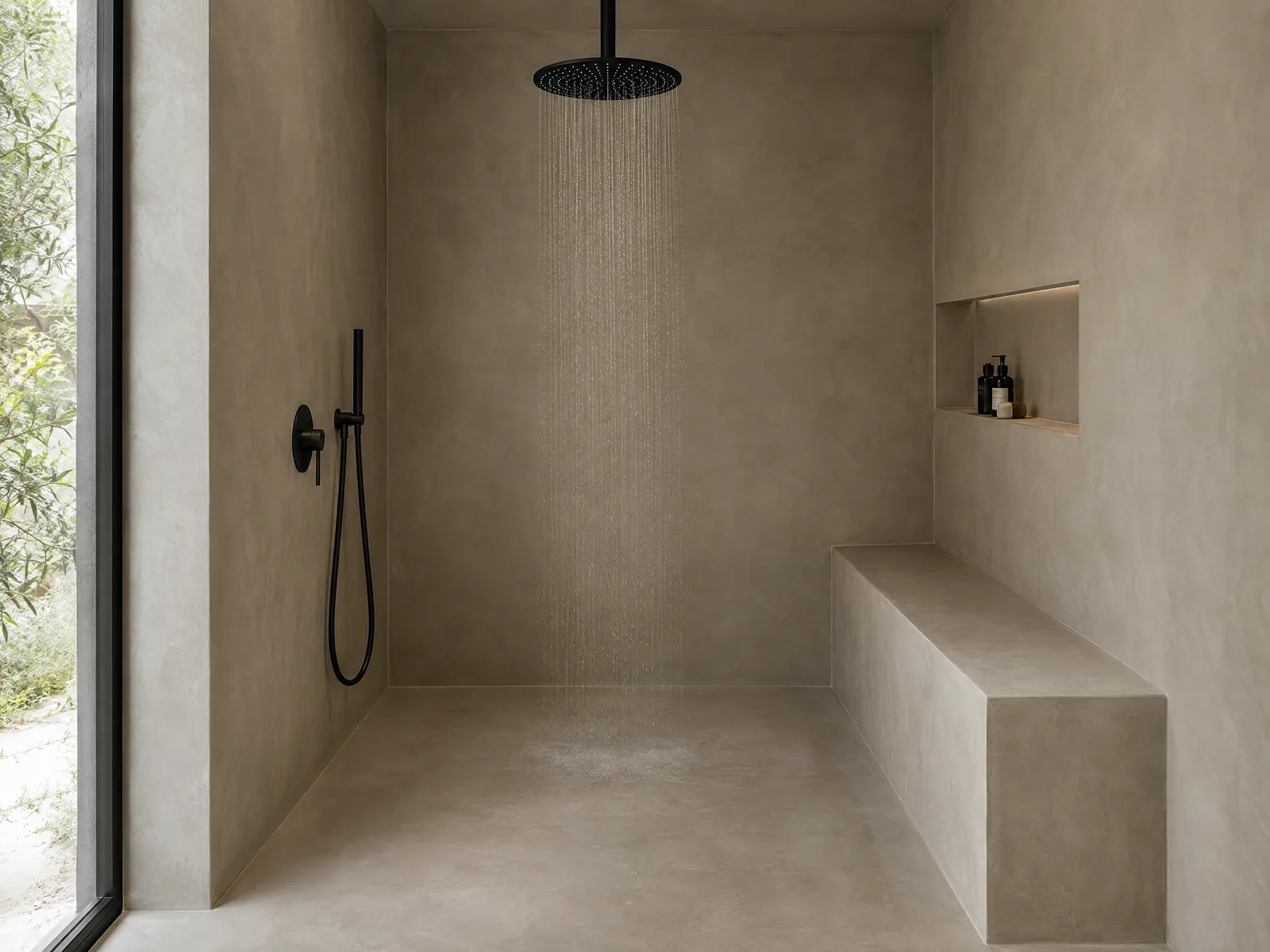
Microcement
Continuous cement-based finishes for floors, walls, counters and showers, with the prep and waterproofing explained.
See microcement →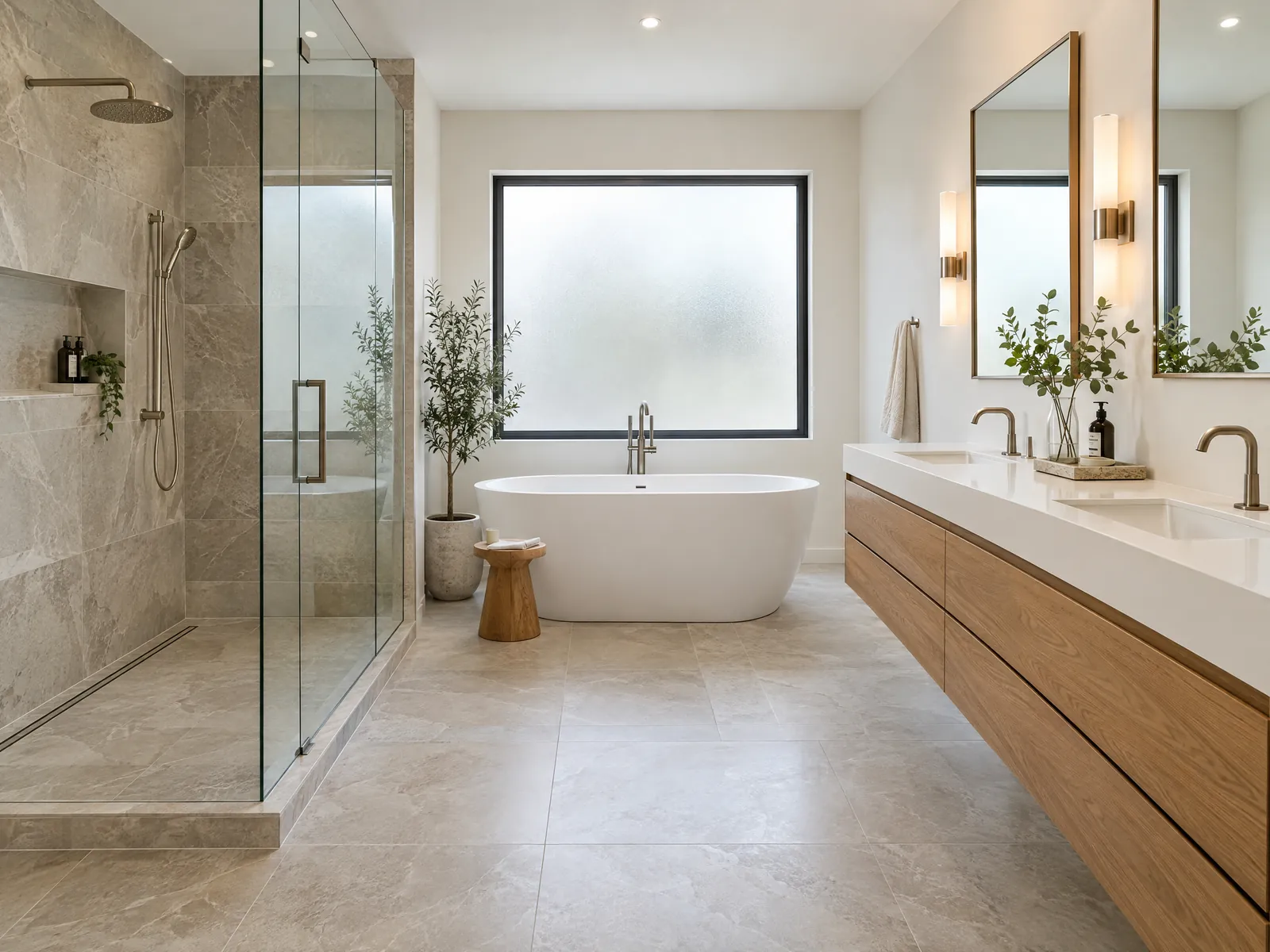
Bathroom Remodeling
Showers, tubs, vanities and full baths, with the permit path, waterproofing and prices from named sources.
See bathroom remodeling →
Flooring
Hardwood, engineered wood, vinyl plank, laminate and tile, with slab testing and a written scope.
See flooring →Keep reading
How Much Does a Bathroom Remodel Cost in California?
Los Angeles bathroom remodel prices by scope, what a new bathroom adds, and the permit and contract rules that touch the total.
Read the guide →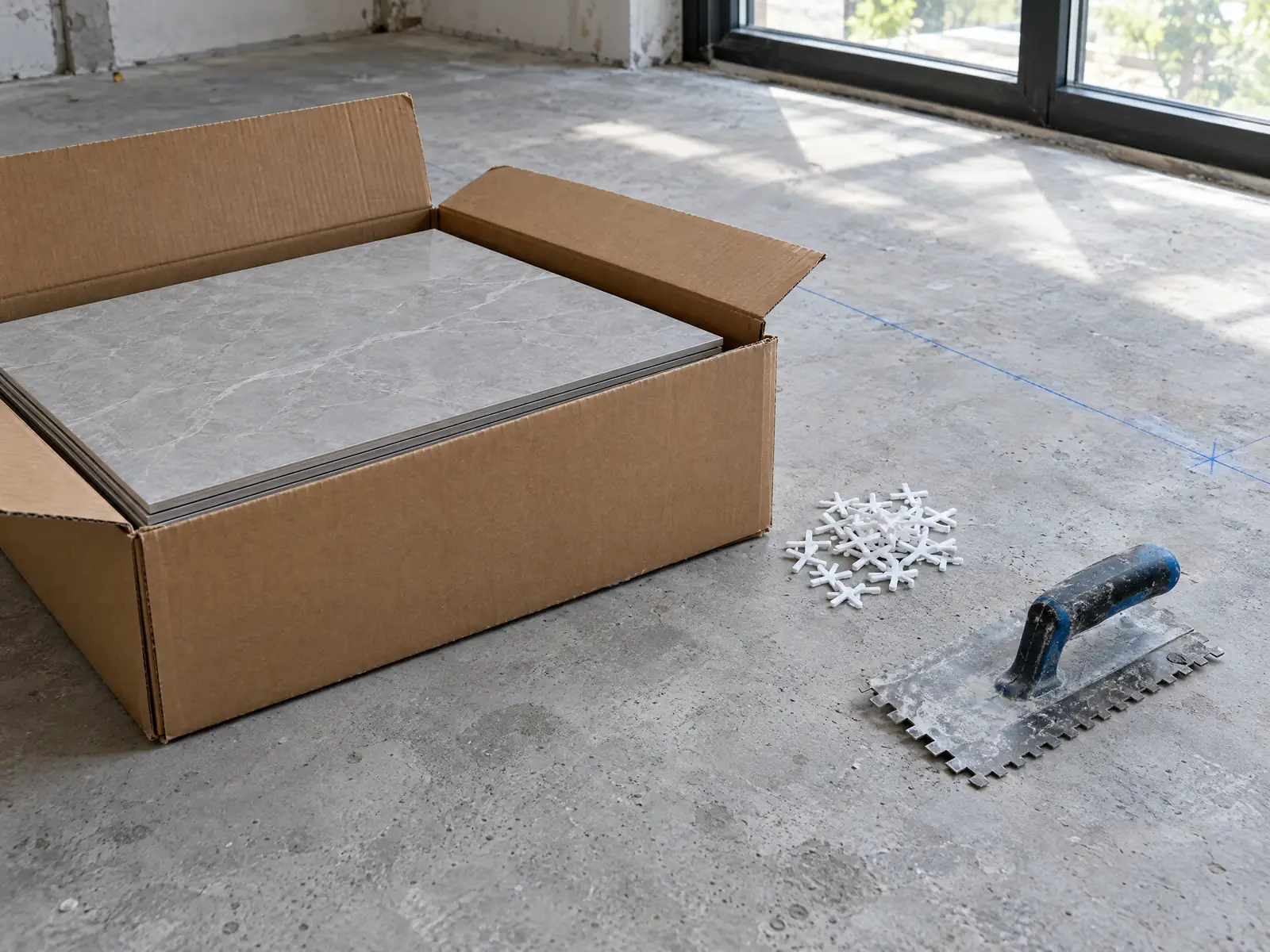
How Much Does Flooring Installation Cost in Los Angeles?
Per-square-foot flooring prices for Los Angeles with sources, a room-sized worked example, slab moisture, and who is licensed to install.
Read the guide →
How General Contractors Use Subcontractors
Why most general contractors hire specialists for the field work, what that means for you, and what to ask for in writing.
Read the guide →Ready to plan your project?
Call or send the form. We schedule a site visit and send a written proposal.