
How Tall Can a Fence Be in California? Front and Backyard Limits in Los Angeles and Nearby Cities
California has no statewide fence height limit, so your city's zoning code decides. In the City of Los Angeles a front yard fence in an R zone tops out at 3.5 feet, and side and rear fences at 8 feet on lots 40 feet or wider outside the Hillside Area, 6 feet otherwise. Other cities set different numbers.
Is there a California state law on fence height?
Not one that gives you a number for your yard. Height limits live in each city's or county's zoning code. State law steps in on three narrower questions: fences built out of spite, who pays for a shared fence, and barriers around pools.
A house in the City of Los Angeles follows LADBS and City Planning. A house in Long Beach follows the Long Beach zoning code, and one in unincorporated territory follows Los Angeles County. Start by confirming which jurisdiction issues your permits.
How tall can a front yard and backyard fence be in Los Angeles?
LADBS Information Bulletin P/ZC 2023-002, effective January 1, 2023, puts the city's residential limits on one page, listed below. They apply inside the required yards.
The bulletin carries a caution in capital letters: do not assume the inside edge of the sidewalk is the property line. The public right-of-way can extend past the sidewalk, and a fence built there is not on your land. The bulletin also has a diagram for measuring height on sloping ground and flags a view angle at corner lots, so both deserve a call to plan check.
- Front yard, R and RW residential zones: 3.5 feet.
- Front yard, A and RA zones: 6 feet.
- Front yard, with Department of City Planning approval: up to 8 feet.
- Side and rear yards, A, RA and R zones: 8 feet if the lot is 40 feet wide or more and not in the Hillside Area.
- Side and rear yards on lots under 40 feet wide or in the Hillside Area: 6 feet.
Does a taller fence need a building permit in Los Angeles?
Height limits and permits are separate questions. Los Angeles Municipal Code section 91.106.2, amended effective December 31, 2025, exempts from a building permit masonry or concrete fences not over 3.5 feet high and other fences not over 10 feet high, swimming pool barriers excepted. So a 7-foot wood fence needs no building permit, yet it is still illegal in a rear yard on a 35-foot-wide lot, where zoning caps the height at 6 feet.
Masonry is the opposite case: a 5-foot block wall can be fine for zoning in a rear yard and still need a permit. We compare the two materials in block wall or wood fence: cost and permits. One more trap: where a wall or fence carries a required 42-inch guard for a raised patio or deck, the guard counts toward fence height. See when a Los Angeles deck needs a permit.
What are the fence height limits in Long Beach, San Diego and county areas?
Long Beach uses a table. Municipal Code section 21.43.020 and its Table 43-1 limit residential fences and garden walls to 3 feet in the front yard and 6 feet 6 inches in other yard areas. The front limit rises to 4 feet in council-designated special fence height areas if the extra foot is wrought iron or chain link, and fences may reach 8 feet where a yard abuts an alley or flood channel. Height between two private lots is measured from the average grade of both sides.
The City of San Diego works on a sliding line. Municipal Code section 142.0310 holds a solid fence on the front or street-side property line to 3 feet, and lets it rise toward 6 feet as it moves back to the setback line. In required side and rear yards fences may reach 9 feet, but any part above 6 feet must be open. The city's Information Bulletin 222, dated December 2023, defines open as 35 percent open to light, or 75 percent in the Coastal Overlay Zone. The code's permit table requires no permit for a fence under 7 feet.
In unincorporated Los Angeles County, the Public Works exempt work list excuses fences up to 6 feet from a building permit, with masonry and concrete fences also required to sit back from public ways by at least their own height. Zoning heights there come from the county's Title 22, which we did not retrieve, so confirm with Regional Planning. Pasadena and Glendale publish their own standards.
What is the spite fence law in California?
It is one sentence from 1953. Civil Code section 841.4 says any fence or other structure in the nature of a fence that unnecessarily exceeds 10 feet in height, and is maliciously erected or maintained to annoy the owner or occupant of adjoining property, is a private nuisance.
Three things have to line up: over 10 feet, unnecessary, and malicious. A 7-foot fence that breaks the city's 6-foot limit is not a spite fence under this section. It is a zoning violation, a matter for the city's code enforcement office.
Who pays for a shared fence, and what notice is required?
Both owners, by default. Civil Code section 841, in effect since January 1, 2014, presumes adjoining landowners benefit equally from a boundary fence and are equally responsible for the reasonable cost of building, maintaining or replacing it, unless they agree otherwise in writing.
The owner who wants the work must give each affected neighbor 30 days' prior written notice. A neighbor can overcome the equal split in court by showing it would be unjust. Among the factors the judge weighs: whether the burden is out of proportion to the benefit, financial hardship, and whether the cost reflects one owner's personal aesthetic or architectural preferences.
- The notice must state the presumption of equal responsibility for reasonable costs.
- It must describe the problem with the fence and the proposed solution.
- It must give the estimated cost, the proposed cost split and the proposed timeline.
A worked example: splitting a 60-foot fence at the legal height
Two neighbors in the City of Los Angeles share a 60-foot rear boundary. The lots are 50 feet wide and outside the Hillside Area, so the zoning limit is 8 feet. One owner wants 8 feet. The other is content with 6.
Angi's Los Angeles fence page, updated August 4, 2026, reports an average of $29 per linear foot. At that rate the fence costs 60 x $29 = $1,740, and the default share is $1,740 / 2 = $870 each. Angi does not price by height, so suppose the 8-foot version is quoted at $2,400. The neighbor who only needs 6 feet can argue under section 841 that the extra $2,400 - $1,740 = $660 is a preference, leaving shares of $870 and $870 + $660 = $1,530. Put the split in writing first.
How tall must a pool fence be, and what about fire zones and HOAs?
A pool enclosure is the one place state law sets a minimum. Health and Safety Code section 115923 requires an enclosure at least 60 inches high, with no more than 2 inches of clearance at the bottom, no gap that passes a 4-inch sphere, no handholds or footholds on the outside, and gates that open away from the pool and self-latch at 60 inches or higher. In Los Angeles a pool barrier always needs a permit, whatever it is made of.
In wildfire areas, the UC Agriculture and Natural Resources Fire Network fence page advises replacing the last 5 feet of a combustible fence where it meets the house with a noncombustible section such as a metal gate. A homeowners association can be stricter than the city, so get its written approval first.
MDG Builders, CSLB #1040337, checks the zoning limit and permit trigger for the address before pricing, and the fence itself is put up by a licensed fencing subcontractor, or a licensed mason when the design calls for concrete block. Paint or stain on a wood fence is a separate line in the proposal.
Fence height questions
Is an 8 foot privacy fence too high?
It depends on the city and the yard. In the City of Los Angeles, 8 feet is allowed in side and rear yards only on lots at least 40 feet wide outside the Hillside Area. Long Beach stops at 6 feet 6 inches in most yards.
Can I put a privacy fence up in my front yard?
Usually not at full height. Los Angeles limits front yard fences in R zones to 3.5 feet unless City Planning approves up to 8 feet. Long Beach allows 3 feet, and San Diego allows a 3-foot solid fence at the front property line.
What is the good neighbor fence law in California?
It is Civil Code section 841, which presumes adjoining owners share equally in the reasonable cost of building, maintaining or replacing a boundary fence. The owner planning the work must give 30 days' written notice with the problem, the fix, the cost, the proposed split and the timeline.
How tall does a pool fence have to be in California?
At least 60 inches. Health and Safety Code section 115923 also limits the gap under the enclosure to 2 inches, bars openings that pass a 4-inch sphere, and requires gates that open away from the pool with a self-latching device at 60 inches or higher.
Can I sue my neighbor over a spite fence in California?
Yes, if the fence unnecessarily exceeds 10 feet and was built or kept up maliciously to annoy you. Civil Code section 841.4 calls that a private nuisance. A fence that is merely over the city height limit is a matter for code enforcement instead.
How is fence height measured on a slope or between two yards?
Each city defines it. Long Beach measures a fence between two private lots from the average grade of both sides. Los Angeles shows its sloping-ground method in a diagram in bulletin P/ZC 2023-002, so ask LADBS plan check to confirm on a hillside.
Work that goes with this
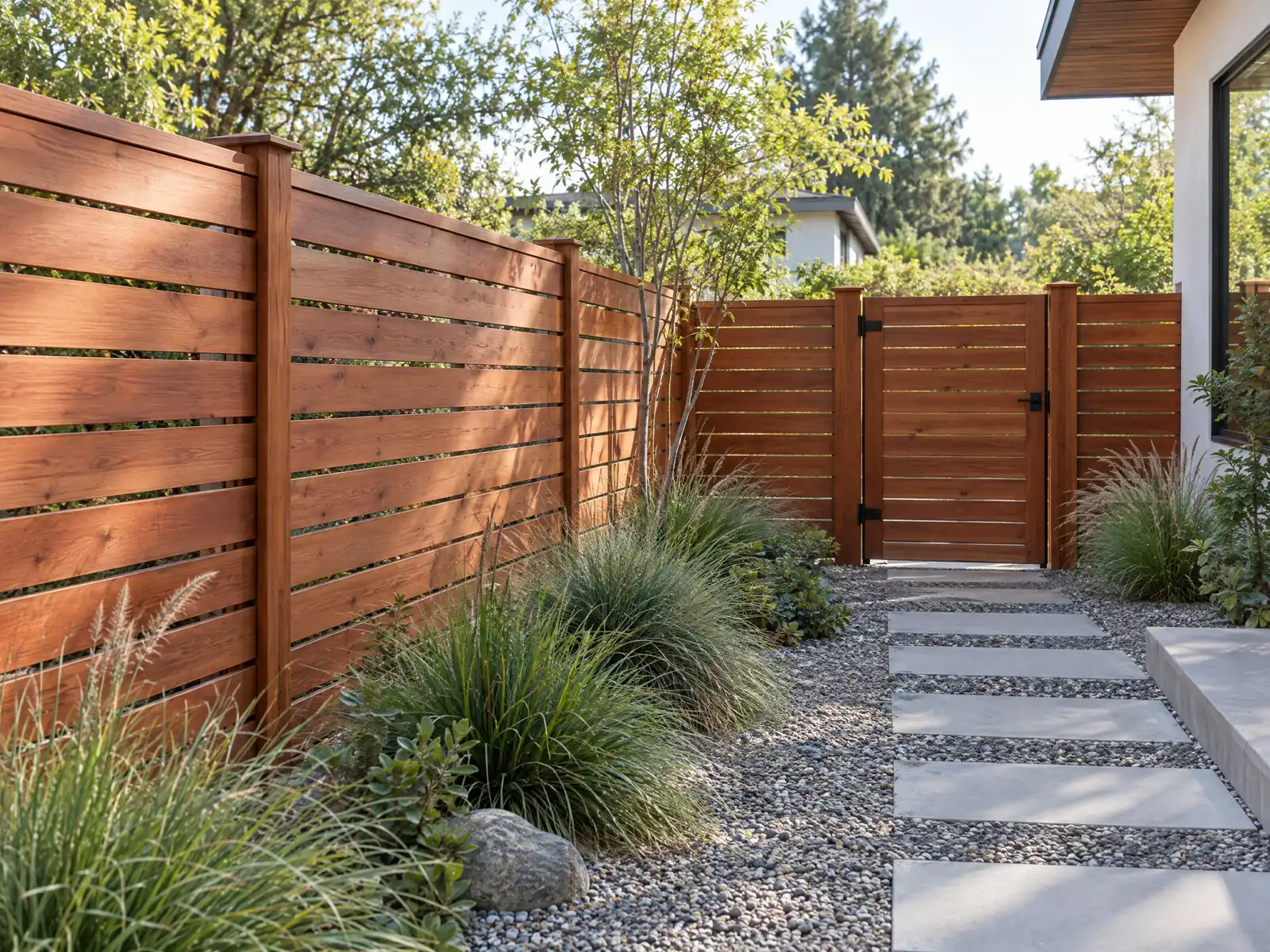
Fencing
Wood, vinyl, iron and block fences with the permit and height rules checked first.
See fencing →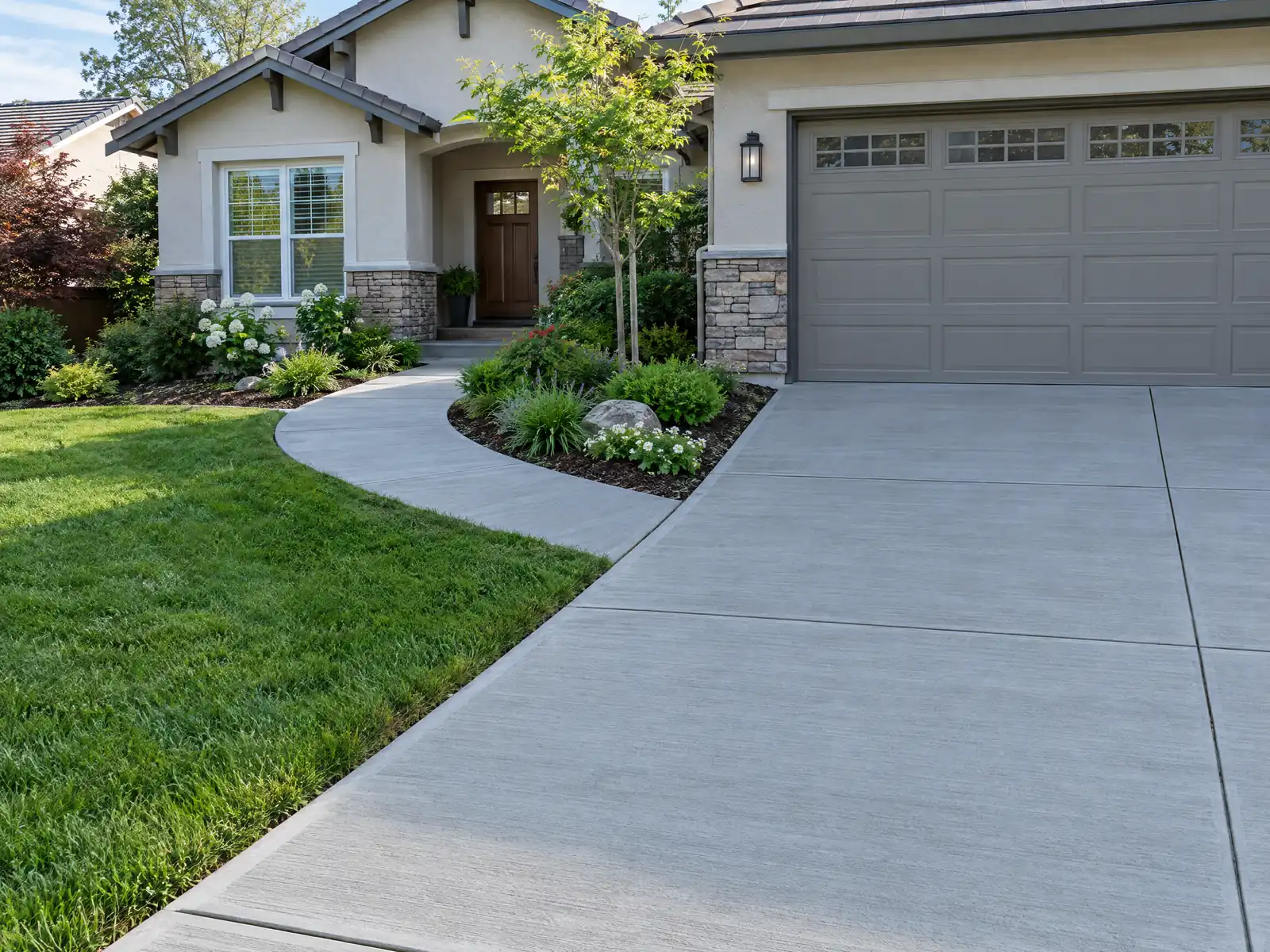
Concrete
Patios, driveways, walkways and retaining walls, poured by licensed specialists and priced from sources.
See concrete work →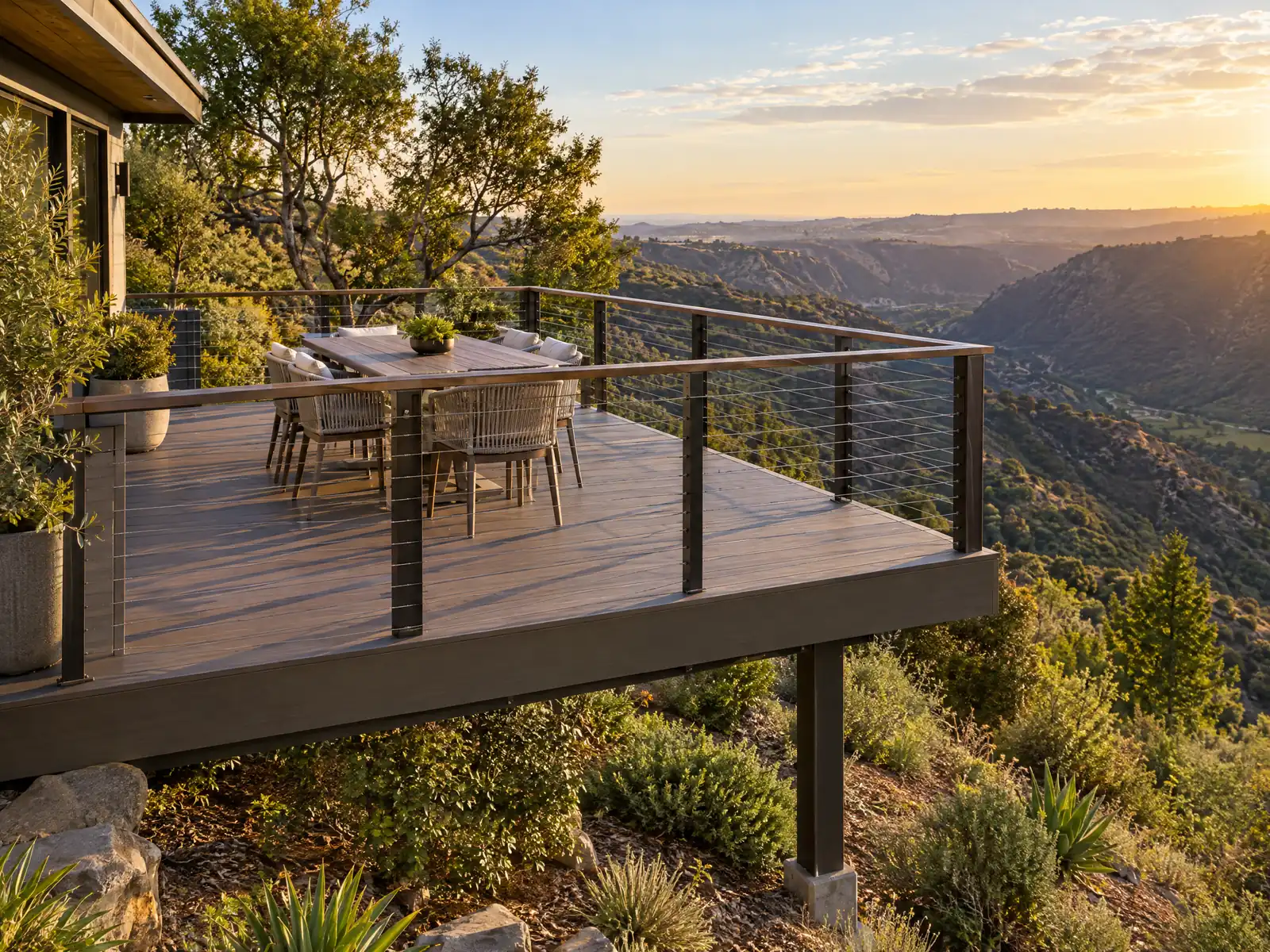
Decks
Wood and composite decks, hillside decks and stairs, with permits and code checked before framing.
See deck building →Keep reading
Block Wall vs. Wood Fence in California: Cost per Linear Foot, Permits and Lifespan
A block wall costs several times what a wood fence does and can outlast it by decades. Per-foot math, Los Angeles permit rules and licenses.
Read the guide →Do You Need a Permit to Build a Deck in Los Angeles?
The 30-inch rule in the Los Angeles code, how far a deck may reach into a yard, and what inspectors check at the ledger, footings and guard.
Read the guide →
How to Check a Contractor's License in California
Read a CSLB license record line by line, learn what a B license means, and see MDG's own record as a worked example.
Read the guide →Ready to plan your project?
Call or send the form. We schedule a site visit and send a written proposal.