
Home Improvement Contract Red Flags in California: 12 Warning Signs
The clearest red flags in a California home improvement deal are a down payment above $1,000 or 10 percent, a demand for cash, pressure to sign today, no written contract, and no license number on the bid. Each one conflicts with state law or with Contractors State License Board guidance, and any one is reason to stop.
What are the warning signs of a bad contractor before any paper appears?
The first group shows up in the sales pitch. The Contractors State License Board, the state agency that licenses contractors, publishes a page called What Seniors Should Know that lists the tactics it sees most. They work on homeowners of any age.
- 1. A knock on the door. Someone offers roofing, painting or paving at a reduced price. The CSLB's description of what follows: once paid, little or no work is done and the project is abandoned.
- 2. Pressure to decide now. An immediate decision makes it impossible to get competing bids, check a license or call references, which is the point of the pressure.
- 3. A free inspection that finds danger. Faulty wiring, bad plumbing or a leaking roof turns up, followed by an urgent and overpriced repair.
- 4. A salesperson with no registration. Under Business and Professions Code section 7152, a home improvement salesperson must be registered with the CSLB and must tell you the business name and license number of the contractor before pitching. Ask to see the registration card.
How much deposit is too much, and which payment demands break the law?
Money is where the law is most exact. Business and Professions Code section 7159.5 caps the down payment on a home improvement contract at $1,000 or 10 percent of the contract amount, whichever is less. It also bars a contractor from requesting or accepting any later payment that exceeds the value of the work performed or material delivered.
- 5. A deposit over the cap. The CSLB notes that scammers justify it with urgent costs for supplies or workers. The statute has no exception for special-order materials. The only exemption is for a contractor who has furnished a bond covering full performance and payment.
- 6. Cash only. The CSLB's advice is short: do not pay cash. Its list includes contractors who drive the owner to the bank to withdraw it.
- 7. Payments that run ahead of the work. A schedule built on calendar dates, or one that asks for most of the price by the midpoint, leaves you holding the risk.
A worked example: the 30 percent materials deposit
Say a contractor bids $30,000 to replace a fence and a driveway gate and asks for 30 percent up front to order materials. That request is 0.30 x $30,000 = $9,000. The legal ceiling is the lesser of $1,000 and 10 percent, and 10 percent of $30,000 is $3,000, so the ceiling is $1,000. The request is $9,000 - $1,000 = $8,000 over the limit, or nine times what the law allows.
The materials may be real, but a lawful version looks like this: $1,000 at signing, then a progress payment when the materials are delivered to your property, because delivered material counts toward value under the statute. The owner pays for the same lumber and steel a little later, with the goods in the yard instead of a promise.
The penalty side is in the same section. Violating the down payment or payment-ahead rules is a misdemeanor punishable by a fine of $100 to $5,000, up to one year in county jail, or both, and the court must impose the maximum fine when the violation happens in a declared disaster area.
What should make you stop reading and put the pen down?
The third group is in the document itself. Business and Professions Code section 7159, as amended effective January 1, 2026, requires a written contract for home improvement work over $500, and it lists what the paper must contain. Our guide on how to read a remodeling contract goes through the headings. These are the gaps that matter most.
- 8. No written contract at all. A contractor who says paperwork is unnecessary is on the CSLB's scam list, and without a document there is no proof of what was agreed.
- 9. Blanks. The CSLB warns never to sign a blank or partly blank contract. An empty price line, an empty completion date or a scope that says per discussion can be filled in later by someone else.
- 10. No license number. The CSLB says contractors must show the license number on business cards, bids and contracts, and every advertisement must carry it. A number alone proves nothing until you look up its status.
- 11. Missing notices. A legal contract carries a right-to-cancel notice with a detachable cancellation form, a Mechanics Lien Warning, and statements about liability and workers' compensation insurance. If they are absent, the contractor does not know the law or is ignoring it.
Why is a contractor asking you to pull the permit a red flag?
12. The owner-builder request. A contractor who asks you to take out the building permit in your own name, as an owner-builder, is shifting responsibility for the job onto you. The CSLB's owner-builder page carries an alert that unlicensed individuals and so-called consultants may push owners into owner-builder permits to cut costs, and that they are usually the ones who illegally profit from the arrangement.
The fix is to have the contractor's name and license number on the permit, and to check it. In the City of Los Angeles, the LADBS Permit and Inspection Report shows the permits and inspections recorded for an address. A room addition or ADU elsewhere runs through that city's own building department, whether that is Long Beach, Burbank or an unincorporated county office. The CSLB takes reports of contractors who skip a required permit.
What happens if you hire an unlicensed contractor in California?
You lose most of your protection, and the contractor commits a crime. Under section 7048, as amended by Assembly Bill 1170 effective January 1, 2026, the license exemption covers only a job under $1,000 in total labor and materials that needs no building permit, done by a person who does not use hired help and does not advertise as a contractor. Some older CSLB pages still show the earlier $500 figure.
Above that line, section 7028 makes contracting without a license a misdemeanor, with a first conviction punishable by a fine up to $5,000, up to six months in county jail, or both. The same section treats the customer as a crime victim eligible for restitution. Section 7031 lets a person who used an unlicensed contractor sue to recover all compensation paid, and bars the unlicensed contractor from suing to collect.
Collecting from someone who works out of a truck is another matter, which is why the CSLB says you can do more to protect yourself before hiring than the board can do after you have been harmed.
What can you do if you already signed or already paid?
For most home improvement contracts signed at your home, you have until midnight of the third business day after you received the signed contract and the cancellation notice to cancel in writing. A senior citizen has five business days. A contract to repair damage from an event covered by a declared state or local emergency carries seven. If you cancel in time, the contractor must return anything you paid within 10 days of receiving the notice.
After that window, put your concerns to the contractor in a dated letter and keep a copy. The CSLB accepts complaints against licensed and unlicensed contractors and says it addresses violations for up to four years from the date of the act. Its investigation is not meant to win you a refund, so it points to small claims court or an attorney for damages.
MDG Builders, CSLB #1040337, works as a general contractor: we write the scope, take out the permits and supervise, and licensed subcontractors carry out each trade. Test our paperwork against this list and ask for each subcontractor's license number. The steps in choosing a general contractor in Los Angeles and in checking a license come before any of this. Nothing here is legal advice.
Contractor warning sign questions
Is it normal for a contractor to ask for 50 percent up front in California?
No, and on a home improvement job it is illegal. Business and Professions Code section 7159.5 limits the down payment to $1,000 or 10 percent of the contract amount, whichever is less. After that, each payment must match work performed or materials delivered.
Should I pay a contractor in cash?
No. The Contractors State License Board tells homeowners not to pay cash and lists a demand for cash among its scam warning signs. Pay by check or card so there is a record, and get a lien release with every payment.
What not to tell your contractor?
Avoid saying you are in a hurry, that you will not get other bids, or that you can pay the whole amount up front. Each one removes a protection. Do share your real budget range and schedule so the bids describe the same job.
Can I get my money back from an unlicensed contractor in California?
The law allows it. Business and Professions Code section 7031 lets a person who used an unlicensed contractor sue to recover all compensation paid, and section 7028 makes the customer eligible for restitution after a conviction. Collecting depends on finding the person and their assets.
Why would a contractor want me to pull the permit myself?
Often because the contractor is unlicensed or wants to avoid responsibility for the work. The CSLB warns that people who push owners into owner-builder permits are usually the ones who profit illegally. Ask that the permit be issued with the contractor's license number on it.
How do I report a bad contractor in California?
File a complaint with the Contractors State License Board, online or on its complaint form. The board handles licensed and unlicensed contractors and addresses violations for up to four years from the act. Send the contractor a dated letter first and keep a copy.
Work that goes with this

Roofing
Shingle, tile and metal roofs with LADBS permit rules, fire-zone requirements and sourced costs.
See roofing →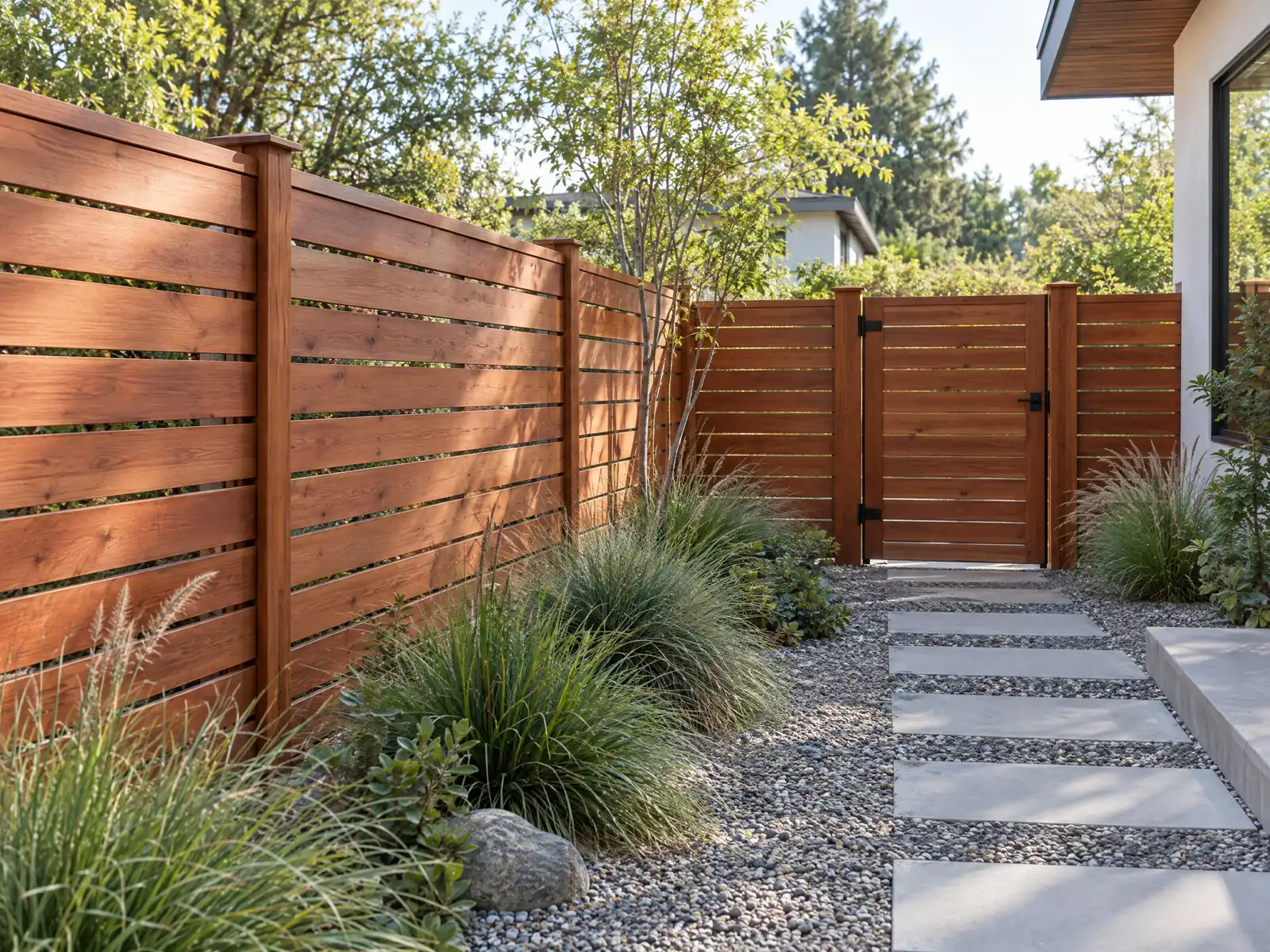
Fencing
Wood, vinyl, iron and block fences with the permit and height rules checked first.
See fencing →
Painting
Interior, exterior, stucco and cabinet painting with real prep, lead-safe rules followed and a written scope.
See painting →Keep reading
How to Read a Remodeling Contract in California, Page by Page
The headings state law requires in a home improvement contract: price, down payment, progress payments, dates, change orders and notices.
Read the guide →How to Choose a General Contractor in Los Angeles
Pick a general contractor in Los Angeles step by step: three matched bids, license and bond checks, city permit records, reference calls.
Read the guide →Mechanics Lien Release Forms in California: Which of the Four to Use
Conditional and unconditional lien releases for homeowners: the four statutory forms, the 20-day notice, deadlines and a worked example.
Read the guide →Ready to plan your project?
Call or send the form. We schedule a site visit and send a written proposal.