
How Long Does a Roof Last in Southern California?
A roof in Southern California lasts about 20 years with three-tab asphalt shingles, 30 with architectural shingles, 40 to 80 with metal and 100 or more with clay or concrete tile, according to the InterNACHI life expectancy chart. Inland heat shortens shingle life, and tile roofs usually need new underlayment long before the tile itself wears out.
What is the life expectancy of a roof by material?
The most cited public number set is the InterNACHI life expectancy chart, kept by the International Association of Certified Home Inspectors. The page carries no revision date beyond a 2006 to 2026 copyright line, and it says its figures are guidelines, not guarantees or warranties. With that caution, here is what it lists for the coverings you see on Southern California houses.
- Three-tab asphalt shingles: 20 years.
- Architectural asphalt shingles: 30 years.
- Clay or concrete tile: 100 years or more.
- Metal: 40 to 80 years.
- Wood: 25 years, though wood shake is banned for roofs in the City of Los Angeles.
- Slate: 60 to 150 years.
The chart is an inspector's planning tool. Your roof's real age limit depends on the four things InterNACHI names: local weather, building design, material quality and maintenance.
Does Southern California heat shorten shingle life?
Yes, and the chart says so in one blunt line: hot climates drastically reduce asphalt shingle life. It does not say by how many years, and we found no official figure for Los Angeles, so we will not invent one. What we can show is how different the region's climates are from each other.
The California Energy Commission sorts every ZIP code into one of 16 building climate zones. Its ZIP code list puts Santa Monica and Long Beach in zone 6, the mild coastal strip. Pasadena, Burbank and Tarzana are in zone 9. Riverside and San Bernardino are in zone 10, Palmdale and Victorville in zone 14, and Palm Springs and Indio in zone 15, the low desert. A shingle on a house in Palm Springs does not live the same life as one on a house a mile from the beach in Santa Monica.
The practical reading: treat 20 and 30 years as coastal best cases for shingles, and start yearly inspections earlier the farther inland you live.
Why does a tile roof need work when the tile looks fine?
Because tile is the armor, not the waterproofing. The Tile Roofing Industry Alliance says in its tile roof FAQ that tile roofs can last 50 to 100 years or more and that most manufacturers offer warranties of 50 years or more. The sheet under the tile, the flashings and the fasteners are a different story, and they age out of sight.
The City of Los Angeles treats this as routine work. LADBS Information Bulletin P/GI 2026-003 lists resetting existing tile on new underlayment as its own Express Permit item, which means no plan check. Santa Clarita's residential re-roof handout allows existing clay or cement tile to be reinstalled, except pieces that are damaged, cracked or broken, and bars reusing flashings that are rusted or deteriorated.
We did not find an official number for how long underlayment lasts, so none appears here. If your tile roof is older and a ceiling stain shows up, the question to ask a roofer is the condition of the underlayment, not the tile. Our tile versus composition shingle comparison covers what a reset involves.
How many years does my roof have left? A worked example
Take three houses on the same street in the San Fernando Valley, all checked in 2026.
House one was built in 1998 and still has its first architectural shingle roof. 2026 minus 1998 is 28 years. Against the chart's 30, that leaves 30 minus 28, or 2 years, and the Valley is zone 9, not the coast. Plan the replacement now and budget with our roof replacement cost figures.
House two got three-tab shingles in 2010. That is 16 years against 20, so 4 years on paper. An inspection every year is cheap insurance at this stage.
House three has concrete tile from 1990. The tile is 36 years into a 100-year figure, so 64 years remain on the chart. The underlayment is also 36 years old, and nobody can see it from the driveway. This house needs a roofer to lift a few tiles and look, even though it has the most years left on the chart.
How long do flat and low-slope roofs last?
Shorter than pitched roofs, as a rule. The same chart lists built-up roofing at 30 years, modified bitumen at 20, EPDM rubber at 15 to 25 and TPO membrane at 7 to 20. An aluminum roof coating is listed at 3 to 7 years, which tells you a coating is maintenance, not a new roof.
Flat sections show up on more houses than people think: over a room addition, a porch, a converted garage, or a modern box of a house. If your home mixes a pitched roof and a flat section, the two will come due at different times. LADBS lists applying a roof coating as an Express Permit item too, so ask whether a permit is part of any coating quote.
What wears a roof out faster than the calendar?
Debris, standing water and neglected flashings. State law treats one of these as a fire issue as well. Government Code section 51182 requires owners in very high fire hazard severity zones to keep the roof of a structure free of leaves, needles and other vegetative materials. CAL FIRE's Low-Cost Retrofit List, updated January 1, 2026, gives the same advice for roofs and gutters everywhere.
A short yearly routine does most of the work:
- Clear valleys and gutters before the first rain and again after the Santa Ana winds.
- Look at the flashing around every pipe, vent, skylight and chimney.
- Check the ceiling under each roof penetration for stains.
- Keep foot traffic off tile, and have solar or satellite installers use proper walk paths.
- Photograph the roof each year from the same spots, so change is easy to see.
What changes when an old roof finally gets replaced?
The new roof has to meet current rules, not the rules from the year the house was built. Three of them surprise owners. Replacing 50 percent or more of the roof area triggers the state Energy Code's cool roof requirements in most inland climate zones. In mapped fire hazard severity zones the new covering must be a Class A assembly. And wood shakes cannot go back on in Los Angeles at all. The roof over a new ADU is built to the current code from day one, so it starts its clock with all three already handled.
MDG Builders is a general contractor, CSLB #1040337, based in Tarzana. On a roofing project we plan the scope, handle the permit and schedule the work, and a licensed roofing subcontractor installs the roof. You can ask for that subcontractor's license number and certificate of insurance before signing, and our guide shows how to check a contractor's license in two minutes.
Roof lifespan questions
What is the life expectancy of a roof in California?
It depends on the material: about 20 years for three-tab asphalt shingles, 30 for architectural shingles, 40 to 80 for metal and 100 or more for clay or concrete tile, per the InterNACHI chart. The chart is national and calls its figures guidelines, and it warns that hot climates cut asphalt shingle life sharply.
Does a 30 year shingle really last 30 years?
Not always. InterNACHI lists architectural asphalt shingles at 30 years but states that hot climates drastically reduce asphalt shingle life, without giving a number. Inland valleys and the desert are harder on shingles than the coast, so judge the roof by inspection, not by the label.
At what age is a roof considered old?
A roof is old when it nears the chart figure for its material: around 20 years for three-tab shingles and 30 for architectural shingles. Tile is different, because the tile can be decades from its limit while the underlayment beneath it is worn. Age starts the conversation, and an inspection ends it.
How long does a tile roof last in California?
The tile itself can last 50 to 100 years or more, according to the Tile Roofing Industry Alliance, and InterNACHI lists clay and concrete at 100 years plus. The underlayment below it does not last as long. In Los Angeles, resetting existing tile on new underlayment is a listed Express Permit job.
How often should a roof be replaced in California?
Replace a roof when inspection shows the material is worn out, not on a fixed schedule. As planning numbers, shingle roofs come due every 20 to 30 years and metal every 40 to 80, while tile roofs need underlayment work between tile replacements. Heat, debris and poor flashing shorten all of these.
How often should I have my roof inspected?
Once a year is a sensible habit once a shingle roof passes the halfway mark of its chart life, and after any storm that leaves a ceiling stain. We found no official inspection interval for California homes, so treat this as practical advice. Ask for dated photos with every inspection.
Work that goes with this
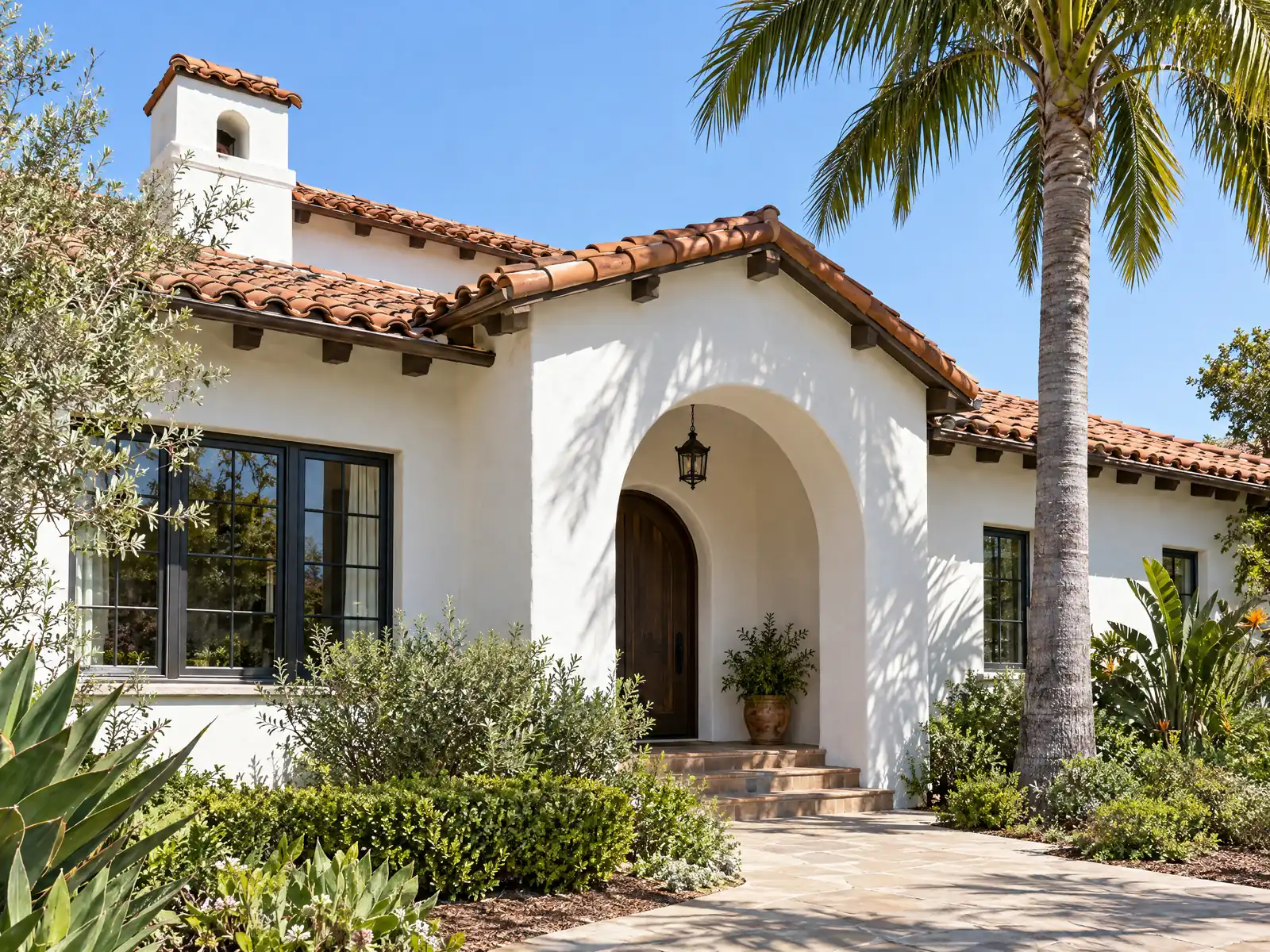
Roofing
Shingle, tile and metal roofs with LADBS permit rules, fire-zone requirements and sourced costs.
See roofing →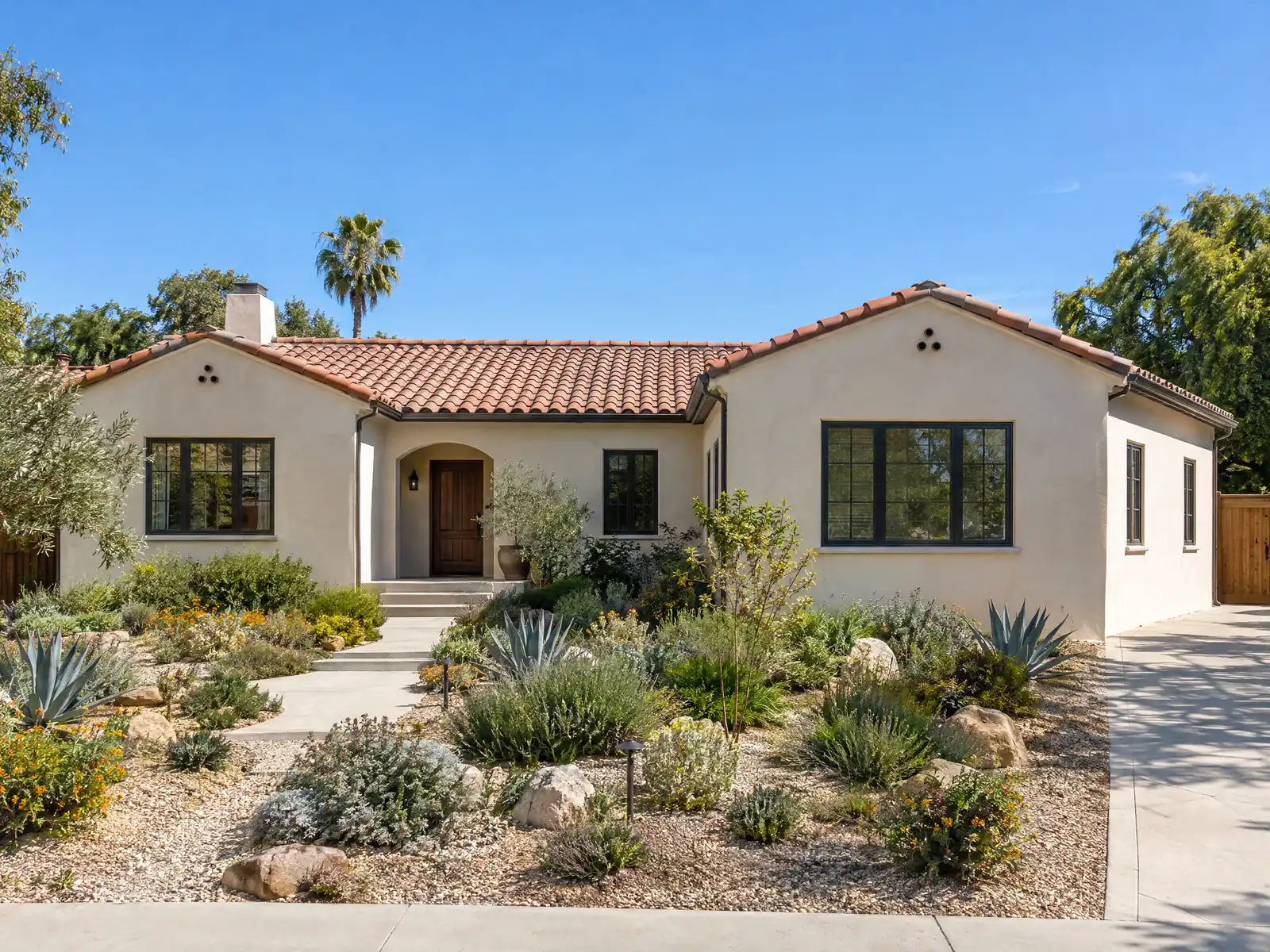
Room Additions
Family rooms, primary suites and second stories, from zoning check to final inspection, with sourced prices.
See room additions →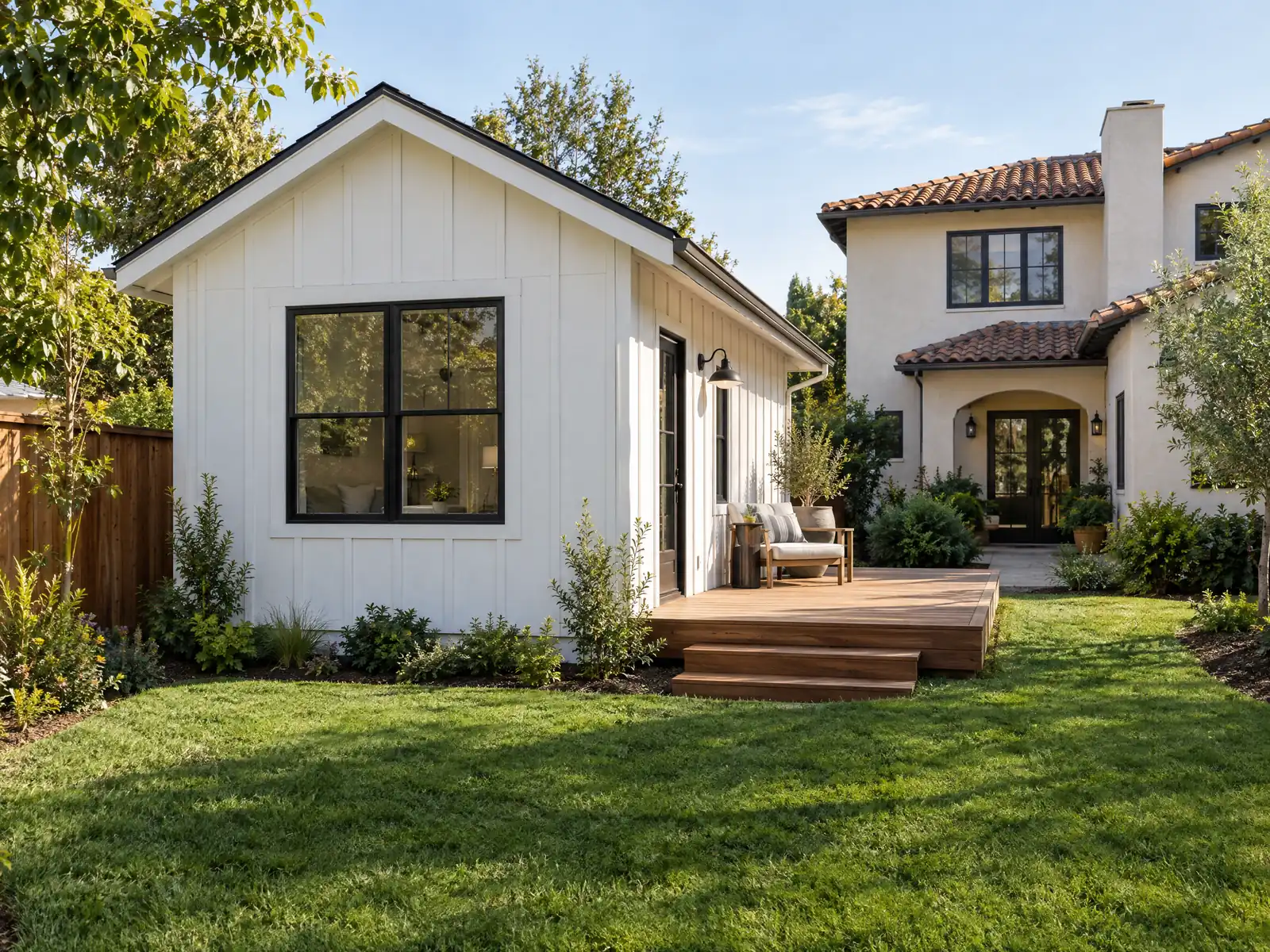
ADU Construction
Garage conversions, detached ADUs and JADUs, with the 2026 permit clocks, utilities and sourced costs explained.
See ADU construction →More on roofs
Tile or Composition Shingle: Which Roof Fits a Southern California Home?
Tile against composition shingle on weight, structure, price per square foot, lifespan and fire rating, with city weight limits.
Read the guide →Roof Repair or Replacement: How to Decide in California
How to choose between a roof repair and a full replacement: age, layers, the percentage rules cities use, permits and a worked example.
Read the guide →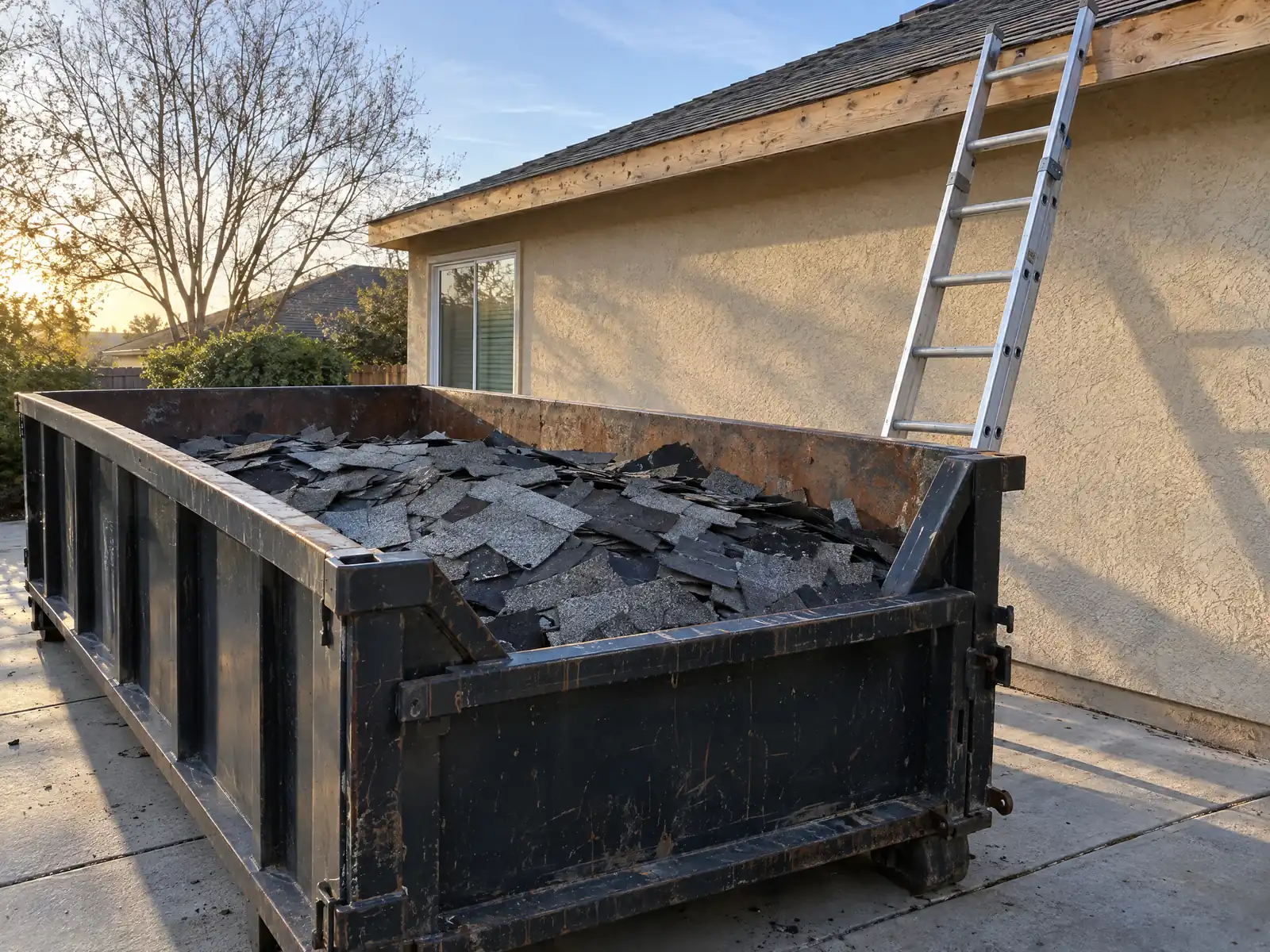
How Much Does a Roof Replacement Cost in Los Angeles?
Per-square-foot roof prices for Los Angeles with sources, a worked example by roof size, and the permit, fire-zone and contract rules.
Read the guide →Ready to plan your project?
Call or send the form. We schedule a site visit and send a written proposal.