
Stamped Concrete or Pavers: Which Is Better for a California Yard?
Pavers are the safer pick where the ground moves or utilities run underneath, because single units lift out and go back. Stamped concrete gives one continuous surface with no shifting edges, but a crack is permanent. In Los Angeles, Angi's 2026 pages show pavers at $9 to $28 per square foot and stamped concrete at $15 to $30.
What is the real difference between stamped concrete and pavers?
Stamped concrete is a poured slab. While it is still soft, the finisher presses textured mats into it and adds color so it reads as slate, brick, cobble or wood plank. It is one rigid piece. Pavers are separate units of concrete, clay brick or stone, set on a compacted base and a bed of sand and held by an edge restraint.
That one fact, rigid sheet against flexible field, explains nearly every difference that follows. Both are concrete and hardscape work that lasts when the base is right and fails early when it is not.
Is it cheaper to get stamped concrete or pavers in Los Angeles?
At the low end, pavers. Angi's Los Angeles paver patio page, updated April 13, 2026, gives $9 to $28 per square foot installed, an average project of $4,317 and a normal range of $2,726 to $7,952. Its Los Angeles stamped concrete page, updated July 20, 2026, gives $15 to $30 per square foot, an average of $5,948 and a normal range of $2,915 to $8,982.
The ranges overlap, so material decides it. Angi prices concrete pavers at $9 to $17 per square foot, brick or clay at $11 to $23 and natural stone at $17 to $57. On the stamped side it lists a single-color brick pattern at $15, slate texture at $18 and wood plank at $25. A plain concrete paver beats any stamp on price. Natural stone does not.
A second source disagrees on the floor for stamped work: HomeGuide's patio guide, dated July 2025, starts it at $9 per square foot. When two published ranges start $6 apart, take neither as a quote.
Stamped concrete and paver prices in Los Angeles
All rows are from Angi's Los Angeles pages dated April and July 2026. They are installed prices for typical residential work on accessible sites.
| What it covers | Typical range | What moves the price |
|---|---|---|
| Stamped concrete, installed | $15 to $30 per sq ft | Pattern, number of colors, borders, access |
| Typical stamped concrete project | $2,915 to $8,982 (average $5,948) | Size; small jobs carry minimum charges |
| Concrete pavers, installed | $9 to $17 per sq ft | Paver style, base depth, pattern |
| Brick or clay pavers | $11 to $23 per sq ft | Unit cost, cuts at borders |
| Natural stone pavers | $17 to $57 per sq ft | Stone type and thickness |
| Typical paver patio project | $2,726 to $7,952 (average $4,317) | Size, site preparation, drainage |
How we got these numbers: Angi's Los Angeles paver patio cost page (updated April 13, 2026) and its Los Angeles stamped concrete cost page (updated July 20, 2026). Angi says the paver page adjusts national cost data with federal regional price data, and the stamped page says it draws on surveys of Angi customers. HomeGuide's July 2025 patio guide starts stamped concrete lower, at $9 per square foot, so confidence is medium-low for decorative work. MDG's written proposal for your yard is the real price.
Worked example: a 400 square foot patio priced both ways
Take a 20 by 20 foot patio, 400 square feet. Stamped concrete at Angi's range is 400 x $15 = $6,000 up to 400 x $30 = $12,000. Concrete pavers are 400 x $9 = $3,600 up to 400 x $17 = $6,800. Angi's own paver table lists a 20 by 20 patio at $3,635 to $11,360 across all paver materials, which matches.
So on first cost, basic pavers save 400 x ($15 - $9) = $2,400 at the low end. Now add upkeep. Angi's stamped page says stamped concrete should be resealed every two to three years and puts that at about $8 to $15 per square foot each time. That looks high to us for a sealer coat and the page does not explain it, so get a written resealing price from the installer before you sign.
What is the downside of stamped concrete?
Cracks and color. Every slab shrinks as it cures and most crack somewhere; control joints are there to steer the crack into a straight line. On a slab stamped and colored like flagstone, a crack that wanders off the joint cuts across the pattern, and a patch never matches the aged color around it. Angi lists repairs for cracks, chips or color loss at $300 to $3,000.
Sealer is the other trade. It protects the color from sun, but sealed stamped surfaces can be slick when wet, which matters beside a pool. Ask the installer what goes into the sealer for traction and to show you a wet sample.
What goes wrong with pavers, and how are they fixed?
Pavers fail at the base and the edges. If the base was thin or poorly compacted, wheel paths settle into ruts. If the edge restraint is weak, the field creeps outward and joints open. Weeds work into joint sand over time. None of that is permanent.
The repair is the selling point. A crew lifts the affected units, corrects the base and relays the same pavers. The same goes for a plumber who has to reach a sewer or gas line; with a slab, that trench is sawcut and patched, and it shows. If you expect to add an ADU later, pavers over the likely utility trench are the practical choice.
Which holds up better on Southern California clay soil?
Some lots, inland and on the hillsides especially, sit on clay that swells when wet and shrinks when dry. The American Society of Civil Engineers Geo-Institute, in its homeowner pamphlet Living With Shrink/Swell Soils, lists vertical or horizontal separation of a concrete driveway, patio, porch or sidewalk from the foundation as a typical sign of that movement.
A rigid slab resists the movement until it cracks. A paver field moves with it and can be re-leveled. That is a real advantage inland, in places like Riverside, and on hillside lots. Our guide to slab cracks and when to worry explains the soil side.
How should a patio drain away from the house?
Away, and measurably. The 2025 California Residential Code, section R401.3, says impervious surfaces within 10 feet of the building foundation shall be sloped not less than 2 percent away from the building. Over 10 feet, 2 percent is 0.02 x 120 inches = 2.4 inches of fall.
Stamped concrete sheds nearly all the rain that lands on it, so plan where the water ends up: an area drain, a swale or a planter. Standard pavers let a little through the joints, and permeable paver systems are built to soak water into the ground. Ask your building department whether local stormwater rules apply.
Do you need a permit for a patio or paver driveway?
A ground-level patio often does not, but check: Angi's Los Angeles paver page says covered, attached or raised patios usually do. The street end always differs. In Los Angeles the apron and sidewalk need a city A-Permit, covered in our post on driveway approach permits in Los Angeles, and plain slab pricing is in what a new concrete driveway costs in Los Angeles. In planned communities such as Irvine, get the HOA's approved materials list before you fall for a color.
Which one should you choose for a pool deck, patio or driveway?
Choose by what the surface has to forgive. MDG Builders, CSLB #1040337, runs these projects as the general contractor, and the pour or the paver install is done by a licensed specialty subcontractor whose license and insurance certificate you can ask to see. The advice we give clients, whether the surface stands alone or runs up to a raised deck, is short.
- Driveway with tree roots, clay soil or utilities below: pavers on a properly built base.
- Large simple patio on stable soil with a tight budget: plain or lightly stamped concrete with well-placed joints.
- Pool deck: either works; decide on wet traction and heat underfoot using real samples in the sun.
- Adding a new fence or gate posts beside it: set the footings first, then lay the surface.
Stamped concrete and paver questions
How much would a 20x20 stamped concrete patio cost?
About $6,000 to $12,000 in Los Angeles. That is 400 square feet at the $15 to $30 per square foot range on Angi's July 2026 Los Angeles page. A single-color brick or slate pattern sits near the bottom, and multi-color cobblestone or wood plank patterns sit near the top.
How much does it cost to install 1000 sq ft of pavers?
Roughly $9,000 to $28,000 in Los Angeles, using Angi's April 2026 range of $9 to $28 per square foot. Concrete pavers at $9 to $17 would put 1,000 square feet at $9,000 to $17,000. Natural stone runs far higher, and large jobs sometimes earn a lower rate per foot.
Do pavers or stamped concrete last longer?
Either can last decades on a good base, and we found no dated independent study that ranks them, so we will not give lifespans in years. The practical difference is repair: a settled paver area can be lifted and relaid with the same units, while a cracked stamped slab is patched and the patch shows.
Is stamped concrete or pavers better around a pool?
Both are used, and the deciding points are wet traction and heat. Sealed stamped concrete can be slippery when wet unless a traction additive is used. Pavers have joints that give grip and let a little water drain. Ask for samples, wet them, and stand on them barefoot in afternoon sun.
Does stamped concrete add value to a home?
Angi's Los Angeles pages claim a return of 80 to 90 percent for stamped concrete and 30 to 40 percent for a paver patio, but neither page shows the data behind those figures. We would not choose between the two on that basis.
Work that goes with this
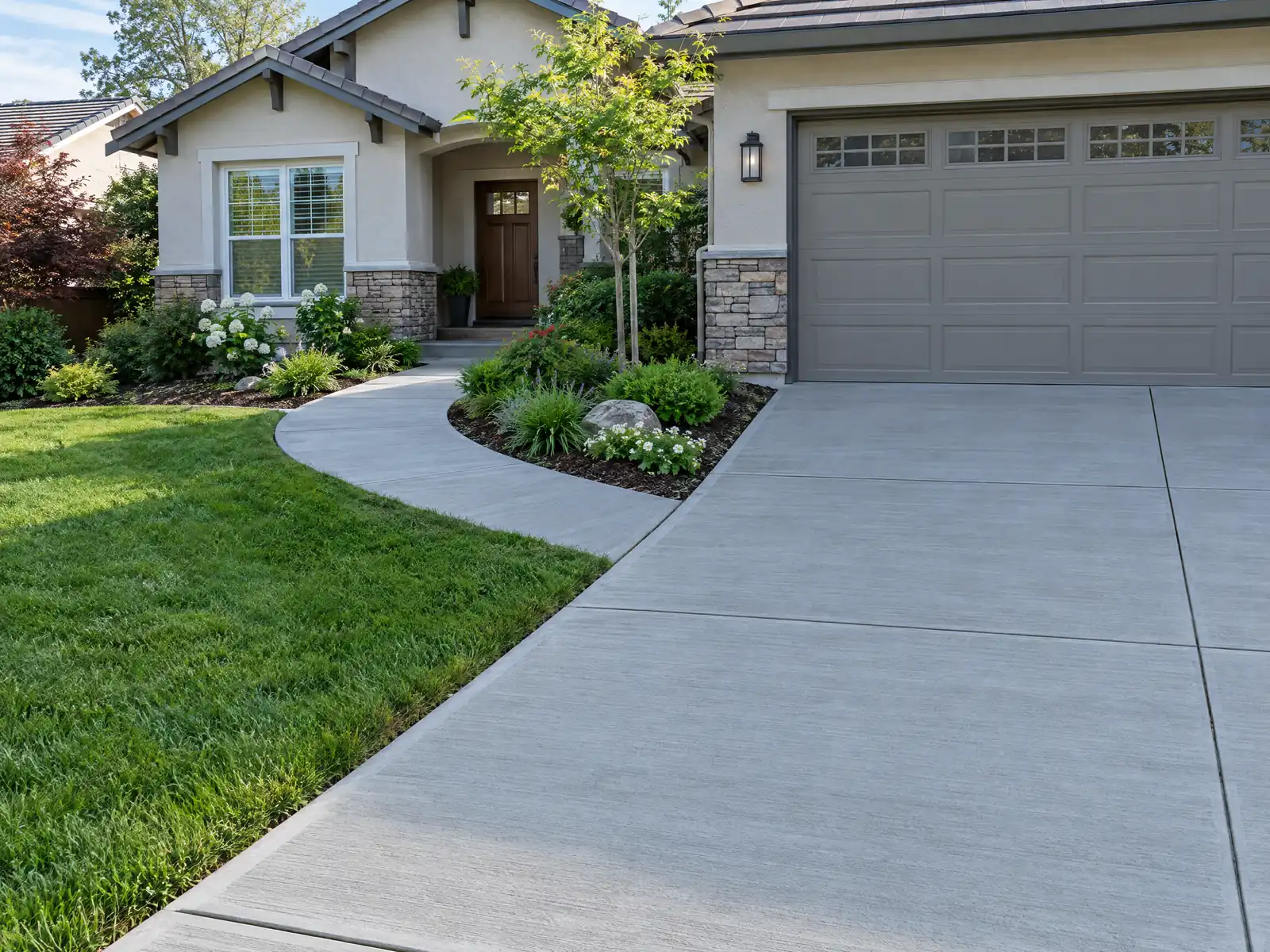
Concrete
Patios, driveways, walkways and retaining walls, poured by licensed specialists and priced from sources.
See concrete work →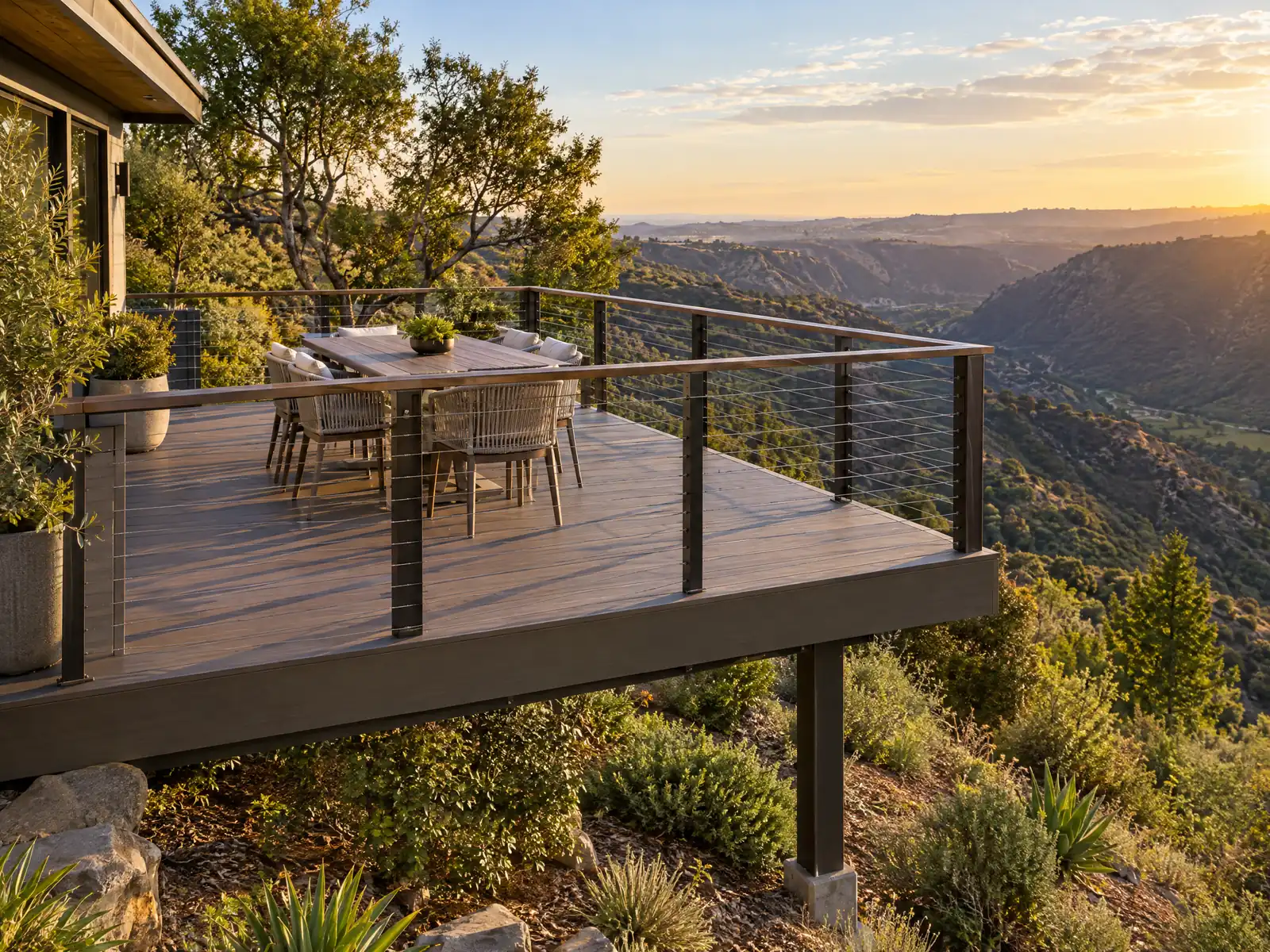
Decks
Wood and composite decks, hillside decks and stairs, with permits and code checked before framing.
See deck building →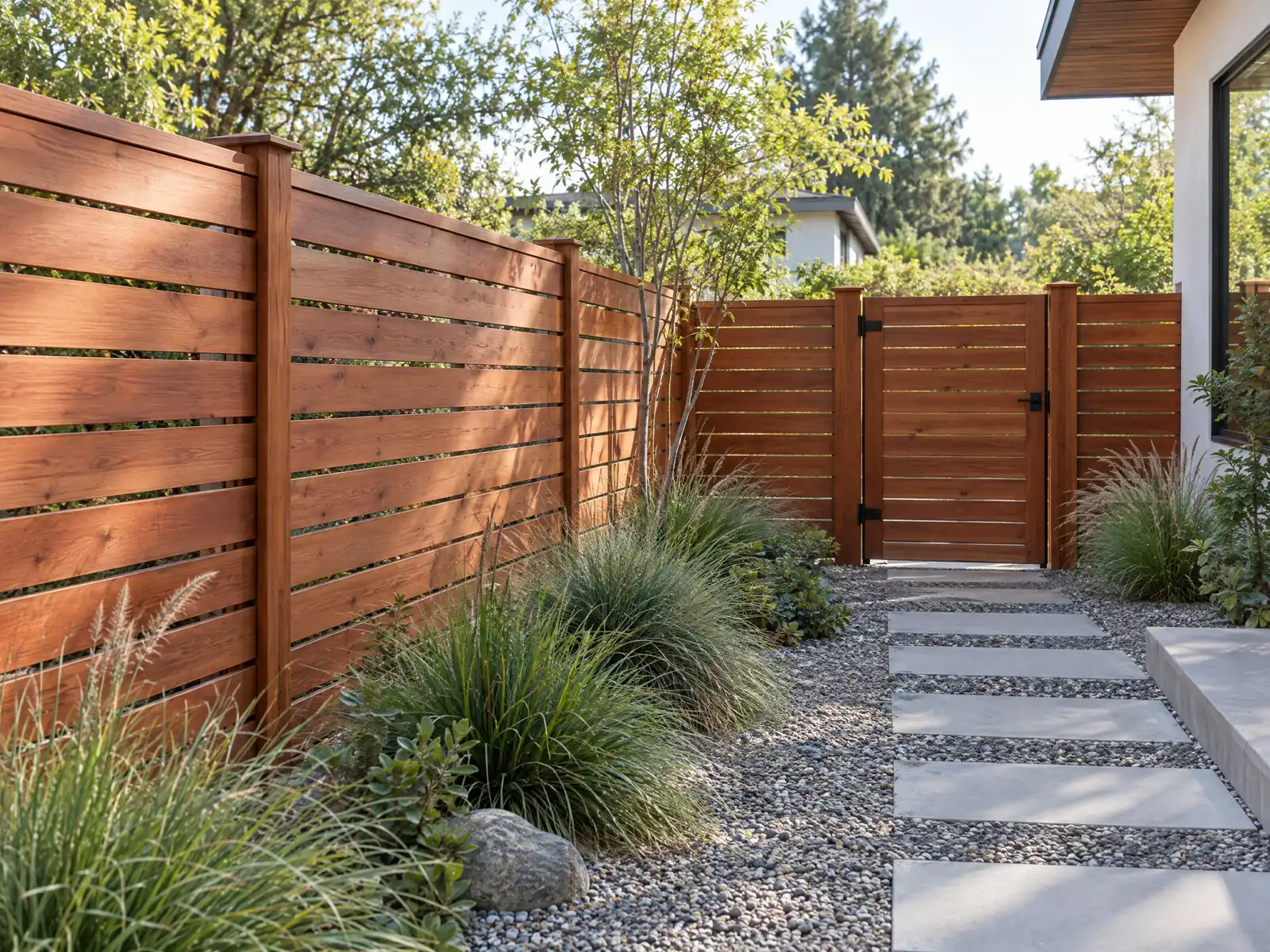
Fencing
Wood, vinyl, iron and block fences with the permit and height rules checked first.
See fencing →Keep planning the yard
What Does It Cost to Replace a Concrete Driveway in Los Angeles?
Per-square-foot driveway prices for Los Angeles with dates and sources, tear-out costs, a 720 sq ft worked example and the deposit cap.
Read the guide →Concrete Slab Cracks in Southern California: When Should You Worry?
Which slab cracks are shrinkage and which point to soil movement, how to track a crack, the drainage numbers in the code, and who to call.
Read the guide →Block Wall vs. Wood Fence in California: Cost per Linear Foot, Permits and Lifespan
A block wall costs several times what a wood fence does and can outlast it by decades. Per-foot math, Los Angeles permit rules and licenses.
Read the guide →Ready to plan your project?
Call or send the form. We schedule a site visit and send a written proposal.