
Quartz vs. Granite Countertops: Cost, Care and California's Silica Rules
Neither wins outright: quartz needs no sealing and looks uniform, granite is natural stone that needs periodic sealing, and their published prices overlap. In California the bigger difference is regulatory. Cal/OSHA treats cutting engineered stone as a high-hazard task, and in September 2026 it posted a draft rule to prohibit fabricating slabs above 1 percent crystalline silica.
Which is better for a kitchen, quartz or granite?
It depends on what bothers you more: maintenance or sameness. Granite is quarried stone, cut into slabs and polished. Every slab is different, and you choose the actual piece. Quartz countertops are engineered stone, which California's safety regulation defines as a manufactured product commonly made by combining natural stone or other silica-containing materials with resins or other binders to form a slab. The pattern is controlled at the factory, so the sample matches the kitchen.
Both are cut in a shop from a template made after the cabinets are set, late in a kitchen remodeling project. The differences that matter are price, upkeep, and California workplace rules that now shape how quartz is made and sold.
What do quartz and granite countertops cost installed?
Their ranges overlap, and the slab you pick matters more than the category. HomeGuide, a cost site that says it tracks millions of estimates homeowners get from contractors, lists quartz at $50 to $200 per square foot installed, or $1,500 to $8,000 for an average-sized kitchen, on a page last updated in December 2023. Its granite page, last updated in August 2023, lists $80 to $150 per square foot installed on average, as low as $50 and as high as $250 or more, with a typical kitchen at $2,400 to $6,000.
These are national figures about three years old, so use them to compare the two materials, not to predict a bid. HomeGuide also lists the extras that bids hide: fabrication and installation labor of $10 to $30 per square foot for quartz and $10 to $50 or more for granite, and removal of old countertops at $50 to $400. Where countertops fall in a whole budget is covered in our kitchen remodel cost guide.
A worked example: 45 square feet of countertop, priced both ways
Measure each run in inches, multiply length by depth, add the runs and divide by 144. Say a kitchen with an island comes to 45 square feet. On HomeGuide's 2023 ranges, quartz is 45 x $50 = $2,250 at the low end and 45 x $200 = $9,000 at the high end. Granite at its average range is 45 x $80 = $3,600 to 45 x $150 = $6,750.
So the cheapest quartz undercuts average granite by $3,600 - $2,250 = $1,350, and the dearest quartz exceeds it by $9,000 - $6,750 = $2,250. Granite then carries an upkeep cost quartz does not: HomeGuide lists professional sealing at $200 to $350 per treatment.
How much upkeep does each countertop need?
Granite asks for sealing, and quartz asks for care with heat. Granite is porous to varying degrees, and HomeGuide calls sealing essential to prevent staining. How often depends on the stone and the sealer, so follow the fabricator's written instructions.
Quartz is bound with resin, so it is not sealed. The resin is also the part to protect. Manufacturers' care guides generally warn against setting hot cookware directly on the surface, so read the guide for your specific product before you buy.
Why is California regulating quartz countertops?
Because the workers who cut them are getting silicosis, an incurable lung disease caused by breathing crystalline silica dust. In a comment letter dated September 30, 2026, the California Department of Public Health reported that, as of September 16, 2026, it had identified 644 cases of silicosis among engineered stone countertop fabrication workers in the state, including at least 35 deaths and 75 lung transplants.
Enforcement has not solved it. Among 62 recent Cal/OSHA inspections that CDPH analyzed, 77 percent of employers were cited for at least one violation of the silica standard and 27 percent received an Order Prohibiting Use. Cal/OSHA's own silica standards page states that silica exposure from artificial stone is much more toxic than exposure from natural stone.
What do Cal/OSHA's silica rules require of a countertop fabricator?
A long list, set out in Title 8, section 5204 of the California Code of Regulations. Its countertop provisions began as an emergency rule on December 29, 2023 and became permanent on February 5, 2025. It defines a high-exposure trigger task as cutting, grinding, polishing and similar work on artificial stone containing more than 0.1 percent crystalline silica, or on natural stone containing more than 10 percent. That second threshold means granite fabrication can fall under the same rules, depending on the stone.
For those tasks the shop must use effective wet methods, with water covering the surface where the tool meets the slab. Compressed air and dry sweeping of the dust are prohibited. Workers must be given full-face powered air-purifying respirators or equal protection, with lighter respirators allowed only where air sampling shows exposures stay below the action level. Failing to use wet methods is classed as an imminent hazard, subject to an order that stops the work.
State law added more in 2026. A Cal/OSHA fact sheet dated June 2026 explains that Senate Bill 20 updated the Labor Code on January 1, 2026. Silicosis and silica-related lung cancer now count as a serious injury or illness that employers must report immediately. Dry cutting is not allowed. As of July 1, 2026, employers must file an electronic attestation with Cal/OSHA each year that every worker doing these tasks has received the required training.
Is California going to ban quartz countertops?
It has proposed to ban fabricating the high-silica kind, and nothing is final. Cal/OSHA's silica rulemaking page shows that on September 16, 2026 the agency posted a discussion draft of a new section 5204.1, titled Crystalline Silica Activities Strictly Prohibited, which would prohibit the fabrication and manufacture of artificial stone with more than 1.0 percent crystalline silica.
When we read that page on November 9, 2026, it showed a draft and no adopted rule. So a quartz countertop is legal to buy today, and the rules above govern how it is cut. CDPH's letter says a survey of large California showrooms found more than 30 types of lower-silica manufactured countertop products already for sale.
Is a quartz countertop safe in your home?
The documents we read are about dust from cutting, grinding and polishing. None of them describes a finished, installed countertop as a hazard to the household.
CDPH's letter supports a companion change to the construction silica rule specifically so fabrication does not shift from shops to job sites. Ask that all cutting be done wet in the shop, and that any adjustment on site, such as trimming a cutout, is done wet and outdoors with the dust collected. The same request makes sense for a stone vanity top in a bathroom remodeling job. A troweled microcement finish on walls or floors involves no slab cutting, and our Los Angeles microcement page describes where it fits.
What should you ask a countertop fabricator before you order?
Ask about the shop as well as the slab.
- What is the crystalline silica content of this product, from its safety data sheet?
- Is every cut, grind and polish done with water, in the shop?
- Have you filed this year's Cal/OSHA silica training attestation for your workers?
- How many slabs does my layout need, and where will the joints fall?
- What square footage did you measure, and what do edges, cutouts and removal cost?
MDG Builders, CSLB #1040337, is a general contractor: we specify the material and manage the schedule, and a licensed specialty subcontractor cuts and installs the stone.
Where do countertops fit in the rest of the kitchen plan?
After the cabinets. New boxes almost always mean new tops, while refaced cabinets keep the tops you have, as our post on cabinet refacing versus replacing explains. The template waits until base cabinets are fixed in place, which our kitchen remodel timeline shows week by week.
For a project in the city, start at our Los Angeles kitchen remodeling page.
Quartz and granite questions
Is quartz or granite cheaper?
Neither is reliably cheaper, because their ranges overlap. HomeGuide's 2023 national pages list quartz at $50 to $200 per square foot installed and granite at $80 to $150 on average, with granite running from $50 to more than $250.
Is California banning quartz countertops?
Not as of November 9, 2026, but a ban on fabricating high-silica engineered stone has been proposed. Cal/OSHA posted a discussion draft on September 16, 2026 that would prohibit fabricating artificial stone with more than 1.0 percent crystalline silica. It was still a draft when we checked.
Are quartz countertops safe to have in my house?
The state documents we read concern dust created when slabs are cut, ground or polished, and none describes an installed countertop as a household hazard. The danger is to fabrication workers. To limit dust at home, ask that cutting be done wet in the shop and that on-site trimming be done wet and outdoors.
Does granite need to be sealed every year?
Not necessarily every year. Sealing frequency depends on the stone and the sealer, so follow your fabricator's written instructions. A quick test is to leave a few drops of water on the surface and see whether the stone darkens within minutes. HomeGuide lists professional sealing at $200 to $350 per treatment.
Can you put a hot pan on a quartz countertop?
It is not a good idea. Engineered quartz is bound with resin, and manufacturers' care guides generally warn against placing hot cookware directly on it. Use a trivet, and read the care guide for your specific product.
Can countertops be cut inside my kitchen during installation?
They should not be cut dry anywhere. Cal/OSHA says dry cutting is not allowed and wet methods must be used for cutting engineered stone above 0.1 percent crystalline silica and natural stone above 10 percent. Ask the fabricator to do all cutting in the shop and to handle any site adjustment wet and outdoors.
Work that goes with this
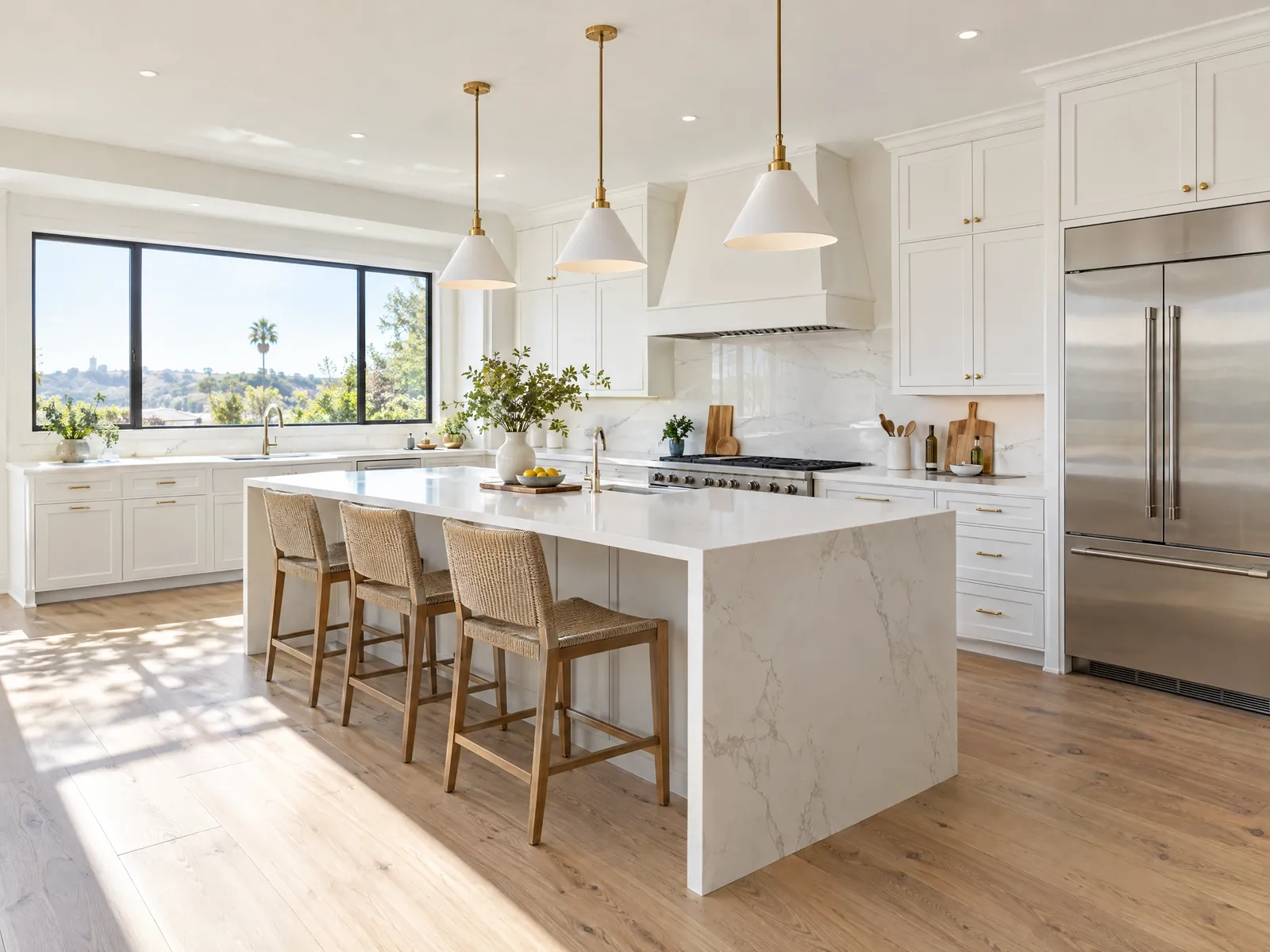
Kitchen Remodeling
Cabinets, counters, layout changes, permits and a written schedule, with prices tied to named sources.
See kitchen remodeling →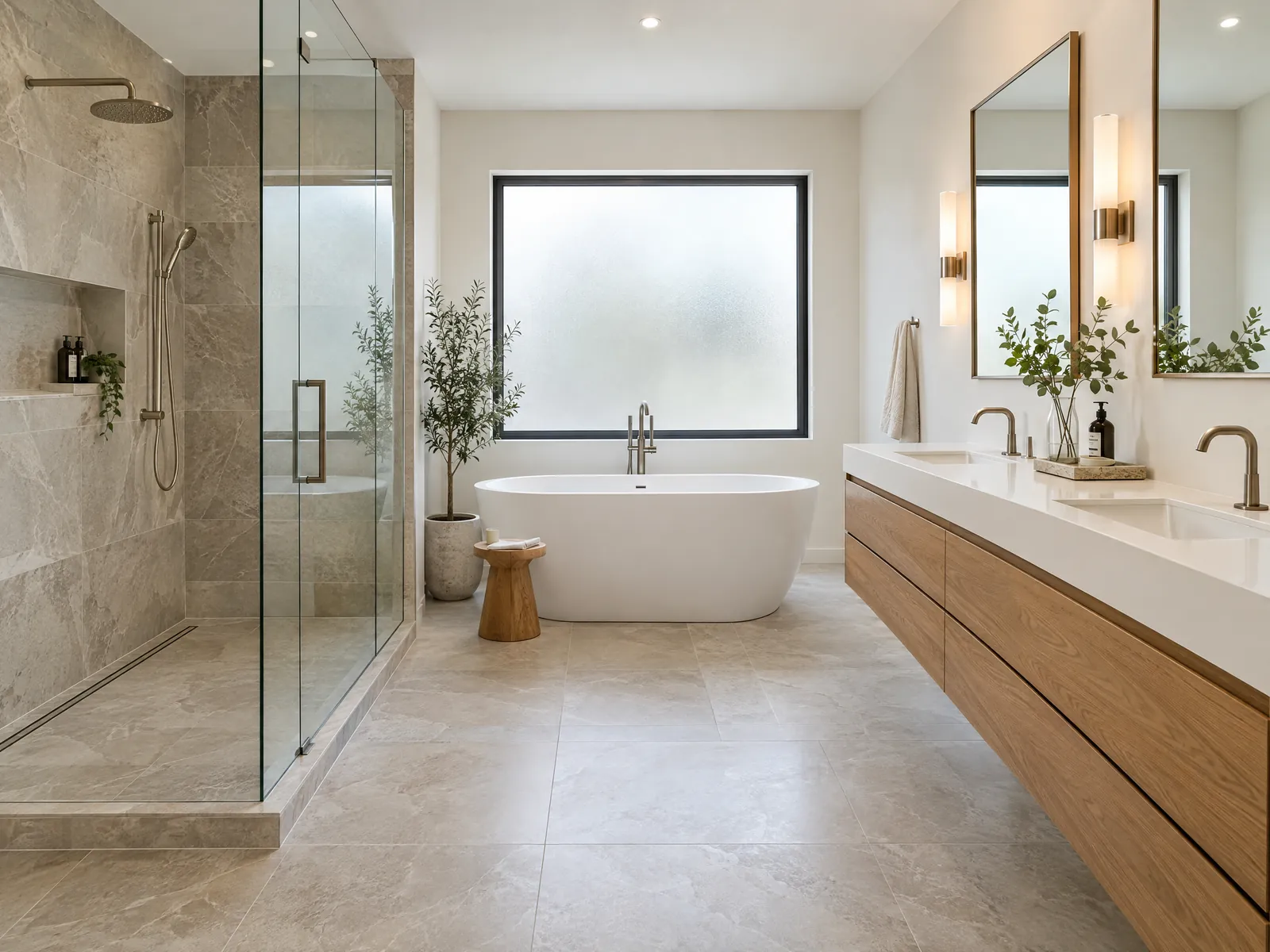
Bathroom Remodeling
Showers, tubs, vanities and full baths, with the permit path, waterproofing and prices from named sources.
See bathroom remodeling →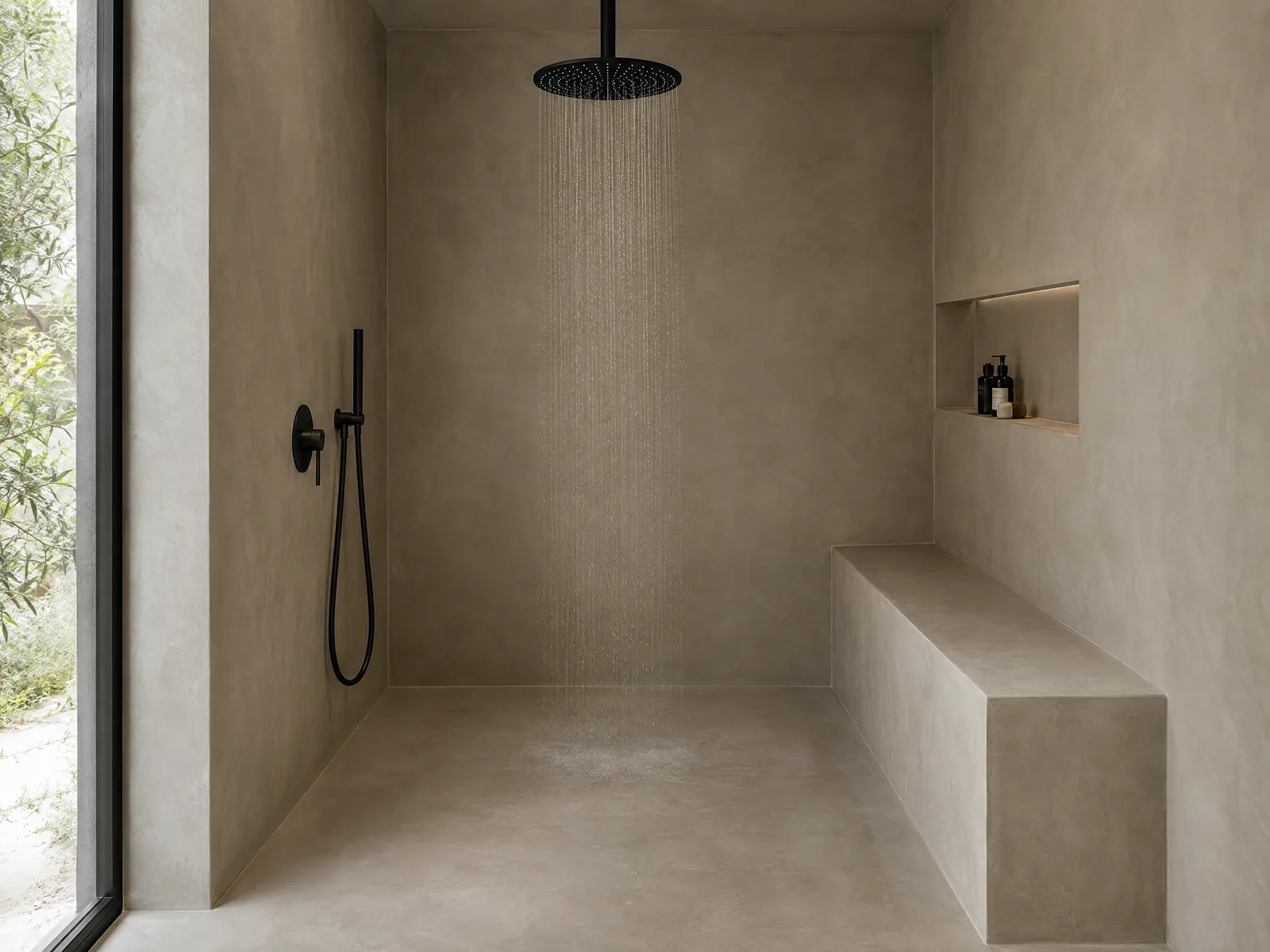
Microcement
Continuous cement-based finishes for floors, walls, counters and showers, with the prep and waterproofing explained.
See microcement →Keep reading
Cabinet Refacing vs. Replacing: Which Makes Sense for Your Kitchen?
Refacing or new cabinets: dated price ranges, a 25-linear-foot example, when each works, and California permit and contract rules.
Read the guide →How Long Does a Kitchen Remodel Take in Los Angeles?
A week-by-week kitchen schedule for Los Angeles: the LADBS permit step, cabinet and countertop waits, inspections and common delays.
Read the guide →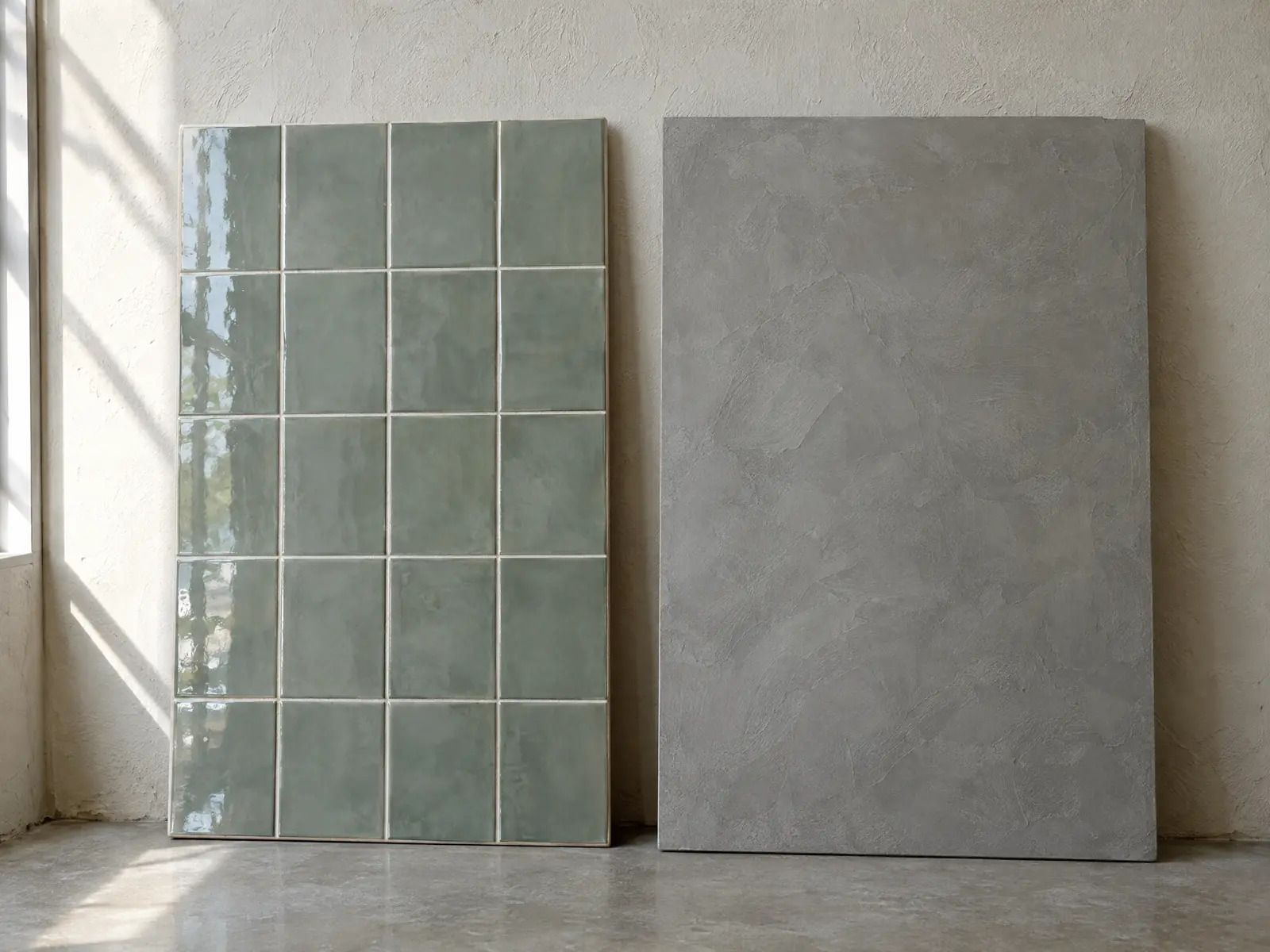
Microcement vs Tile: Which Holds Up Better in a Bathroom?
How microcement and tile differ in installation, wet-area performance and upkeep, using only facts we could verify.
Read the guide →Ready to plan your project?
Call or send the form. We schedule a site visit and send a written proposal.