
How Much Does a Microcement Shower Floor Cost?
No independent price exists for a microcement shower floor, so nobody can quote an honest average. One Los Angeles installer publishes $15 to $35 per square foot with a $3,500 minimum, and one supplier says installers charge $30 to $75 or more. On a small shower floor, the minimum charge and the waterproofing set the bill.
What do installers charge for a microcement shower floor in Los Angeles?
Two published figures exist, and both come from people who sell the product. We read them on November 9, 2026. An installer, EHO Builders doing business as LA Microcement, states on its website that microcement in Los Angeles typically runs $15 to $35 per square foot, with a minimum project charge of $3,500. A supplier, Microcement USA, says on its site that installers typically charge $30 to $75 or more per square foot, and that a bathroom can bill at $6,000 to $15,000.
Neither page separates a shower floor from a wall or a living room floor, and neither is a survey of what homeowners paid. Remodeling magazine's Cost vs. Value report for Los Angeles has no microcement project, and we found no government or trade study that prices it. Treat both ranges as asking prices, not a market average, which is why the microcement service page carries no price table.
Why does a small shower floor cost more per square foot than a big room?
Because the minimum charge takes over. A shower floor is tiny next to a living room flooring job. Take one that measures 3 feet by 5 feet, which is 3 x 5 = 15 square feet. At the installer's published rates, that floor would be 15 x $15 = $225 at the low end and 15 x $35 = $525 at the high end. Both are far under the $3,500 minimum, so the minimum is the price. Divide it out and the floor costs $3,500 / 15 = about $233 per square foot.
That is why most people coat the shower walls in the same visit. Three walls 8 feet high around that floor measure (3 + 5 + 3) x 8 = 88 square feet. Add the floor and the total is 88 + 15 = 103 square feet. At $15 to $35 that is $1,545 to $3,605, which is still about the minimum charge. At the supplier's $30 to $75 it is 103 x $30 = $3,090 up to 103 x $75 = $7,725.
So a floor-only job and a full enclosure can start at nearly the same price, and the sellers' own figures put the finish for a whole small shower between roughly $3,500 and $7,700. None of that covers a new drain, a rebuilt shower pan, plumbing or glass.
On a shower floor, ask for the minimum job charge before you ask for the price per square foot.
What goes under a microcement shower floor?
The finish is the thin part. A shower floor is first a plumbing fixture: a base sloped to a drain, with a waterproof assembly that sends water to that drain even if the surface above it is scratched or cracked. Microcement goes on top of that as the wear layer. The supplier we read puts it in one sentence on its FAQ: a waterproof coating does not replace the required shower assembly.
The same supplier describes two build-ups. Its basic system for dry interior rooms is primer, microcement coats and sealer. Its reinforced system adds a mesh layer and build coats, and it says showers need the approved complete system, with waterproofing details and the specified sealer, installed by an experienced professional. It does not publish a thickness, so ask for the product data sheet.
The slope, the drain connection and the pan test are plumbing code items that a building inspector looks at, not finish choices. Our guide to shower waterproofing in California covers that layer.
How soon can you stand in a new microcement shower?
The two sellers give very different answers. The Los Angeles installer says most projects finish in 3 to 5 days and that the surface is ready to use within 24 hours of the final seal coat. The supplier says to allow at least 14 days after the final sealer coat before exposing the surface to water, and adds that touch-dry and recoat times do not mean the surface is ready for water.
If the sealer goes on a Friday, one answer has you showering on Saturday and the other has you waiting until Friday two weeks later, a difference of 14 - 1 = 13 days. The statements describe different products, so neither is wrong on its face. The cure time that counts is the one printed on the data sheet for the sealer used on your floor. Ask for that sheet, and have the first-use date written into the schedule.
What should a microcement shower bid put in writing?
A one-line price for a finished shower hides the parts that decide whether it lasts. A complete bid separates the fixture from the finish and names products, so two bids can be compared line by line. Converting a bathtub at the same time adds plumbing and framing lines, which our tub to shower conversion cost guide covers.
- Demolition or prep: what is removed, and whether the coating goes over existing tile.
- Shower base: who builds the slope, what the drain is, and whether the pan is new.
- Waterproofing: product name, who installs it, and a water test with photos before it is covered.
- Microcement system: maker, product line, number of coats, mesh, color and texture, with a signed sample.
- Floor texture: how slip resistance is handled, shown on a sample you can wet.
- Sealer: product, coats, cure time before water, and the maker's cleaning and resealing instructions.
- The minimum job charge, and what is excluded: glass, valves, fixtures, permit fees.
Does a microcement shower need a permit or a licensed contractor?
In the City of Los Angeles, a bathroom remodel in a residential building with no structural changes is on the Express Permit list, as are replacing and adding plumbing fixtures. That comes from LADBS Information Bulletin P/GI 2026-003, effective January 1, 2026 and revised June 10, 2026. Items on that list skip plan check. The bulletin does not mention coatings, so whether recoating a sound shower with no plumbing change needs a permit is a question for LADBS. A job in Santa Monica or Pasadena goes through that city's own building department.
On licensing, any job of $1,000 or more in labor and materials, or any job that needs a permit, takes a licensed contractor under Business and Professions Code section 7048 as amended January 1, 2026. MDG Builders, CSLB #1040337, plans the bathroom, handles the permit and runs the schedule, and the troweled finish is applied by a licensed specialty subcontractor. Ask the installer for a license number and an insurance certificate before you sign.
Under section 7159.5 the down payment cannot exceed $1,000 or 10 percent of the price, whichever is less. On a $3,500 job, 10 percent is $350, so $350 is the most a contractor may take up front. Our guide to reading a remodeling contract shows where that line sits.
When is tile or a prefabricated shower pan the safer choice?
When you need a known price or a long record. Tile has dated, independent price data, and a damaged piece can be replaced. Microcement on a shower floor has neither an independent price nor independent test data on wear, and the floor is the hardest-working surface in the room.
A middle path some owners take is a tiled floor with microcement on the walls, where water runs off instead of sitting. Our microcement versus tile comparison covers the walls, and the bathroom remodeling page covers the rest of the room. If you want the single-surface look underfoot too, the Los Angeles microcement page lists what we ask an installer to document. Ask any installer for the address of a shower floor finished more than two years ago, and go look at the area around the drain.
Microcement shower floor questions
How much does it cost to install microcement in a shower?
There is no independent figure. A Los Angeles installer publishes $15 to $35 per square foot with a $3,500 minimum, and a supplier says installers charge $30 to $75 or more. For a small shower, expect the minimum charge to set the price, plus any pan, drain and plumbing work.
Is microcement expensive compared with other shower floors?
Per square foot on a small floor, yes, because of minimum job charges. A 15 square foot floor at a $3,500 minimum works out to about $233 per square foot. Only two written bids for the same shower can tell you whether the total beats tile.
Can I use microcement in wet areas like a shower floor?
Yes, when it is installed over a proper shower assembly. The supplier we read says wet areas need the correct substrate, waterproofing details, reinforcement and the specified sealer, and that a waterproof coating does not replace the required shower assembly.
Is a microcement shower easy to clean?
It has no grout lines to scrub, which is the main appeal, but we found no independent data on staining or soap buildup. Cleaning depends on the sealer, so get the maker's written list of approved cleaners and its resealing schedule before you sign.
Does microcement need to be sealed?
Yes. Every system we read ends with a sealer, and in a shower the supplier requires its specified wet-area sealer. The same supplier says to wait at least 14 days after the final coat before water exposure, so ask for the data sheet and a first-use date in writing.
What are the downsides of microcement on a shower floor?
The main downsides are uncertainty and dependence on the installer. There is no independent price, no independent wear testing, a cure period before use, a sealer to maintain, and repairs that may not match. The finish will not fix a leaking pan.
Work that goes with this
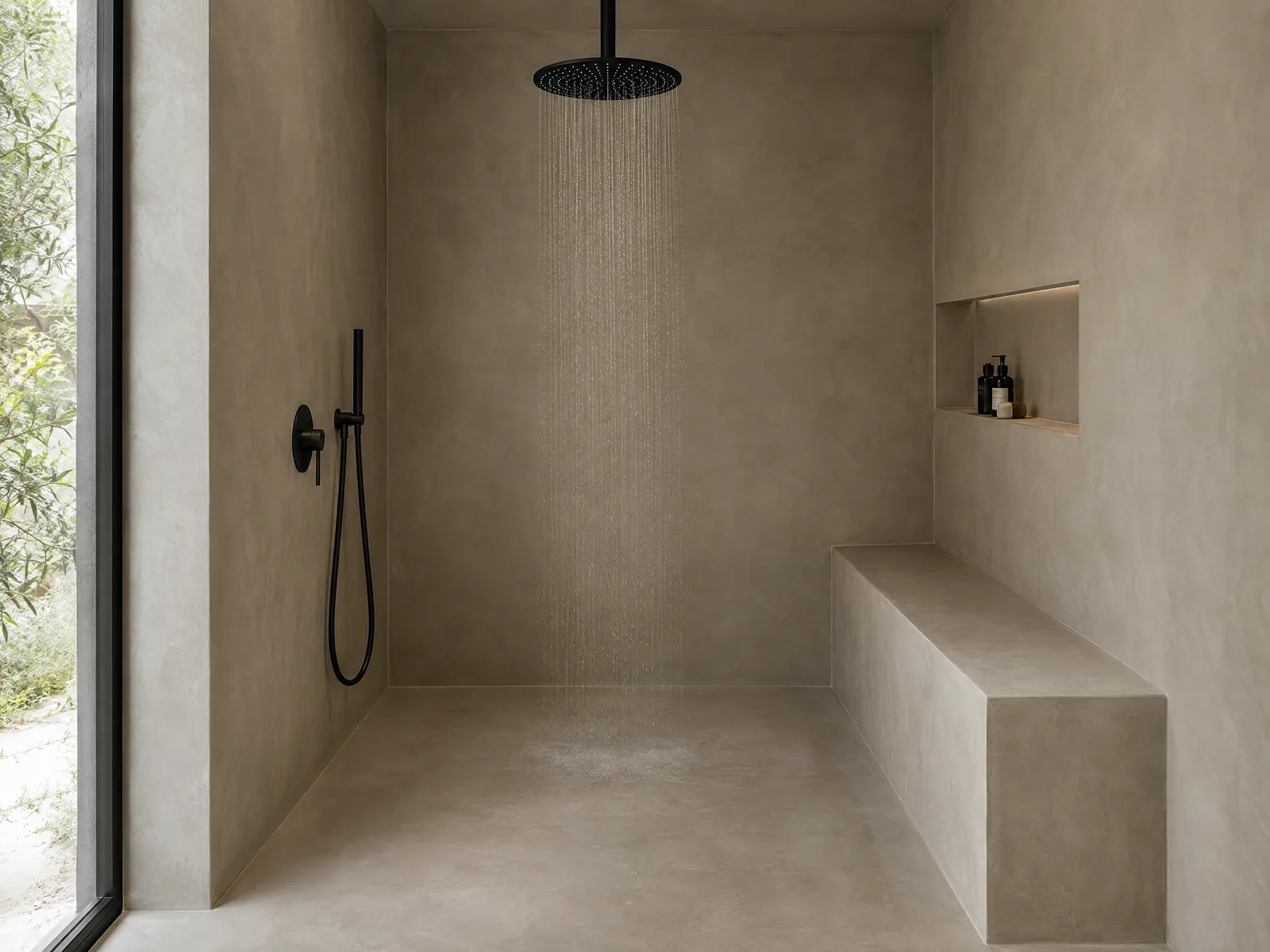
Microcement
Continuous cement-based finishes for floors, walls, counters and showers, with the prep and waterproofing explained.
See microcement →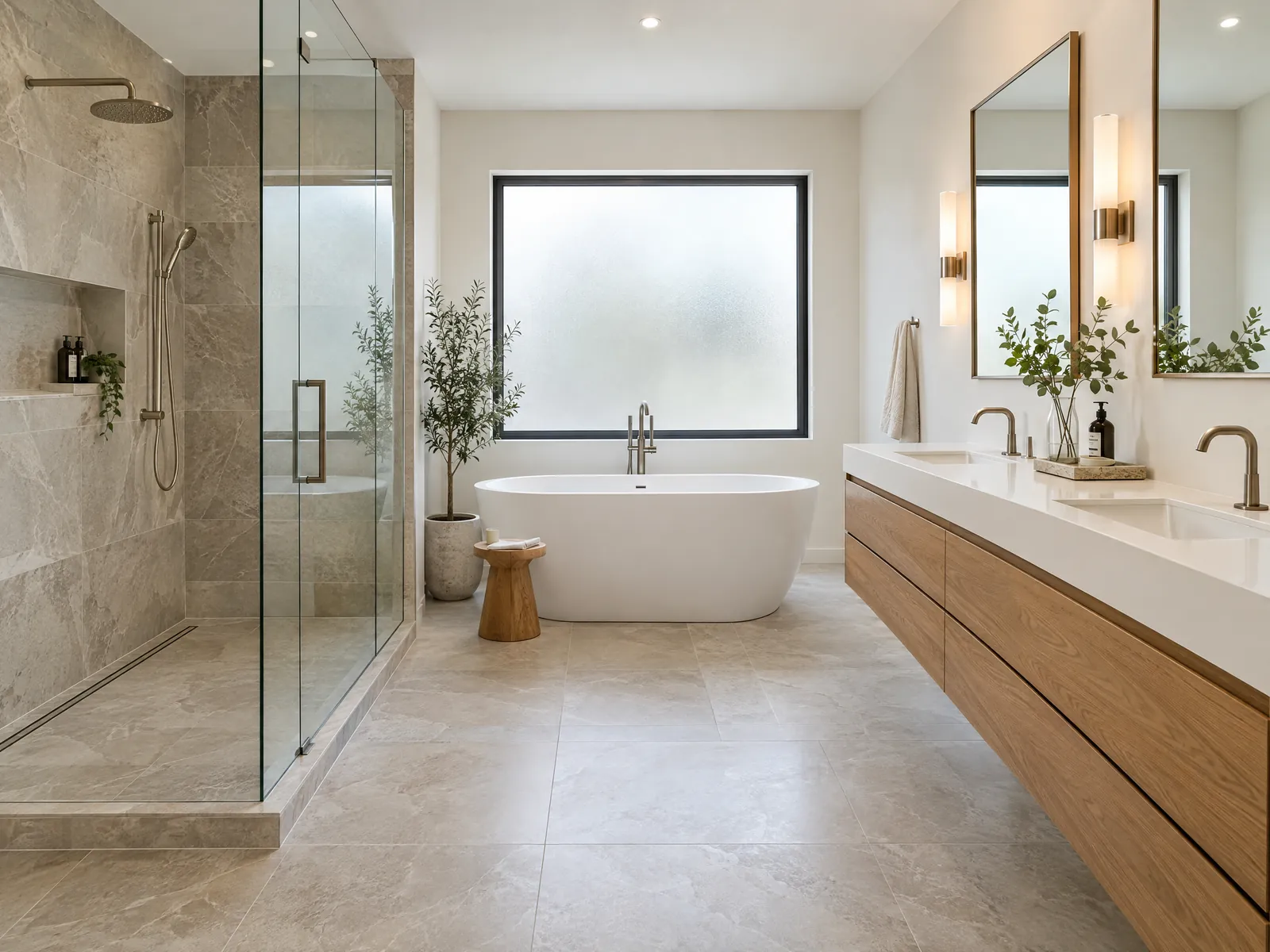
Bathroom Remodeling
Showers, tubs, vanities and full baths, with the permit path, waterproofing and prices from named sources.
See bathroom remodeling →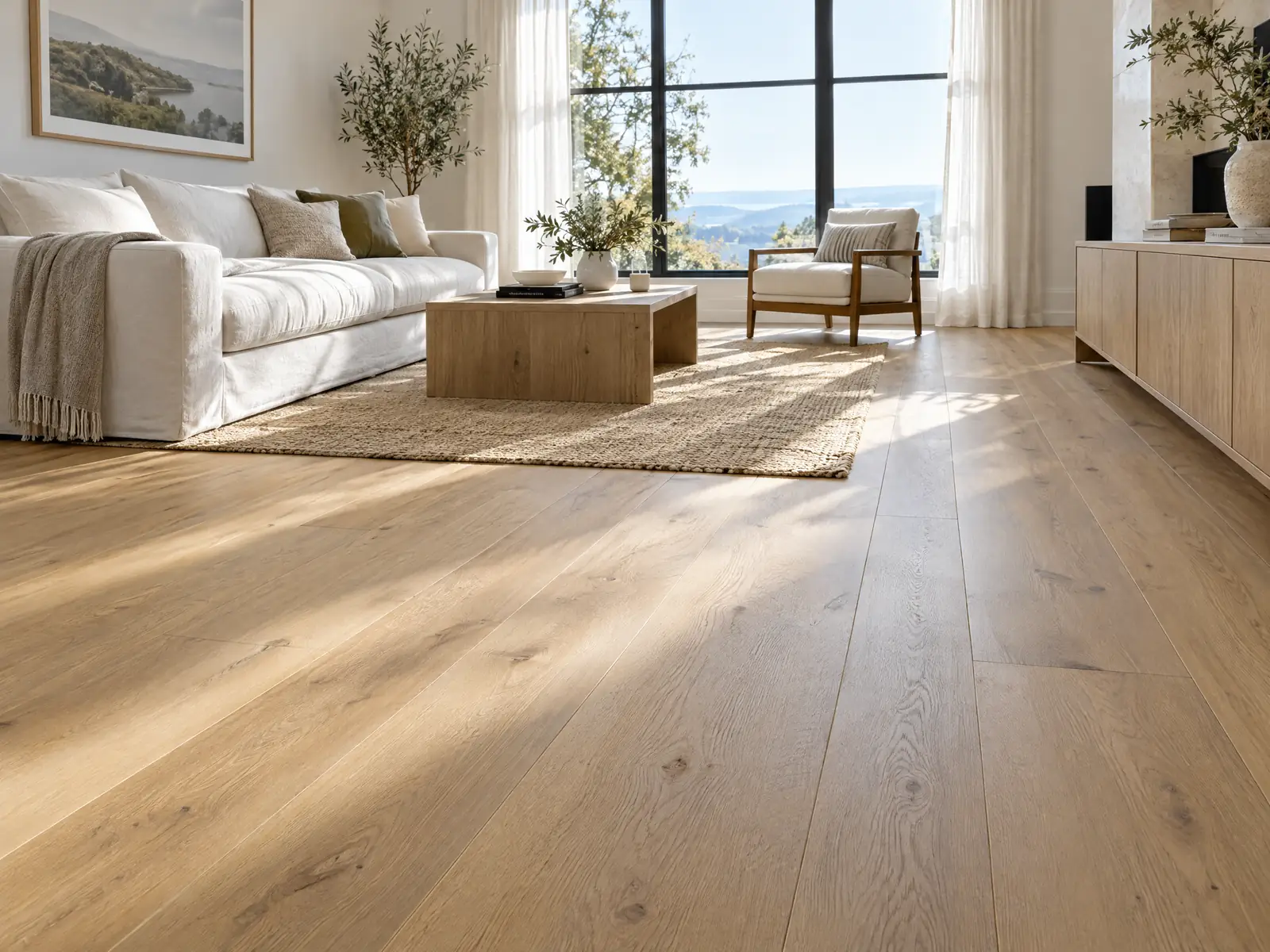
Flooring
Hardwood, engineered wood, vinyl plank, laminate and tile, with slab testing and a written scope.
See flooring →Keep reading
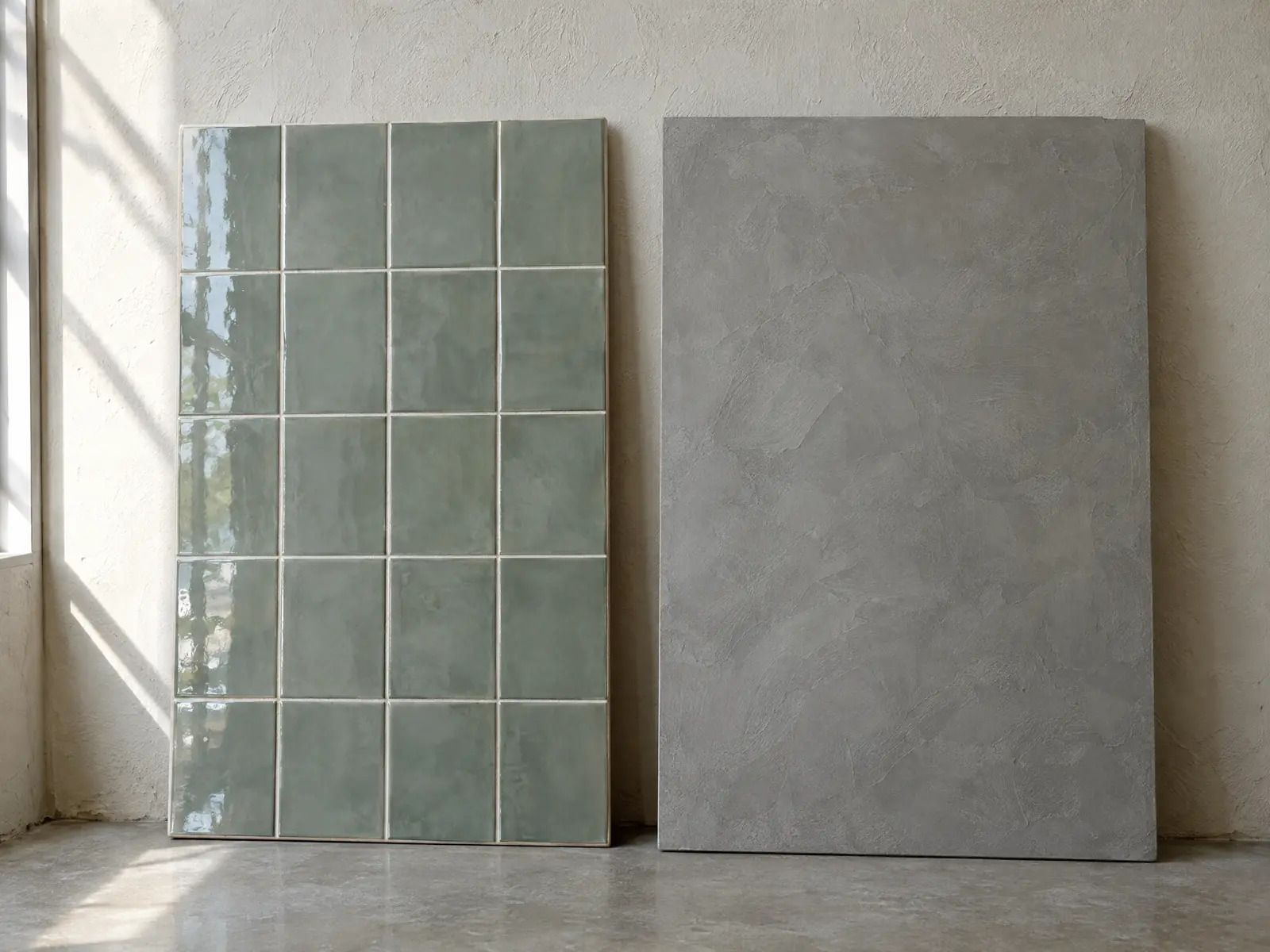
Microcement vs Tile: Which Holds Up Better in a Bathroom?
How microcement and tile differ in installation, wet-area performance and upkeep, using only facts we could verify.
Read the guide →Shower Waterproofing in California: What Does the Code Require?
Backer boards, membranes, the 72 inch rule, how a shower pan flood test works and what inspectors in Southern California ask to see.
Read the guide →How Much Does a Tub-to-Shower Conversion Cost in California?
Dated national ranges by shower type, a line-by-line worked example, permit rules by city and what an accessible walk-in shower needs.
Read the guide →Ready to plan your project?
Call or send the form. We schedule a site visit and send a written proposal.